iAspirants
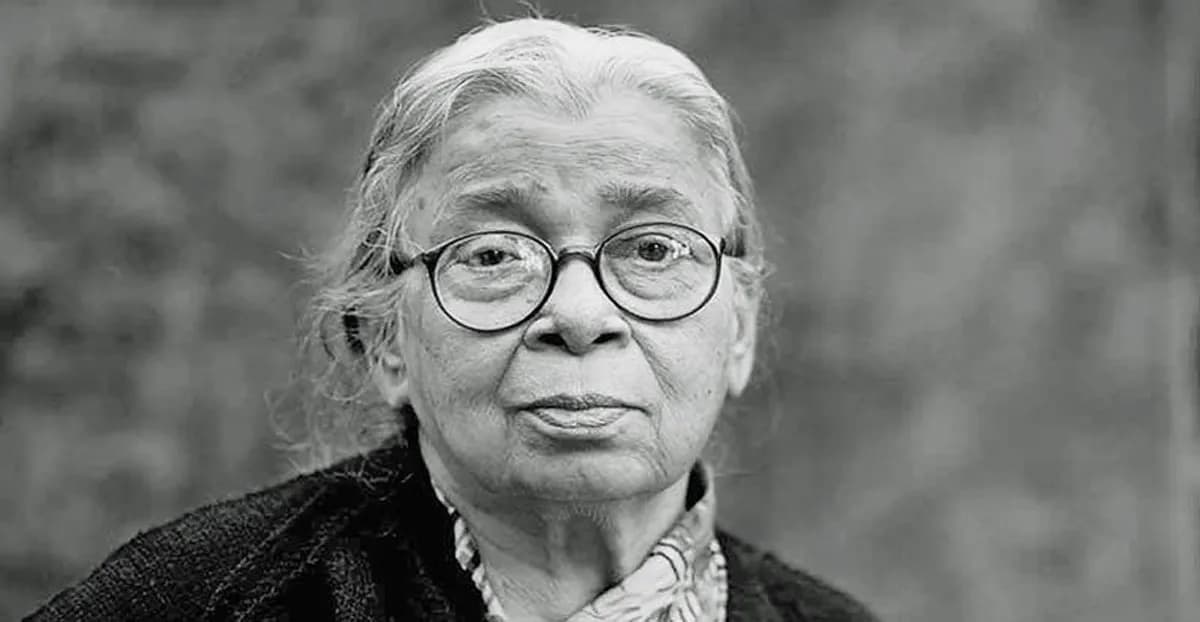
Mahasweta Devi's Legacy and Impact
Published on:
Share this post
Article Summary
Key Highlights on Mahasweta Devi and Societal Issues:
Biography and Contributions:
- Mahasweta Devi was born in Dhaka in 1926 and schooled at Shantiniketan under Rabindranath Tagore. Her early education empowered her with skills traditionally associated with boys, promoting gender equality.
- She remained a key literary figure until her death in 2016, producing significant works addressing social injustices.
- Devi's works focused on voicing the concerns of marginalized communities, including tribals, women, and the urban poor.
Themes in Her Work:
- Explored critical societal issues such as caste discrimination, untouchability, and the exploitation faced by tribal communities.
- Highlighted the plight of marginalized women and the socio-economic disparities in India.
Cultural and Literary Activism:
- Advocated for the rights of Denotified and Nomadic Tribes and worked towards the upliftment of disadvantaged communities in West Bengal.
- Her initiatives led to tangible development for the Kheria Sabar tribe, including setting up educational institutions, vocational training centers, and eco-friendly projects like pisciculture and sericulture.
Government Indifference and Marginalization:
- Expressed concern over government policies that neglect marginalized groups, criticizing the prioritization of economic growth (GDP) over human rights.
- Allegations of marginal activists facing government repression indicate an environment hostile to dissent and advocacy for social justice.
Institutional Censorship:
- Incidents of censorship in academic settings, such as the apparent exclusion of her works from curricula and disruptions during performances of her stories, reflect a growing intolerance for critical voices in society.
Economic Context:
- Approximately 55% of Indians depend on free rations, highlighting issues around poverty and food security in contrast to economic growth narratives.
- Critical scrutiny of land allocation for mining and other industries that displace tribal populations raises concerns about environmental and human rights violations.
Constitutional Reflections:
- The struggles depicted in Devi’s works resonate with the Fundamental Rights guaranteed under Article 14 (Right to Equality) and Article 21 (Right to Life) of the Indian Constitution, which should protect all citizens against exploitation and discrimination.
Cultural Impact and Recognition:
- Her literature has transcended regional boundaries, being translated into nearly all Indian official languages and multiple foreign languages, thus making her a cultural ambassador for India.
International Perspectives:
- Devi’s recognition on a global platform affirms the universal appeal of her themes of equity, justice, and cultural identity, relevant in discussions around human rights at international forums.
Reflections on National Identity:
- Concerns regarding the discrimination faced by speakers of her mother tongue and the associated cultural ethos underline broader themes of national identity and citizenship debates in contemporary India.
This summary encapsulates Mahasweta Devi's contributions, the socio-political landscape she navigated, and the ongoing struggles faced by marginalized groups in India today.
Key Terms & Concepts
| Mahasweta Devi | Influential Indian author |
| Denotified and Nomadic Tribes Rights Action Group | Advocacy group for marginalized |
| Kheria Sabar tribals | Beneficiaries of social projects |
| Delhi University | Dropped work from syllabus |
| Haryana university | Host of disrupted play |
| GDP growth rate | Economic indicator |
| 55 percent reliance on free rations | Economic statistic |
| forest land | Cleared for mining |
| residential schools | Initiated for Kheria Sabar |
| vocational centres | Skill development projects |
| pisciculture and sericulture | Economic activities in projects |