iAspirants
Mangroves' Adaptation to Saline Environments
Published on:
Share this post
Article Summary
Exam-Focused Notes on Mangrove Research and Salt Tolerance
Mangrove Adaptations:
- Mangroves possess unique cell traits that allow them to survive in high-salinity environments due to rising sea levels from climate change.
- The study identifies key characteristics in mangrove species’ cells that are critical for salt tolerance.
Key Findings:
- Research analyzed 34 mangrove species across 17 plant families.
- Unlike inland plants, mangroves have:
- Smaller leaf epidermal pavement cells.
- Thicker cell walls, providing mechanical strength against low osmotic potentials.
Mechanisms of Salt Tolerance:
- Various species of mangroves employ different strategies to cope with salt:
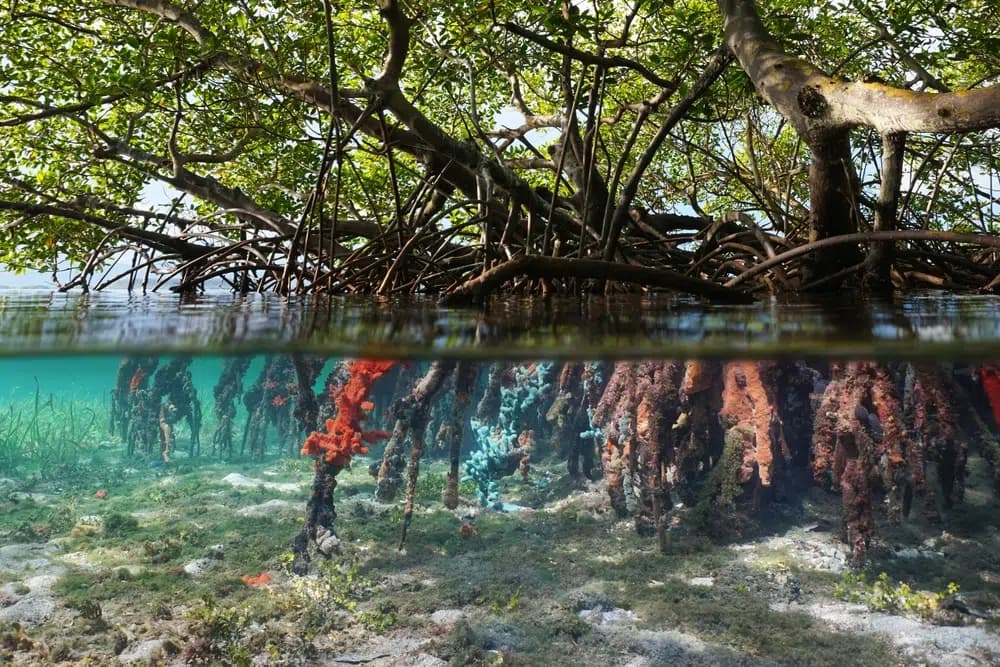
- Waxy roots inside that filter out most of the salt.
- Some species absorb salt and then concentrate and excrete it through specialized leaf tissues.
Ecological Importance of Mangroves:
- Mangroves are crucial for coastal ecosystems:
- They protect against erosion.
- They provide vital habitats for marine life and birds.
- Significant human benefits due to their presence, especially for populations living along coastlines.
Implications for Agriculture:
- The research paves the way for engineering salt-tolerant crops.
- Focus on economically important crops that face threats from increasing salinity.
- Potential methods include manipulating plant cell size and wall properties.
Research Publication:
- The findings were published in the journal Current Biology.
Scientist Commentary:
- Adam Roddy, co-author and assistant professor at New York University, emphasized the importance of understanding these adaptations for future agricultural applications.
Conclusion
This research highlights the resilience of mangroves and provides insights that could benefit agricultural science, particularly in developing strategies for crops to withstand salinity as a response to climate change.
Key Terms & Concepts
| Mangroves | Species adapted to saltwater |
| Current Biology | Published research journal |
| 200 million years | Timeframe of evolution |
| 34 | Number of mangrove species studied |
| 17 | Number of plant families involved |
| Tension mechanism | Water extraction process |
| Salt concentration | Process for salt management |
| Erosion protection | Function of mangroves |
| Habitat for wildlife | Function of mangroves |
| Climate change | Factor affecting salinity |