iAspirants
Current AffairsPrelims PYQsUPSC CSE SyllabusUPSC CSE StrategyBlogsPricing
Login
iAspirants

Your AI-powered companion for UPSC preparation.

Quick Links

  • Home
  • About Us
  • Current Affairs
  • Prelims PYQs
  • UPSC CSE Syllabus
  • UPSC CSE Strategy
  • Blogs

Company

  • Pricing
  • FAQs
  • Contact Us
  • Login

Legal

  • Privacy Policy
  • Terms & Conditions
  • Return Policy

© 2025 iAspirants, Inc. All rights reserved.

  1. Blogs
  2. Environment and Ecology

Meghalaya Coal Mining Debate Renewed

Published on: 06-Sep-2026

Source: The Hindu

Share this post

Meghalaya Coal Mining Debate Renewed

Article Summary

Key Facts and Updates on Illegal Coal Mining in Meghalaya:

  1. Legal Background:

    • The National Green Tribunal (NGT) imposed a ban on hazardous rat-hole coal mining in Meghalaya in April 2014.
    • The Supreme Court upheld this ban but permitted scientific mining under strict statutory compliance.
  2. Current Incident:

    • A recent road accident involving a coal-laden truck near Shillong raised concerns about illegal mining practices.
    • The truck involved was transporting coal to Guwahati, Assam and was linked to the Justice (retired) B.P. Katakey Committee, which submitted its 40th Interim Report to the High Court of Meghalaya.
  3. Investigation and Findings:

    • The report recommends a thorough investigation into whether the coal was legally auctioned or illegally mined.
    • The investigation was triggered by the truck's lack of a mandatory Mineral Transport Challan from the Directorate of Mineral Resources.
  4. Compliance Issues:

    • The truck operator provided documents asserting that the coal, totaling 8,338.374 metric tonnes, was auctioned and belonged to a successful bidder. However, they failed to produce the original transport challan for the vehicle.
    • This non-compliance violates the Standard Operating Procedure for transporting auctioned coal.
  5. Law Enforcement Statistics:

    • From 2023 to August 2026, Meghalaya Police registered:
      • 64 cases related to illegal transportation of coal.
      • 127 cases involving illegal extraction of coal.
    • The panel noted insufficient action taken against landowners and mine owners, with only four cases pursued in East Jaintia Hills.
  6. Call to Action:

    • The committee has asked the police to submit a status report regarding the investigation within two weeks from September 4, 2026.
    • It also questioned the authorities on why the confiscation process has not commenced despite seizing 92 pieces of equipment and 62 vehicles tied to illegal coal trade.
  7. Environmental and Safety Implications:

    • The increasing number of accidents and fatalities linked to illegal coal mining highlights the ongoing risks associated with non-compliance and the urgent need for regulatory enforcement in Meghalaya's mining sector.

These points serve to underscore the challenges in regulating coal mining operations in Meghalaya and the implications for both environmental safety and compliance with judicial directives.

Key Terms & Concepts

National Green TribunalBanned hazardous mining in 2014
Supreme CourtUpheld coal mining ban
Justice (retired) B.P. Katakey CommitteeInvestigated illegal coal transport
Coal India LimitedAllowed to auction pre-ban coal
Mineral Transport ChallanMandatory for coal transport
ShillongAccident location near capital
Assam’s GuwahatiDestination for transport
8,338.374 metric tonnesAmount of coal claimed auctioned
92 items of equipment and 62 vehiclesSeized in illegal coal cases
64 cases of illegal transportRegistered by Meghalaya Police
127 cases of illegal extractionRegistered by Meghalaya Police
East Jaintia HillsLocation of few legal actions

Mind Map for UPSC Civil Services Revision

Turn UPSC Civil Services Current Affairs Into Exam-Ready Notes

Reading Environment and Ecology current affairs is half the work. Revise them with ready-made notes and test what actually stuck.

  • Daily UPSC Civil Services current affairs analysis
  • Revision notes, mind maps & MCQs
  • Prelims mock tests with instant results

Related UPSC Civil Services Current Affairs Articles

CPCB Mandates Fly Ash Compliance Audits
Environment and Ecology21-Oct-2026

CPCB Mandates Fly Ash Compliance Audits

Summary of Thermal Power Plant Compliance Regulations

Regulatory Framework

  • Central Pollution Control Board (CPCB) has mandated annual audits for thermal power plants to ensure adherence to fly ash utilisation and disposal norms.
  • This requirement follows the Union Environment Ministry’s 2021 Ash Utilisation Notification and its amendments.
September 4, 2026Deadline for police status report

Key Provisions of the 2021 Ash Utilisation Notification

  • 100% utilisation of fly ash is mandated over the compliance cycle, with an annual minimum target set at 80%.
  • Thermal power plants, particularly coal and lignite-based ones, are accountable for environmentally sound ash utilisation.
  • Permissible uses of fly ash include:
    • Manufacturing of bricks and blocks.
    • Production of cement.
    • Other approved applications.

Compliance and Penalties

  • Non-compliance with the prescribed utilisation targets incurs an environmental compensation fee of ₹1,000 per tonne of unutilised ash.
  • Audits of fly ash management are required to be performed by CPCB-authorised auditors.
  • Reports from these audits need submission to the CPCB and the respective State Pollution Control Boards by November 30 each year.

Enforcement and Oversight

  • The CPCB has authorised 124 auditors to perform these compliance audits.
  • Directions have been issued to non-compliant thermal power plants under the Environment (Protection) Act, 1986, as of June 12 and July 3, 2026.
  • Non-compliant plants are directed to meet requirements within stipulated deadlines.

Judicial Oversight

  • The submission and enforcement actions were in response to a petition by the Tamil Nadu Fly Ash Brick and Blocks Manufacturers Association to the National Green Tribunal (NGT), concerning the CPCB’s role in regular audits.

This regulatory framework and audit mechanism aim to enhance the efficient utilisation of fly ash and mitigate environmental impacts from thermal power plants.

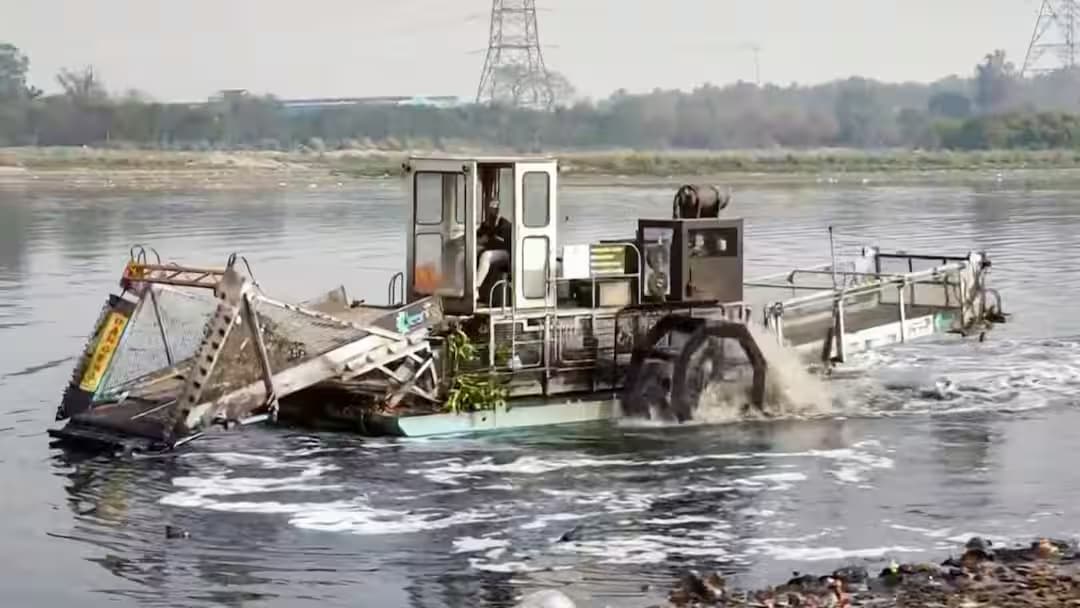
Yamuna River Pollution Challenges Ahead
Environment and Ecology21-Oct-2026

Yamuna River Pollution Challenges Ahead

Summary of Key Points on Yamuna River Pollution and Cleanup Initiatives:

Environmental Issues:

  • Fish Deaths: Reports indicate thousands of dead fish in the Yamuna near Burari, signaling severe pollution.
  • Potential Causes:
    • Industrial effluents
    • Low dissolved oxygen levels
    • Inadequate environmental flows
  • Sewage Discharge: Approximately 200 million litres of untreated sewage is discharged into the Yamuna daily.

Government Initiatives:

  • “Chalo Yamuna” Clean-up Drive:
    • Launched by the Delhi government, led by Chief Minister Rekha Gupta.
    • Involved community participation in cleaning 70 ghats and raising awareness about disposal of waste in the river.

Challenges Identified:

  • Failure of Sewage Treatment Plants: At least seven sewage treatment plants did not meet water quality standards as reported by the Delhi Pollution Control Committee.
  • Interceptor Drain Project Issues: Project aimed at preventing sewage from slum drains entering the river is hindered by fragmented responsibilities among agencies.

Call for Comprehensive Strategies:

  • Proposes that efforts to rejuvenate the Yamuna must not only focus on sewage treatment but also ensure adequate clean water flows.
  • Urgent need for cooperation between the Central Government, Delhi, Haryana, and Uttar Pradesh to:
    • Set common pollution targets.
    • Share data for effective accountability.

Institutional and Policy Recommendations:

  • Need for a multi-faceted approach to pollution which includes:
    • Engaging public participation through campaigns.
    • Sustained investment in infrastructure.
    • Scientific oversight and diligent enforcement of regulations.

Conclusion:

The pollution of the Yamuna River requires coordinated actions across states, investment in sewage infrastructure, and a public movement for environmental stewardship to effectively address the chronic health issues of the river.

Air Pollution Mitigation Innovations Discussed
Environment and Ecology19-Oct-2026

Air Pollution Mitigation Innovations Discussed

Summary Notes on Air Pollution Mitigation Initiatives

Key Participants and Focus:

  • Union Minister for Environment, Forest and Climate Change: Bhupender Yadav
  • Engaged with start-ups and innovation companies centered on air pollution mitigation in Delhi-NCR.

Strategic Approaches Introduced:

  1. Technological Solutions:

    • Artificial Intelligence (AI), sensors, remote sensing, satellite, and drone technologies.
    • Emphasis on data analytics for real-time assessments of air pollution.
  2. Specific Innovations Discussed:

    • Low-cost mechanized solutions for road sweeping.
    • Monitoring systems for road-dust resuspension.
    • Portable solutions for pothole repairs.
    • Modular systems for dust containment.

Environmental Monitoring Technologies:

  • Hyperlocal air-quality monitoring systems for accurate pollution readings.
  • City-wide pollution mapping, and identification of pollution hotspots.
  • AI-based source apportionment.
  • Real-time tracking of pollution sources.
  • Predictive systems for traffic congestion management.

Enforcement Technologies:

  • Continuous monitoring for stubble and open biomass burning.
  • Automated systems to identify vehicles lacking valid Pollution Under Control (PUC) certificates and vehicles beyond their operational age.

Government Collaboration:

  • Start-ups are currently aiding various government bodies with technological solutions.
  • Anticipated growth in partnerships between innovative firms and governmental agencies in upcoming months.

Implications for Policy and Development:

  • Aligns with broader government goals for enhancing air quality and implementing sustainable environmental practices.
  • Encourages public-private partnerships in the environmental technologies domain.

This initiative illustrates a commitment to leveraging innovative technology to combat air pollution, aligning with constitutional and societal obligations to maintain a healthy environment under Article 48A of the Indian Constitution, which mandates the State to protect and improve the environment and safeguard the forests and wildlife of the country.

Concerns Over Illegal Sand Mining MP
Environment and Ecology19-Oct-2026

Concerns Over Illegal Sand Mining MP

Exam-Oriented Notes on Illegal Sand Mining in Madhya Pradesh

Background and Context

  • Concern: The illegal sand mining in Madhya Pradesh has raised legal and environmental concerns, prompting oversight from the National Green Tribunal (NGT) and the Supreme Court.
  • Supreme Court Ruling (April 2026): The court criticized the Madhya Pradesh government's inaction, stating, "State cannot plead helplessness" and warned of stringent measures if illegal mining persists.

NGT Inquiry Findings

  • Task Force Ineffectiveness: A joint committee appointed by the NGT indicated that the state task force, created to combat illegal sand mining, is not functioning effectively at the ground level.
  • Concerns Raised:
    • Lack of action against large stockpiles while prosecuting smaller ones.
    • Excavation activities occurring in restricted zones, undermining established environmental guidelines.
    • Absence of check posts at critical locations for monitoring activities.

Quantitative Data

  • Sand Storage Findings:
El Niño Threatens Kerala's Forests
Environment and Ecology19-Oct-2026

El Niño Threatens Kerala's Forests

Summary of Key Facts and Issues regarding El Niño Impact on Kerala's Forests

  1. Climate Context:

    • The developing strong El Niño is forecasted to intensify dry conditions in Kerala.
    • Kerala has recorded a 28% deficit in southwest monsoon rainfall, exacerbating dry conditions.
  2. Forest and Wildlife Impacts:

    • The dry conditions could lead to:
      • Early drying of forest streams and waterholes.
      • Altered wildlife movement patterns.
      • Increased human-wildlife conflicts as animals seek alternative water sources near human habitats.
      • Physiological stress and behavioral changes in wildlife, necessitating field observations for verification.
    • The risk of forest fires expected to increase due to high temperatures and fewer rains, prompting considerations for advanced preventive measures, such as creating fire lines.
  3. Scientific Insights:

    • K.A. Sreejith, senior principal scientist at the Kerala Forest Research Institute (KFRI) stated that:
Chennai Northeast Monsoon Heavy Rainfall
Environment and Ecology18-Oct-2026

Chennai Northeast Monsoon Heavy Rainfall

Summary of Northeast Monsoon Rainfall in Tamil Nadu

Key Facts & Data

  • Geographical Impact: Chennai received heavy rainfall due to the onset of the northeast monsoon, especially affecting areas like Kargil Nagar and Tiruvottiyur with 12 cm, Kathivakkam and Tondiarpet with 9 cm, and Ennore, Basin Bridge, and Manali with 7 cm within just a few hours.
  • Rainfall Statistics: In a significant downpour, Uthiramerur in Kancheepuram recorded the highest rainfall of 15 cm, while around 84 weather stations reported substantial rainfall over a 24-hour period.
  • Rainfall Deficit: The recent rains have reduced the state's rainfall deficit to 3%, categorizing it as normal for October.

Weather Forecast & Alerts

  • Alerts Issued: The Regional Meteorological Centre (RMC) issued a yellow alert for 17 districts, particularly in northern and interior regions including Cuddalore and Tiruchi, indicating a high possibility of heavy rainfall through October 23.
  • Predictions for Future Rainfall:
    • A low-pressure area may form over the southwest Arabian Sea around October 18.
    • Anticipated weather systems could deliver further intense rainfall, particularly in districts along the Western Ghats, with isolated heavy rainfall expected to reach up to 20.4 cm on October 20.
    • Rainfall intensity is predicted to decline after October 25, with a new weather system forming over the Bay of Bengal in the last week of October.

Meteorological Insights

  • Cyclonic Circulation: The current heavy rainfall is linked to an upper air cyclonic circulation over north Tamil Nadu and adjoining coastal Andhra Pradesh, facilitating sustained rainfall across the State.

Government & Regulatory Oversight

  • The Regional Meteorological Centre (RMC) is actively monitoring weather patterns and issuing alerts to keep the public informed about potential weather hazards and necessary precautions.

Environmental Considerations

  • This downpour highlights environmental challenges, particularly concerning water management in delta and interior districts that are currently water-stressed but may benefit from the influx of water due to recent rains.

Conclusion

The northeast monsoon has initiated a significant rainfall event across Tamil Nadu, particularly affecting Chennai and its adjacent districts, impacting agricultural water resources positively, while also presenting challenges related to flash floods in susceptible areas. The government and meteorological agencies are actively engaged in monitoring and preparing citizens for potential weather impacts.

Elephant Death From Anthrax Confirmed
Environment and Ecology18-Oct-2026

Elephant Death From Anthrax Confirmed

  • Incident Summary: A female elephant in the Periyanaickenpalayam forest range, Coimbatore, died of anthrax, triggering immediate action from the Forest and Animal Husbandry Departments.

  • Date of Discovery: The carcass was spotted on October 13, identified during a routine patrol.

  • Health Concern: Initial suspicions of anthrax were based on the appearance of the carcass, which veterinarians later confirmed by testing a blood smear for Bacillus anthracis, the anthrax bacterium.

  • Response Protocol:

    • The carcass was burned without a postmortem, abiding by veterinary protocols to prevent disease spread.
    • Personnel involved in handling the carcass used personal protective equipment (PPE) to ensure safety against contamination.
  • Departments Involved:

    • Forest Department: Responsible for monitoring wildlife and addressing disease outbreaks.
    • Animal Husbandry Department: Conducted the diagnostic testing of the blood sample.
Innovations for Air Pollution Mitigation
Environment and Ecology18-Oct-2026

Innovations for Air Pollution Mitigation

Facts & Key Points:

  1. Air Pollution Mitigation Initiatives:

    • Union Minister for Environment, Forest and Climate Change, Bhupender Yadav, engaged with start-ups and innovative companies to discuss scalable solutions for air pollution in Delhi-NCR.
  2. Innovative Technologies and Approaches:

    • Focus on practical solutions such as:
      • Low-cost mechanized road sweeping.
      • Monitoring road-dust resuspension.
      • Portable pothole repair methods.
      • Modular dust-containment systems.
  3. Use of Advanced Technologies:

    • Emphasis on integrating:
      • Artificial Intelligence (AI).
      • Sensors.
      • Remote sensing.
      • Satellite and drone technologies.
      • Data analytics for real-time air pollution monitoring.
  4. Proposed Solutions:

    • Innovations discussed include:
  • 11 sand storage yards were documented, with an estimated total of 6,010 cubic meters of sand stockpiled.
  • Breakdown: 3,800 cubic meters in Datia and 2,210 cubic meters in Bhind.
  • Illegal Activities Recorded in Datia District (2025-26):
    • 17 illegal excavation cases.
    • 87 illegal transportation cases.
    • 4 illegal storage cases.
  • Judicial Oversight

    • NGT Directive (August 7, 2026): Ordered inquiries and emphasized accountability, with the committee recommending the formation of a regular surveillance group involving multiple departments including Revenue, Police, and Mining Departments.

    Environmental Significance

    • Sindh River:
      • Flows approximately 470 kilometers through Madhya Pradesh before joining Yamuna in Uttar Pradesh.
      • Critical for irrigation in northern Madhya Pradesh.
      • Habitat for endangered species including gharial, mugger crocodiles, and Gangetic river dolphins.

    Recommendations from NGT Committee

    • Establish a regular surveillance committee to monitor mining activities, incorporating input from various departments including the District Collector.
    • Conduct investigations into the disparity in enforcement against illegal mining, with accountability measures for any proven lapses.

    Relevant Laws and Guidelines

    • Enforcement and Monitoring Guidelines for Sand Mining (2020): Established to regulate and monitor sand mining activities to protect environmental interests.

    Government Response

    • State-Wide Task Force: Promised by the Madhya Pradesh government to address illegal sand mining, although its implementation and effectiveness are under scrutiny.

    Conclusion

    The issue of illegal sand mining in Madhya Pradesh underscores significant gaps in enforcement and the need for robust action from both government and judicial entities to protect sensitive ecological zones while adhering to legal standards. The NGT's involvement highlights the intersection of environmental protection, governance, and judicial oversight in addressing such illegal activities.

    • El Niño can disrupt monsoon patterns, leading to reduced soil moisture and increased water stress on plants, which in turn affects forest health, regeneration, and ecosystem function.
    • Forest phenology (the timing of seasonal events in plants) is closely tied to climatic factors, and disruptions could affect food availability and ecological interactions.
  • Historical Data:

    • 49 large forest fire incidents reported in Kerala in 2026 up to the current date, in comparison to 52 incidents in 2025.
    • Evaluation of forest phenology during El Niño years against historical records could be beneficial in understanding seasonal vegetation changes.
  • Dynamic Factors:

    • The extent of impacts will vary based on:
      • Forest type, elevation, soil moisture content, and prevailing climatic conditions.
      • Species resilience to drought; some species are more tolerant while others are highly susceptible to water stress.
  • Future Considerations:

    • C.K. Vishnudas, executive director of the Hume Centre for Ecology and Wildlife Biology, emphasizes that water availability and the distribution of northeast monsoon rainfall will be critical for assessing the ecological impact.
    • Expected localized convective rainfall might not sufficiently replenish widespread water sources.
  • Long-term Observations:

    • Continuous monitoring in the coming weeks will be essential to determine the full ecological impact as weather conditions evolve.
  • Preparedness Actions:

    • Authorities may need to implement precautionary measures to mitigate fire risks and manage wildlife encounters effectively.
  • By integrating these observations and data, stakeholders can better prepare for the challenges posed by El Niño on Kerala's ecosystems, ensuring both wildlife conservation and human safety.

  • Public Health Implications: Anthrax is a zoonotic disease; vigilance is necessary to prevent potential outbreaks and ensure both animal and human safety.

  • Preventive Measures:

    • Enhanced surveillance by both the Forest and Animal Husbandry Departments in the area following the confirmed case of anthrax.
    • Education and training for personnel on handling disease outbreaks effectively and safely.
  • Background on Anthrax:

    • It is caused by a bacterium that can affect both humans and animals, emphasizing the need for rapid response and protocols in wildlife management.
  • This incident highlights the importance of inter-departmental coordination in managing wildlife health and public safety in the context of zoonotic diseases.

    • Hyperlocal air-quality monitoring.
    • City-wide pollution mapping.
    • Hotspot identification and forecasting.
    • AI-based source apportionment techniques.
    • Real-time identification of pollution sources.
    • Predictive traffic-congestion management.
  • Environmental Monitoring Technologies:

    • Technologies showcased for:
      • 24x7 monitoring of agricultural stubble and open biomass burning.
      • Automated identification of vehicles lacking valid Pollution Under Control (PUC) certificates and those that are over-aged.
  • Collaborations with Government Entities:

    • Certain start-ups are already collaborating with various government bodies.
    • Additional partnerships anticipated in the coming months to enhance air quality management efforts.
  • Government Focus:

    • The initiative aligns with the government's broader goals concerning environmental protection and public health under the Constitution’s Directive Principles of State Policy (Part IV, Article 48A), which emphasizes the duty of the state to protect and improve the environment.
  • Conclusion: The proactive collaboration between the government and innovative entities signifies a comprehensive approach to tackling the pressing issue of air pollution in urban areas, leveraging advanced technology for effective enforcement and sustainable urban planning.