iAspirants
Mesolithic Man's Artistic Endeavors
Published on:
Share this post
Article Summary
Prehistoric Findings: Recent excavations at Bhim Betka near Ujjain uncovered artifacts from the mesolithic period, approximately 10,000 years ago.
Artifacts: Archaeologists discovered evidence of basket usage by mesolithic humans for transporting fruits, hunted animals, and even toddlers.
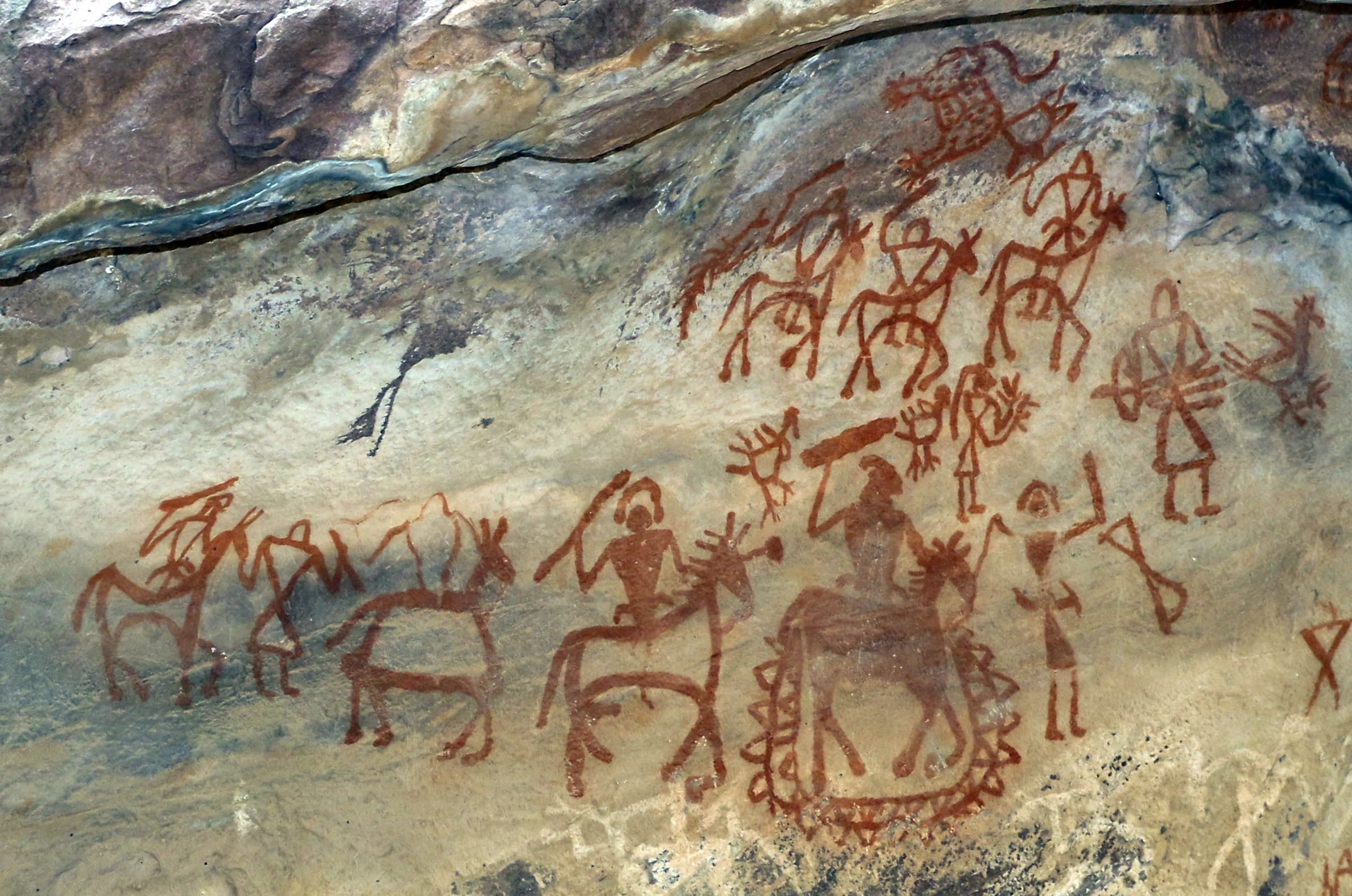
Cave Paintings: Findings also include paintings depicting daily life activities such as the transportation of goods and children. This suggests organized social structures and trade activities during the mesolithic era.
Cultural Transitions: Dr. V.S. Wakankar noted a cultural shift as mesolithic people interacted with agricultural chalcolithic communities around 3,000 to 5,000 years ago. This interaction resulted in a decline in the vibrant mesolithic art depicted in previous paintings and a transition towards styles influenced by chalcolithic pottery.
Archaeological Scope: So far, around 1,300 caves and shelters have been explored in the region, with evidence of upper palaeolithic cave art found in approximately 300 locations, indicating a rich artistic and cultural heritage.
Historical Importance: These findings at Bhim Betka are essential to understanding the evolution of human art and culture in the Indian subcontinent, providing insight into early human societal norms and transitions over millennia.
Key Terms & Concepts
| Bhim Betka | Prehistoric site exploration |
| Vikram University | Conducted archaeological excavations |
| Dr. V.S. Wakankar | Excavation leader |
| Mesolithic period | Cultural timeline reference |
| Agricultural chalcolithic communities | Influenced mesolithic culture |
| 1,300 shelters | Caves explored for artifacts |
| 10,000 years | Timeframe of habitation |
| 3,000 to 5,000 years ago | Contact timeframe with chalcolithic |
| Cave art | Art from upper paleolithic age |