iAspirants
Missile Warfare Impact on India-China Relations
Published on:
Share this post
Article Summary
Summary of Key Points
Missile Warfare and Strategic Implications
- Missiles are changing the nature of warfare, making conflicts quicker and more politically driven.
- China has over 200 conventional missile launchers deployed opposite India, significantly enhancing its missile capability.
- Conventional missiles are perceived as deterrents by India, while China uses them as tools for political coercion and military aggression.
Key Missile Systems
- China deploys several missile types:
- DF-15B, DF-16, DF-21C: Target military installations along disputed borders.
- DF-26: Capable of hitting deep within Indian territory (high-value targets).
- Hypersonic missiles (DF-100 and CJ-1000): Present a major threat due to their speed and reduced warning time for potential strikes.
Vulnerabilities and India's Response
- India lacks adequate defense against hypersonic missiles, which compromises its strategic depth.
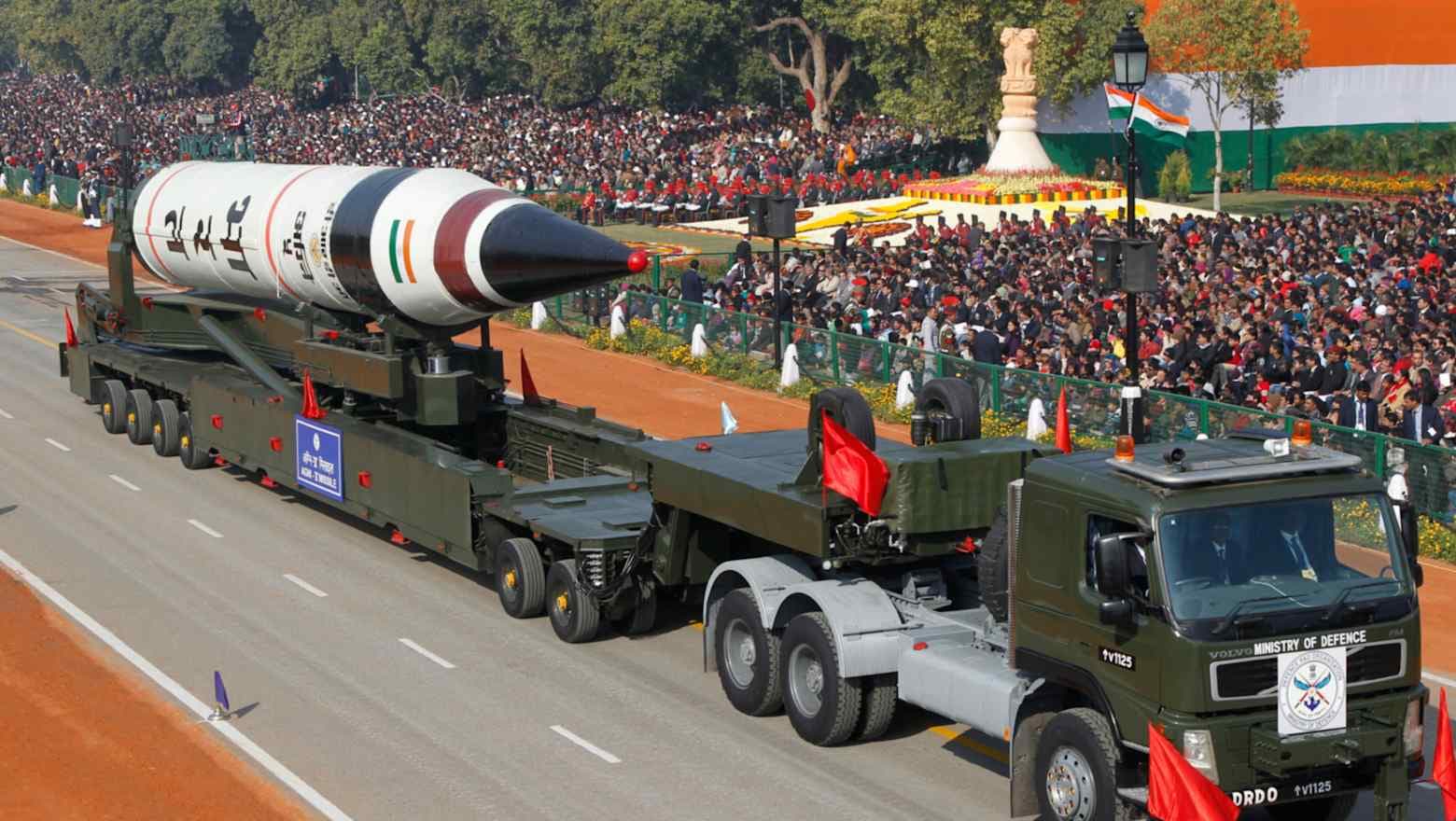
- Indian missile capabilities include Agni series, Long Range Land Attack Cruise Missile (LR-LACM), Nirbhay, and BrahMos, but there are limitations in range, diversity, and integration.
- The Indian military faces challenges in developing a cohesive rocket force that can effectively retaliate against missile strikes.
Strategic Recommendations for India
Rocket Force Development:
- Establish a rocket force under the Chief of Defence Staff (CDS) to enhance operational effectiveness.
- Expand the inventory of Medium-Range Ballistic Missiles (MRBMs) and Intermediate-Range Ballistic Missiles (IRBMs), including Agni variants.
Doctrinal Changes:
- Shift to a counter-value strike doctrine; focus on a unified target list that transcends service-specific targets.
- Grant pre-designated launch authority to the rocket force to mitigate risks at conflict initiation.
Technological and Industrial Growth:
- Increase private sector participation in missile development to overcome dependence issues on foreign suppliers.
- Invest in R&D to enhance capabilities in air propulsion systems, semiconductors, and materials.
Interim Measures:
- Disperse Indian Air Force (IAF) assets and fortify airbases to limit adversarial missile effectiveness.
- Optimize air defense systems to force adversaries to waste missiles on defensive targets instead of critical infrastructure.
- Strengthen long-range conventional strike capabilities to make Chinese assets in Tibet and Xinjiang vulnerable.
- Expand satellite surveillance to track mobile launchers, particularly DF-26 systems, improving early response capabilities.
Implications for Bilateral Relations
- If India does not enhance its deterrent capabilities, it risks being seen as unable to protect itself, potentially inviting aggression.
- The strategic balance in the region will depend significantly on India’s ability to demonstrate credible defense options without escalating to a nuclear confrontation.
Conclusion
- India must urgently reassess its military strategy, focusing on strengthening its conventional missile capabilities to deter potential aggressions from China.
- Building a comprehensive rocket force capable of engaging in modern warfare scenarios is crucial for national security.
Key Terms & Concepts
| Chinese missile launchers | Threat to Indian security |
| DF-15B, DF-16, DF-21C, DF-26 | Types of Chinese missiles |
| Agni, LR-LACM, Nirbhay, BrahMos | Indian missile systems |
| Himalayas | Geographical strategic depth |
| Chief of Defence Staff (CDS) | Authority for rocket force |
| PLA's Western Theatre Command (WTC) | Target of Indian strategy |
| Hypersonic missiles | Advanced missile technology |
| Missile detection timings | Operational challenge for India |
| Rocket force | India's proposed military strategy |
| R&D investment | Needed for missile technology |