iAspirants
Myanmar Elections and Military Control Impact
Published on:
Share this post
Article Summary
Myanmar Political Situation Post-Elections (February 2026)
Election Outcome & Military Involvement:
- The Union Solidarity and Development Party (USDP), backed by the military, won the recent elections, securing 739 out of 1,025 national and provincial seats.
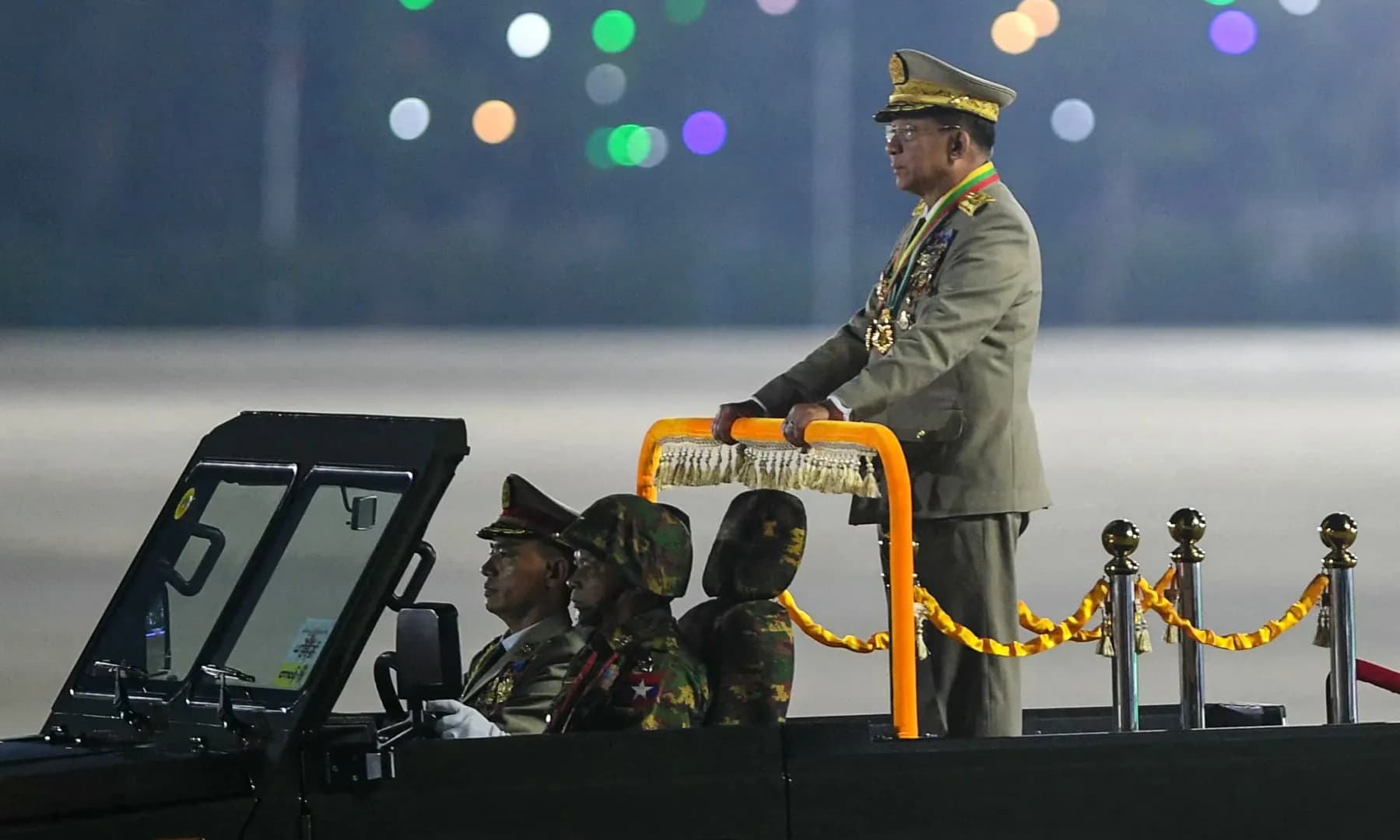
- The elections were criticized as a managed transition following a military coup on February 1, 2021, led by Senior General Min Aung Hlaing, reversing a decade of democratic reforms.
Constitutional Context:
- The 2008 Constitution institutionalizes military power, reserving 25% of parliamentary seats and granting military control over key ministries (Defense, Home Affairs, Border Affairs).
Humanitarian Crisis:
- Nearly 50% of Myanmar's population lives below the poverty line.
- About 15 million people are at risk of acute food insecurity; 3.2 million displaced due to conflict.
- The International Court of Justice is deliberating on a genocide charge against Myanmar, initiated by The Gambia.
Election Criticism:
- Over 40 opposition parties dissolved by the junta-appointed Union Election Commission (UEC).
- Significant territorial disenfranchisement acknowledged by UEC; polling not held in 56-67 townships, particularly impacting regions like Rakhine, Shan, and Kachin.
Military Control & Governance:
- New laws (2022-2023) have enabled tighter military control over civil governance.
- Establishment of the Union Consultative Council, which will operate as an extra-constitutional body for oversight.
- Recent reshuffles aimed at consolidating military power and loyalty, including reassignment of over 300 military officers to civilian positions.
International Response:
- ASEAN has refused to certify the elections, maintaining sanctions against Myanmar.
- The Five-Point Consensus by ASEAN seeks a cessation of violence and restoration of peace.
Regional Implications for India:
- India impacted by spillover effects from Myanmar's instability, facing challenges in diplomacy, border security, and humanitarian crises.
- 31,000 refugees reported in Mizoram; significant rise in drug seizures (500% increase in five years).
- India’s strategic projects like the Kaladan Multi-Modal Transit Transport Project may be jeopardized due to border instability.
Emerging Security Challenges:
- Rebel groups reportedly control about 42% of Myanmar’s territory, leading to increased operational space for insurgents.
- The NSCN-IM is purportedly strengthening positions along the India-Myanmar border, escalating security threats for India.
Humanitarian Efforts:
- India has provided humanitarian assistance, including earthquake relief under Operation Brahma in 2025, to support the population affected by the ongoing conflict.
This summary highlights key political dynamics, constitutional context, humanitarian challenges, and regional security concerns related to Myanmar's elections and military governance.
Key Terms & Concepts
| Union Solidarity and Development Party | Winner of Myanmar elections |
| February 1, 2021 | Start of military coup |
| International Court of Justice | Deliberating genocide charge |
| The Gambia | Country bringing genocide charge |
| UN estimates | Half population below poverty line |
| 15 million | Individuals facing food insecurity |
| 3.2 million | Displaced due to conflict |
| Cybersecurity Law | Criminalises online activities |
| 739 out of 1,025 | Seats won by USDP |
| 2008 constitution | Reserves seats for armed forces |
| Union Consultative Council | Super-body for governance oversight |
| Over 300 military officers | Reassigned to civilian positions |