iAspirants
NAMASTE Scheme Enhances Sanitation Workers
Published on:
Share this post
Article Summary
Exam-Focused Notes on NAMASTE Scheme
Overview of the NAMASTE Scheme:
- Objective: To ensure dignity, safety, and social security for sanitation workers in India.
- Implemented by: Ministry of Social Justice and Empowerment and Ministry of Housing and Urban Affairs.
- Vision: Aligns with the government’s motto of "Sabka Saath, Sabka Vikas, Sabka Vishwas, Sabka Prayas."
Key Features:
Target Groups:
- Over 89,000 sewer and septic tank workers.
- More than 281,000 waste pickers.
Health and Safety Measures:
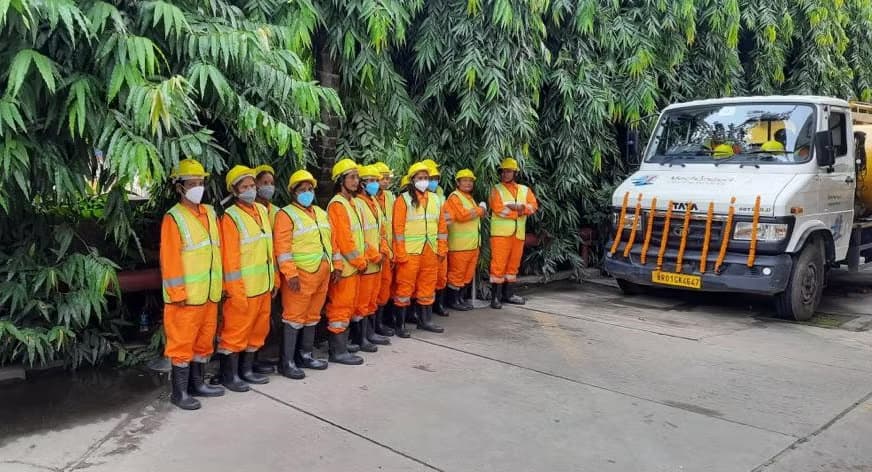
- Distribution of Personal Protective Equipment (PPE):
- 87,037 kits to sewer and septic tank workers.
- 184,118 kits to waste pickers.
- Issuance of health cards to:
- 76,845 sewer and septic tank workers.
- 104,729 waste pickers.
- Distribution of Personal Protective Equipment (PPE):
Emergency Response Units:
- Strengthening of 753 Emergency Response Sanitation Units (ERSUs) with modern safety equipment.
Goals of the Scheme:
- Eliminate hazardous manual cleaning of sewers and septic tanks.
- Promote mechanized sanitation practices.
- Provide skill development and welfare measures for sanitation workers.
- Aim for zero deaths in sanitation work and reduce direct human contact with hazardous waste.
Comprehensive Approach:
- Focus on technology integration, occupational safety, health protection, and entrepreneurship opportunities for sanitation workers.
- Individual profiling of sanitation workers to ensure targeted support.
- Financial assistance for self-employment and access to modern mechanized sanitation tools.
Government Commitment:
- The scheme highlights the government's commitment to improving the living standards of sanitation workers and their families through a holistic approach that combines technology and welfare initiatives.
Expected Outcomes:
- A safer and more respectful environment for sanitation workers.
- Enhanced public health and sanitation standards.
- Empowerment of sanitation workers through skill development and financial support.
Constitutional Context:
- This initiative aligns with the Directive Principles of State Policy (DPSP) aimed at ensuring social justice and welfare for all citizens (Article 39, 41, 42 of the Indian Constitution).
Significance:
- The NAMASTE scheme contributes to creating a cleaner, safer, and more inclusive India while ensuring dignity and respect for those who play a crucial role in public health and sanitation.
These notes encapsulate the essence of the NAMASTE scheme, focusing on its objectives, features, and impact on sanitation workers, reflecting the government's commitment to social justice and public health.
Key Terms & Concepts
| NAMASTE Scheme | Enhances sanitation worker welfare |
| 89,000 | Verified sewer and septic workers |
| 2,81,000 | Verified waste pickers |
| 87,000 | PPE kits distributed to workers |
| 1,84,118 | PPE kits for waste pickers |
| 76,000 | Health cards issued to workers |
| 1,04,000 | Health cards for waste pickers |
| 753 | Emergency Response Units equipped |
| Ayushman Bharat Scheme | Health insurance for workers |
| Zero deaths target | Goal for sanitation work |