iAspirants
NASA's Artemis II Mission Launched
Published on:
Share this post
Article Summary
NASA's Artemis II Mission Overview
Launch Details:
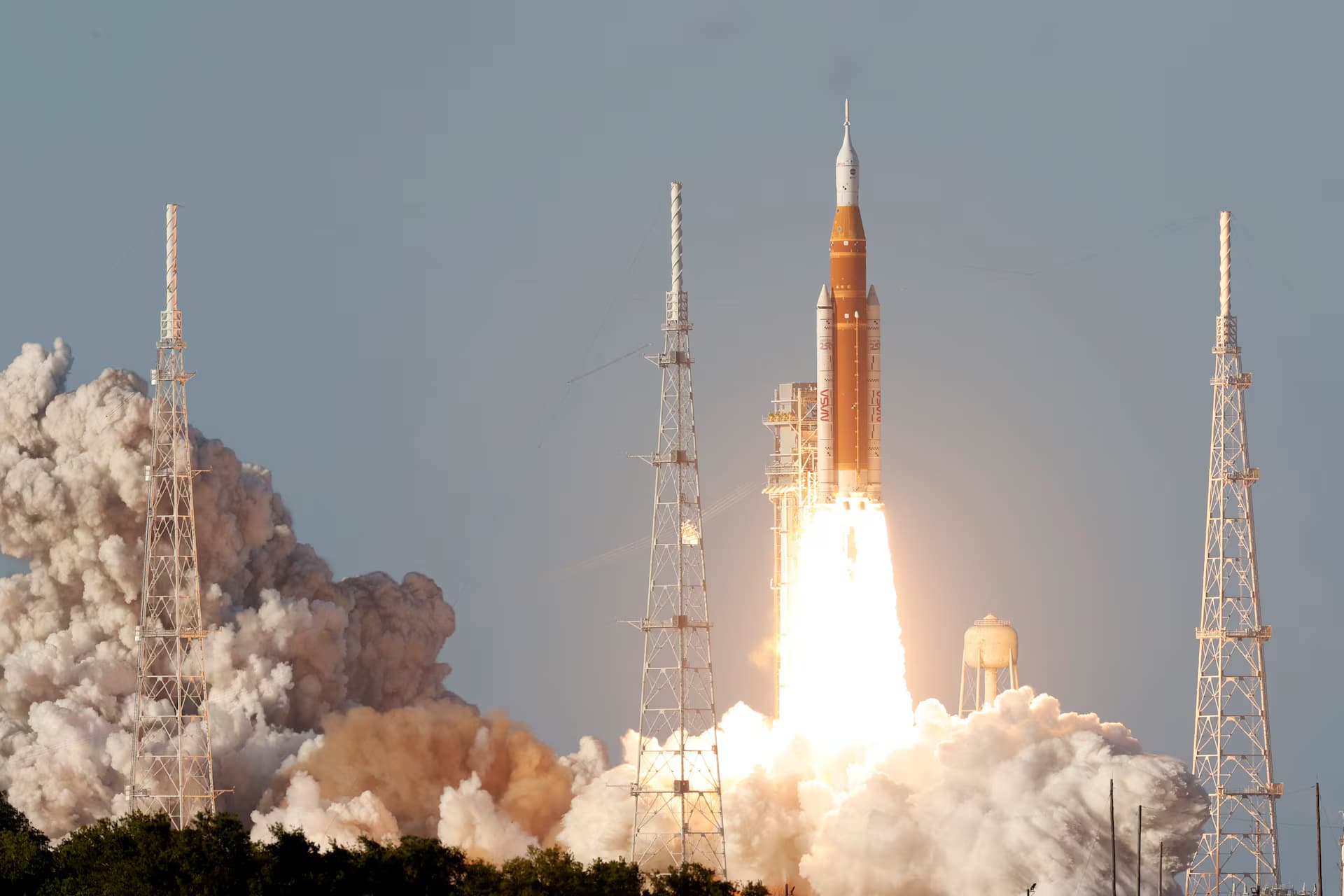
- Launch Date: April 2, 2026
- Launch Site: Kennedy Space Center, Florida, from Launch Complex 39B
- Time of Liftoff: 6:35 p.m. EDT (2224 GMT)
- Vehicle: Space Launch System (SLS) rocket with the Orion spacecraft
Crew Composition:
- Astronauts:
- Reid Wiseman (Commander)
- Victor Glover (Pilot)
- Christina Koch (Mission Specialist)
- Jeremy Hansen (Canadian Space Agency astronaut)
- Historical Significance:
- First diverse lunar crew: first woman, first person of color, and first non-US citizen.
Mission Objectives:
- Duration: Approximately 10 days, with a flight around the Moon and back to Earth.
- Planned Landing Target: Near the lunar south pole by 2028.
- Goal: Establish a permanent moon base and prepare for future lunar exploration.
Technical Details:
- Orion Spacecraft: Named "Integrity"
- SLS Specifications:
- Height: 322 feet (98 m)
- Weight: 5.75 million pounds at launch
- Thrust: Combined thrust of 8.8 million pounds at lift-off from four RS-25 engines and twin solid rocket boosters.
Key Milestones Achieved:
- Structural Separation:
- Successful separation of solid rocket boosters for optimal propulsion.
- Core stage separation occurred after the initial propulsion phase.
- Solar Array Deployment: Scheduled to take place approximately 18 minutes post-launch for continuous power supply.
Engineering and Technology Highlights:
- Spacecraft Systems:
- Development of advanced Orion Crew Survival System suits (fire-resistant, custom-fit, improved thermal management).
- Enhanced life-support systems and avionics for deep-space travel.
- International Collaboration:
- Inclusion of Argentina's ATENEA microsatellite to test navigation systems beyond Earth's orbit. One of four international payloads alongside satellites from Germany, Saudi Arabia, and South Korea.
Economic Context:
- Anticipated economic impact from the Artemis II launch expected to revitalize investor interest in the aerospace sector, catalyzed by the forthcoming SpaceX IPO.
Regulatory and Safety Measures:
- Extensive pre-launch safety checks conducted to ensure secure operations.
- Flight termination system tested to ensure public safety measures are in place.
Historical Context:
- Represents the first crewed lunar mission by NASA in over 50 years, following the Apollo Program which last launched in the early 1970s.
This mission marks a significant step toward sustainable lunar exploration and has potential implications for international collaboration in space research and development.
Key Terms & Concepts
| Artemis II | First crewed lunar mission |
| NASA | U.S. space agency |
| Orion spacecraft | Vehicle for lunar mission |
| Space Launch System (SLS) | Rocket for launch |
| Launch Complex 39B | Launch site in Florida |
| 2028 | Target lunar landing year |
| 177 feet | Height of solid rocket boosters |
| 3.6 million pounds | Thrust at lift-off |
| 8.8 million pounds | Total thrust generated |
| 10 days | Mission duration |
| ATENEA | Microsatellite for navigation testing |
| 2026 | Year of mission launch |
| Lunar South Pole | Future landing target |