iAspirants
NASA's Artemis II Mission Returns Successfully
Published on:
Share this post
Article Summary
Summary of NASA’s Artemis II Mission
Overview:
- Mission Name: Artemis II
- Launch: NASA's first crewed mission in the Artemis program.
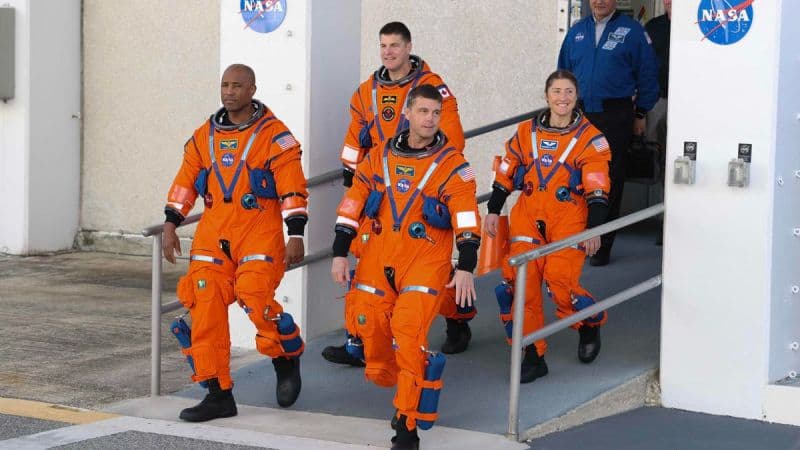
- Astronauts: Reid Wiseman, Victor Glover, Christina Koch (USA), Jeremy Hansen (Canada).
Key Facts:
- Splashdown Date: April 11, 2026
- Splashdown Location: Pacific Ocean, off southern California.
- Mission Duration: 10 days.
Distance and Space Travel:
- Farthest Distance from Earth: 252,760 miles (406,778 km) – surpassing Apollo 13 by 4,105 miles (6,606 km).
- Total Distance Traveled by Artemis II: 694,481 miles (about 1.12 million km).
- Comparative Distance: Apollo 17 traveled about 1.48 million miles (2.38 million km).
- Average Earth-Moon Distance: 384,400 km (round trip would require at least 768,800 km).
Re-Entry Dynamics:
- Re-entry Speed: 11-12 km/sec (40,000-42,000 km/h), much higher than the 26,000-28,000 km/h for missions from the ISS.
- Parachute Deployment:
- First parachute at 6 km altitude.
- Second parachute at 2 km altitude, slowing to about 200 km/h before splashdown at approximately 30 km/h.
Mission Objectives:
- Future Goals: Preparation for the first human Moon landing planned for 2028.
- Artemis Program Goal: Establish a permanent human presence on the Moon, facilitating regular missions.
Historical Context:
- First Human Moon Landing Efforts: Previous manned lunar landings under the Apollo program (1960s-1970s) include 12 astronauts on Moonwalks.
- Significance: Represents a new era in human space exploration after over fifty years since crewed lunar missions.
Conclusion:
The successful completion of Artemis II is pivotal for NASA's long-term objectives in lunar exploration, with implications for establishing human settlement on the Moon and advancing space technology.
Key Terms & Concepts
| Artemis II | NASA crewed lunar mission |
| Orion spacecraft | Carried astronauts to the Moon |
| Pacific Ocean | Landing site for splashdown |
| April 11, 2026 | Date of mission splashdown |
| 252,760 miles (406,778 km) | Furthest distance from Earth |
| 694,481 miles (about 1.12 million km) | Total distance traveled |
| Apollo 17 | Previous long-distance mission |
| 384,400 kilometers | Average distance to the Moon |
| 2028 | Tentative date for Moon landing |
| NASA | Agency behind the mission |
| International Space Station (ISS) | Comparison for re-entry speeds |
| 40,000-42,000 kmph | Re-entry speed of Orion |
| 200 km per hour |