iAspirants
NASA's OSIRIS-REx Asteroid Findings
Published on:
Share this post
Article Summary
Summary of OSIRIS-REx Mission and Findings on Asteroid Bennu
Overview of Mission
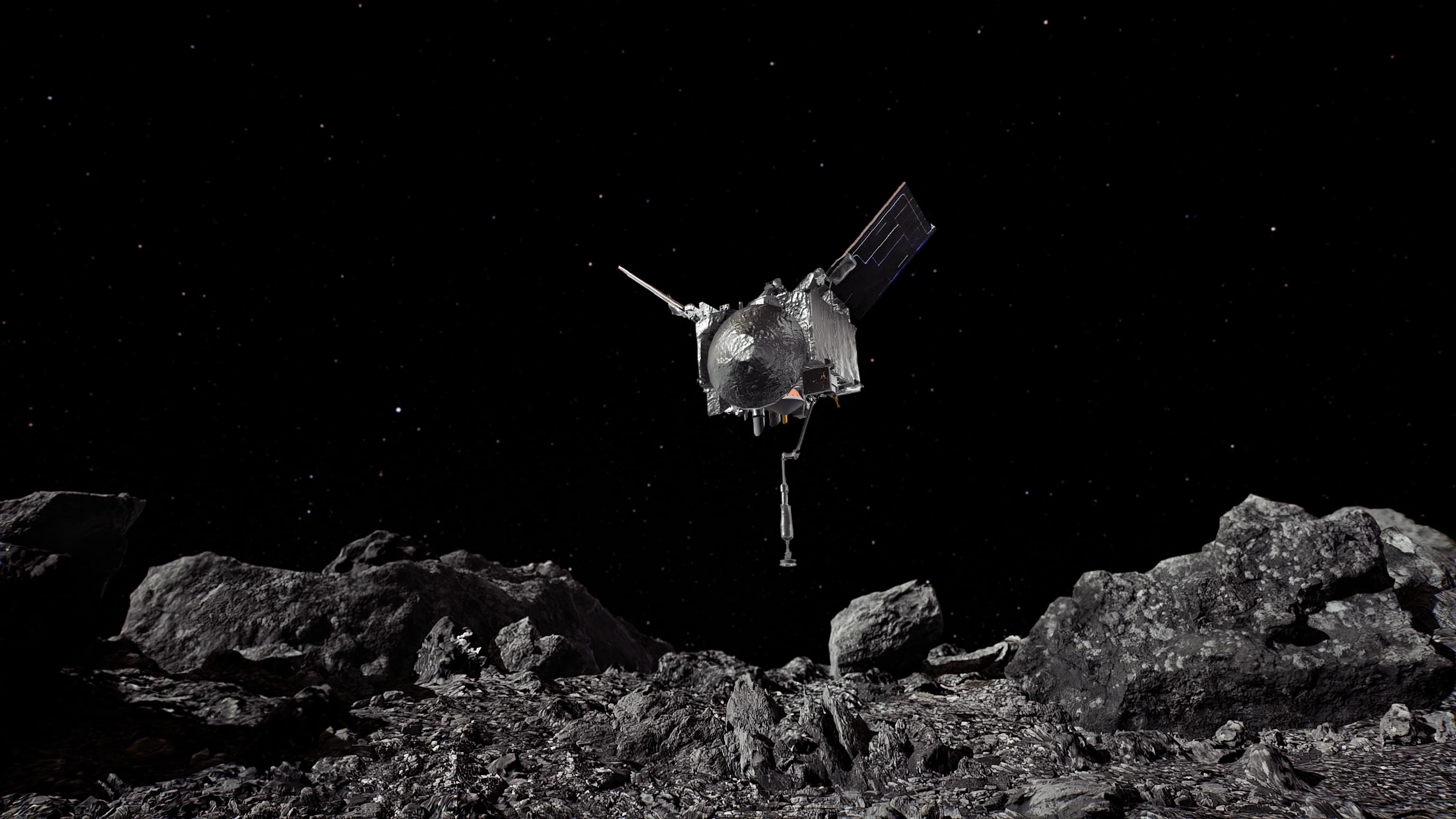
- The OSIRIS-REx mission, launched by NASA, collected samples from the asteroid Bennu in October 2020 and returned them to Earth in September 2023.
- The mission aimed to explore the formation of the early solar system and the origins of life on Earth.
Key Findings from Bennu Samples
Molecular Discovery:
- Recent studies revealed the presence of amino acids, ribose, and glucose, which are critical for forming RNA and supporting metabolic functions.
- Established the presence of essential biological molecules, fulfilling the 'RNA world hypothesis' that RNA was vital for early life development.
Unique Substances:
- Discovery of a previously unobserved 6-carbon sugar molecule in asteroid samples.
- Identification of carbamate, a nitrogen- and oxygen-rich polymer that may provide insights into the origins of life.
Astrobiological Implications:
- Findings suggest that asteroids like Bennu played a significant role in delivering organic compounds essential for life on Earth over 3.5 billion years ago.
Supernova Dust:
- High concentration of supernova-origin grains found in Bennu, indicating it was formed in a region rich in stellar material from supernova explosions.
Scientific Collaboration
- NASA collaborated with Tohoku University (Japan) for studying the samples, leveraging expertise from Japan’s previous missions, including Itokawa and Ryugu.
Environmental & Cosmic Context
- Bennu is part of the Apollo group of asteroids, with orbits intersecting with Earth’s, presenting potential future exploration opportunities.
- The asteroid's samples suggest a complex formation method involving ices and minerals that could have influenced chemical processes leading to life.
Implications for Astrobiology and Planetary Science
- Findings reinforce theories regarding the chemical origins of life and the delivery of organic compounds via celestial bodies.
Future Research Directions
- Ongoing analysis of Bennu samples will continue, focusing on the origins of presolar grains and their implications for understanding solar system formation and the processes that led to the emergence of life.
Conclusion
The returned samples from Bennu not only enhance our understanding of the formation of celestial bodies but also provide significant insights into the biological compounds that could have seeded life on Earth, contributing to ongoing discussions in astrobiology and planetary science.
Key Terms & Concepts
| NASA | Leading space research organization |
| OSIRIS-REx | Spacecraft collecting asteroid samples |
| Bennu | Asteroid studied for origins |
| Tohoku University | Collaborating research institution |
| RNA world hypothesis | Theory on early life formation |
| Itokawa | Previous asteroid sample mission |
| Ryugu | Similar asteroid to Bennu |
| Nature Geoscience | Journal publishing research findings |
| Nature Astronomy | Journal publishing related studies |
| Carbonate | Material found on Bennu |
| Volatile compound ices | Potential life-building materials |
| Hydrothermal vents | Theorized life origin location |
| Supernova dust |