iAspirants
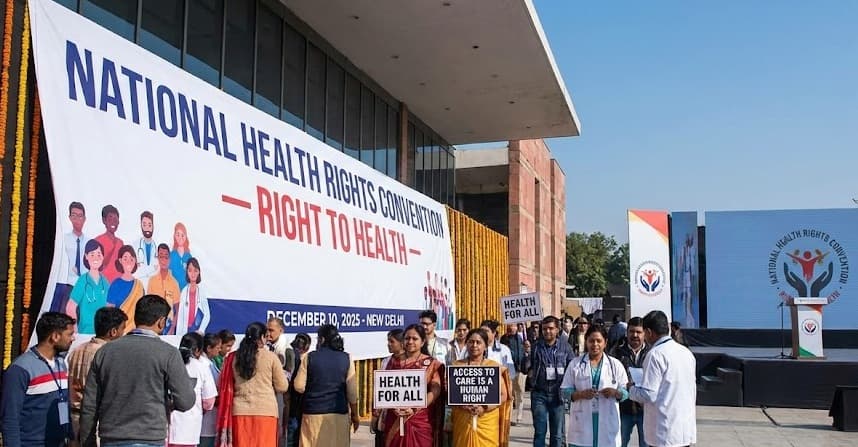
National Convention on Health Rights 2025
Published on:
Share this post
Article Summary
National Convention on Health Rights - Key Facts and Data
Event Overview:
- Dates: December 11-12, 2025
- Location: New Delhi
- Organisers: Jan Swasthya Abhiyan (People’s Health Movement – India)
- Participants: Approximately 400 health professionals, community leaders, and health activists.
Objectives:
- Address major health challenges in India.
- Advocate for the right to health as a fundamental human right.
- Discuss lessons learned from the COVID-19 crisis.
- Critique and propose alternatives to the privatization of healthcare.
Main Issues:
Privatization of Public Health Services:
- Expansion of public-private partnerships resulting in the handover of medical colleges and health facilities to private players.
- Concerns over accessibility and affordability for the Indian populace dependent on public healthcare.
Regulatory Challenges:
- Implementation of the Clinical Establishments (Registration and Regulation) Act, 2010 remains inadequate, leading to overcharging and unnecessary medical procedures in the private sector.
- Need for the proper enforcement of regulations to ensure standardized pricing and observance of the Charter of Patient’s Rights.
Financial Allocations:
- India allocates only 2% of its Union Budget to health services, with an annual per capita public health spending of approximately $25.
- High out-of-pocket expenses notwithstanding government health insurance schemes.
Wages and Employment of Health Workers:
- Ongoing struggles for health worker rights, with many facing low wages and insecure employment.
- Need for improved conditions and social security for frontline health workers highlighted.
Access to Medicines:
- Medicines account for nearly half of household medical expenditures; over 80% are outside price control.
- Discussion on regulatory gaps pertaining to pricing, proposed removal of GST on medicines, and expanding public sector production of essential medicines.
Social Determinants and Justice:
- A focus on addressing entrenched social hierarchies that impact access to healthcare for vulnerable groups, including:
- Dalits
- Adivasis
- Muslims
- LGBTQ+ persons
- Persons with disabilities
- Environmental health issues, food security, and climate change also addressed to highlight health intersectoral strategies.
Legislative Engagement:
- Coordinated activities will occur during the winter session of Parliament to engage Members of Parliament on pressing health policy issues.
25th Anniversary of Jan Swasthya Abhiyan:
- The convention coincides with the 25-year celebration of Jan Swasthya Abhiyan’s efforts in advocating for health rights and equitable health policies across diverse demographics in India.
Conclusion:
The National Convention on Health Rights aims to galvanize a movement for universal, quality, public health systems in India, promoting healthcare as a fundamental right and emphasizing a shift away from profit-driven healthcare solutions. The collective insights and strategies developed will aid in shaping future health policies to better serve the diverse needs of the Indian population.
Key Terms & Concepts
| National Convention on Health Rights | Significant health gathering |
| Jan Swasthya Abhiyan | Organizing health movement |
| Clinical Establishments (Registration and Regulation) Act | Enacted for health regulation |
| Indian Union Budget | 2% for health services |
| $25 | Annual per capita public spending |
| Public Procurement of Medicines | Advocacy for price control |
| Frontline health workers | Highlighting working conditions |
| Gender and Social Justice | Focus on health inclusion |
| Environmental Pollution | Linked to health determinants |
| 25th anniversary of JSA | Celebration of health rights legacy |