iAspirants
National Review Meeting on Water Mission
Published on:
Share this post
Article Summary
Exam-Focused Notes on the National Level Review Meeting for Water Supply and Sanitation
Overview
- The Department of Drinking Water and Sanitation (DDWS) organized a national level review meeting on Jal Jeevan Mission (JJM) 2.0 and the Solid Waste Management (SWM) Rules 2026 with District Magistrates and Collectors.
- Approximately 759 District Magistrates participated in the video conference.
- Meeting chaired by Ashok K.K. Menna, Secretary of DDWS, emphasizing reliable service delivery, efficiency, sustainability, and community ownership.
Key Policies and Schemes
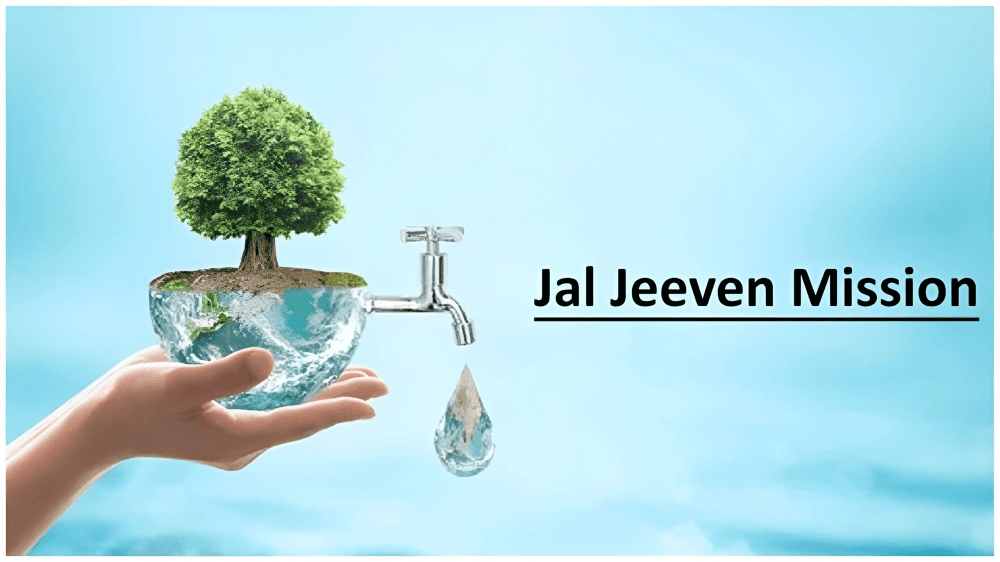
- Jal Jeevan Mission (JJM) 2.0 aims to provide sustainable drinking water services to rural areas, extended by the Central Cabinet until December 2028.
- The mission covers 5.91 lakh villages, 2.62 lakh gram panchayats, and benefits over 19.41 crore rural households, impacting approximately 96 crore people.
Constitutional References
- The meeting highlighted the role of local governance under the 73rd Amendment (Panchayati Raj) in enhancing service delivery and community participation in water and sanitation management.
Judicial Oversight
- The Supreme Court is reviewing the implementation of the SWM Rules 2026, which mandates strict compliance and effective enforcement at the district level.
Solid Waste Management (SWM) Rules 2026
- The focus is on:
- Mandatory source segregation of waste.
- Identification and registration of major waste generators.
- Scientific treatment of legacy waste.
- District Collectors have been given extensive powers for effective enforcement.
Economic Data and Targets
- Sustainable Development Goal: Universal access to safe drinking water is targeted for completion by December 2028.
- The meeting emphasized the need for adequate operational and maintenance support for water supply systems in rural India.
Community Engagement and Capacity Building
- Emphasis on community participation through:
- Su Jal India Digital Infrastructure: GIS-based tracking and monitoring.
- Training of local technical support through Su Jal Mitras and community engagement initiatives.
Environmental and Health Considerations
- The meeting stressed the importance of sanitation and waste management as critical components of public health and environmental sustainability.
Future Actions
- Regular review meetings at state levels to monitor progress and address shortcomings.
- A call for the complete coverage of tribal and particularly vulnerable tribal groups (PVTG) by 2027.
- The next state-level review will be held in Maharashtra on May 27.
Critical Components of JJM 2.0 Implementation
- Institutional Framework: Clarity in roles and responsibilities.
- Utility-Based Approach: Encourage reliable service delivery at the village level.
- Water Quality Management: Regular testing and community monitoring.
- Digital Data Management: Real-time monitoring for effective planning.
- Community Ownership: Strengthening local governance through participatory practices.
Conclusion
- The meeting reinforced the critical role of District Collectors in the successful implementation of JJM and SBM-G, highlighting the need for continuous monitoring, community engagement, and adherence to set timelines and guidelines for achieving sustainable water and sanitation services in rural India.
Key Terms & Concepts
| Swachh Bharat Mission (Gramin) | Rural sanitation program |
| Jal Jeevan Mission 2.0 | Water supply initiative |
| Solid Waste Management Rules 2026 | Waste management regulations |
| PM Janman | Tribal family support program |
| Supreme Court | Judicial oversight |
| Sustainable Development Goals | Global development targets |
| DWSM Dashboard | Monitoring water services |
| 2028 | Deadline for water mission |
| 759 | Number of participants |
| 5.91 lakh villages | Coverage of water mission |
| 19.41 crore rural families | Beneficiaries of the mission |
| 8 March to 22 March | Water Festival duration |
| 2026 |