iAspirants
North Korea's Nuclear State Position
Published on:
Share this post
Article Summary
North Korea's Nuclear Position and Military Developments
Nuclear Position Claim:
- North Korean leader Kim Jong Un reiterated that exercising the country’s nuclear status is deemed essential to address the unpredictable global security landscape.
- Described the current global situation as characterized by "unimaginable" incidents attributed to the “gangster-like” greed of hegemonic forces, specifically blaming the United States for escalating conflicts in Europe and West Asia.
U.S. and South Korea Relations:
- Kim Jong Un accused the U.S. and South Korea of increasing military threats on the Korean Peninsula by enhancing their combined nuclear capabilities, aiming primarily towards an offensive against North Korea.
Military Strategy:
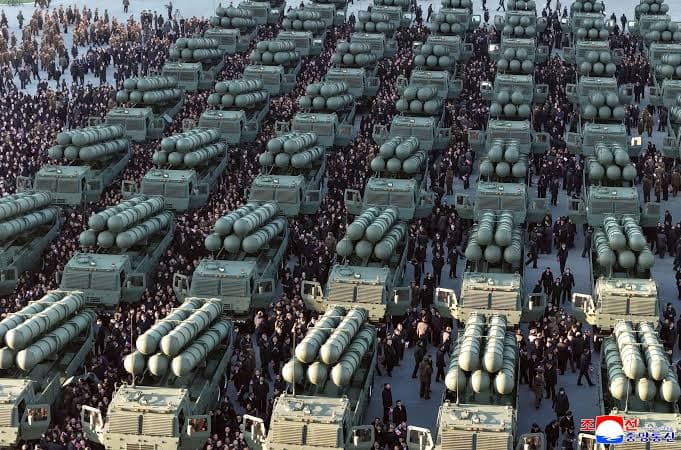
- He emphasized the need to "expand and strengthen nuclear forces" and stated that adopting this strategy is vital to confidently navigate a complex international military scenario.
- Specific details on potential actions regarding North Korea's nuclear arsenal were not disclosed.
- Ordered accelerated development of conventional weaponry and the construction of a 10,000-ton strategic guided missile cruiser.
International Sanctions:
- North Korea has violated extensive sanctions imposed by the United Nations and the United States (2006-2017), designed to prohibit the development of nuclear weapons and ballistic missile technology.
- Despite the sanctions and ongoing diplomatic negotiations by the U.S., China, and South Korea, North Korea remains adamant about retaining its nuclear capabilities.
Regional and International Concerns:
- The stance of North Korea continues to be a source of anxiety for regional powers due to its firm declaration as a nuclear state and the assertion that no amount of pressure will persuade it to relinquish its nuclear arsenal.
Global Security Implications:
- The situation showcases the challenges of nuclear non-proliferation and the complexities involved in managing regional security in East Asia amid ongoing geopolitical tensions.
These developments underline the critical nature of international relations concerning nuclear policies and military advancements in volatile regions.
Key Terms & Concepts
| Nuclear Weapons State | Self-identified nuclear status |
| KCNA | State news agency reports |
| U.S. | Accused of aggression |
| South Korea | Accused of military threats |
| 10,000-ton strategic guided missile cruiser | Military expansion project |
| United Nations sanctions | Imposed on nuclear development |
| Diplomatic efforts | Attempts to limit nuclear arms |
| Bloodshed in Europe and West Asia | Regional conflict impact |
| 2006-2017 sanctions | Restrictions on nuclear arms |