iAspirants
HomeAbout UsCurrent AffairsPrelims PYQsPricing
iAspirants
HomeAboutBlogsFAQsPricingLogin
Privacy PolicyTerms & ConditionsReturn PolicyContact Us

© 2025 iAspirants, Inc. All rights reserved.

  1. Blogs
  2. Economic and Social Development

Opium Licensing Policy for 2026-27

Published on: 18-Aug-2026

Share this post

Opium Licensing Policy for 2026-27

Article Summary

Opium Licensing Policy & Farmer Demands

Overview

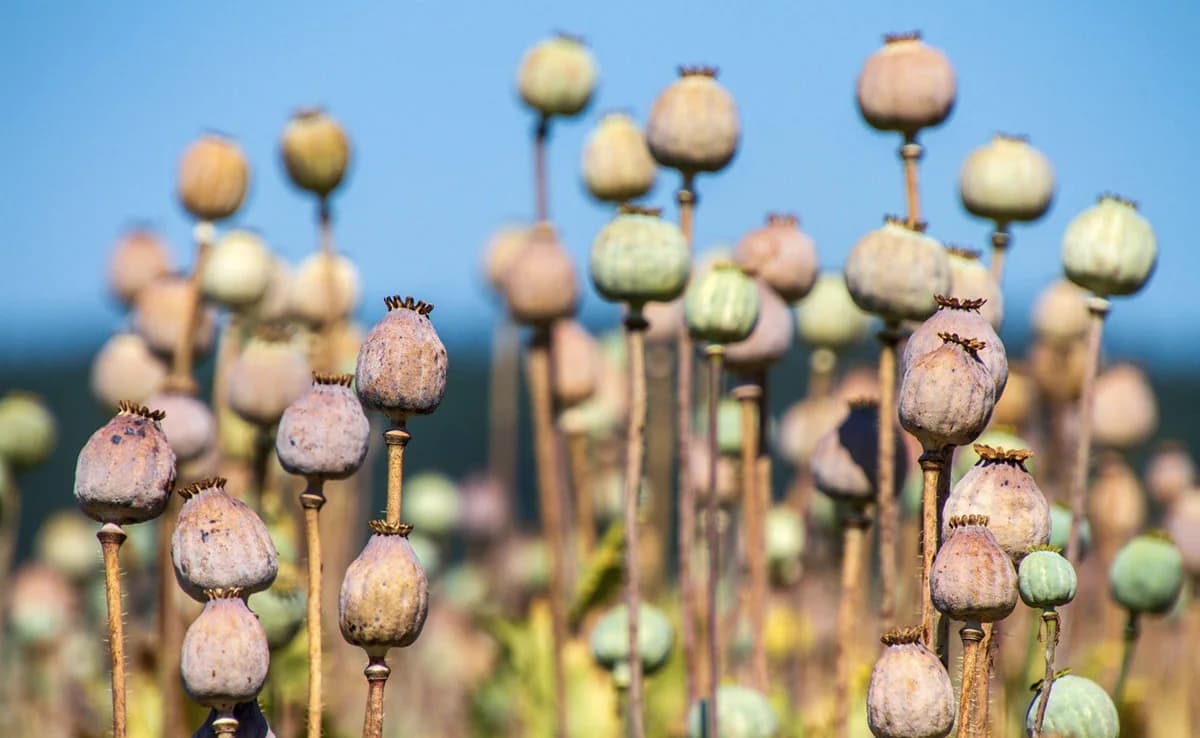
  • Farmers from Madhya Pradesh, Rajasthan, and Uttar Pradesh are advocating for a favorable opium licensing policy for the 2026-27 period.
  • Their demands were presented during a protest organized by the Bharatiya Afeem Kisan Sangharsh Samiti.

Key Demands

  1. Increase in Licenses:

    • Farmers request an increase in the number of licenses for medicinal opium cultivation.
  2. Price Adjustment:

    • Demand for the government to set the procurement price of opium at ₹1,00,000 per kg, aligning with international market rates.
  3. Reinstatement of Cancelled Leases:

    • Request to reinstate opium leases canceled since 1990 to expand cultivation further.
  4. Morphine Yield Criteria:

    • Propose that opium leases be granted based on a morphine yield of 3 kgs per hectare.
  5. Legislative Changes:

    • Farmers want poppy straws excluded from the Narcotic Drugs and Psychotropic Substances Act, arguing they are not narcotic substances.
  6. Abolition of CPS Method:

    • Request to abolish the Concentrate of Poppy Straw (CPS) method of harvesting, advocating for traditional opium cultivation practices.
  7. Price for Poppy Straws:

    • Proposal for the government to purchase poppy straws at ₹2,000 per kg for processing.

Current Licensing Context

  • According to the 2025-26 policy, around 1.21 lakh farmers are eligible for opium cultivation licenses, marking a 23.5% increase from the previous year, thus adding approximately 15,000 new farmers.

Government Response

  • The Central Government's ongoing efforts aim to ensure a stable supply of alkaloids for medical and palliative care.
  • Plans to enhance processing capacity through self-reliant measures are in place to meet the requirements for essential narcotic drugs.

Economic Data

  • The proposed price for opium at ₹1,00,000 per kg indicates a significant economic consideration for farmers, reflecting market trends.

Constitutional References

  • The policy aligns with the government's responsibility under the Directive Principles of State Policy (DPSP) to promote the welfare of farmers and ensure the availability of essential medicines.

Conclusion

  • The farmers' demands highlight the need for a balanced approach to opium cultivation that considers both economic viability for farmers and regulatory frameworks governing narcotic substances.

Key Terms & Concepts

Opium Licensing PolicyRegulates opium cultivation
₹1,00,000 per kgProposed price for opium
1.21 lakh farmersEligible for opium licenses
23.5%Increase in licenses issued
15,000 additional farmersNewly included in policy
Narcotic Drugs and Psychotropic Substances ActCurrent regulation on poppy straws
Concentrate of Poppy Straw (CPS)Harvest method under discussion
2021-22 crop yearStart of CPS promotion
AlkaloidsMedical and palliative care supply

Mind Map for UPSC Civil Services Revision

Turn UPSC Civil Services Current Affairs Into Exam-Ready Notes

Reading Economic and Social Development current affairs is half the work. Revise them with ready-made notes and test what actually stuck.

  • Daily UPSC Civil Services current affairs analysis
  • Revision notes, mind maps & MCQs
  • Prelims mock tests with instant results

Related UPSC Civil Services Current Affairs Articles

Devadula Lift Irrigation Scheme Updates
Economic and Social Development16-Aug-2026

Devadula Lift Irrigation Scheme Updates

Summary of Key Points on Devadula Lift Irrigation Scheme and Related Initiatives

Government Commitment and Timeline

  • Minister for Irrigation and Civil Supplies: N. Uttam Kumar Reddy emphasized the government's commitment to complete and operationalize Phase-VI of the Devadula Lift Irrigation Scheme by .
December 2028

Objectives and Benefits

  • Irrigation Enhancement: The project aims to bring Godavari water to the Tungaturthi constituency in Suryapet district, enhancing irrigation reliability by reducing dependence on rainfall.
  • Agricultural Stability: It is expected to stabilize the existing ayacut (irrigated area) and extend irrigation to underserved regions.
  • Overall Water Security: Integration of Godavari water with the district's irrigation network is projected to improve water management and reduce agricultural vulnerability during dry periods.

Current Agricultural Context

  • Ayacut Statistics: Suryapet district currently has an ayacut of approximately 5.82 lakh acres.
  • Water Management Priority: Drinking water needs are prioritized, with prudent use of available water resources based on reservoir levels (e.g., Nagarjunasagar, SRSP Stage-II, Musi).

Additional Irrigation Projects

  • The government is advancing three major irrigation schemes with a total investment of ₹2,392 crore aimed at providing irrigation to nearly 77,000 acres:
    1. Mahatma Gandhi Muktyala Branch Canal Lift Irrigation Scheme: ₹1,649 crore investment for 53,000 acres.
    2. Jawahar Jampadu Branch Canal: ₹292 crore investment for 10,000 acres.
    3. Rajiv Gandhi Lift Irrigation Scheme: ₹451 crore investment for 14,000 acres.

Modernization Efforts

  • An allocation of ₹396 crore has been sanctioned for the modernization of the Nagarjunasagar Left Canal and associated networks.
  • Additionally, ₹70 crore has been approved for the modernization of the Musi project canals.

Conclusion

The government's strategic focus on the Devadula Lift Irrigation Scheme and related projects aims to enhance irrigation infrastructure, increase agricultural productivity, and ensure water security for the Suryapet district, aligning with broader agricultural and water management policies.

India's Defence Sector Modernization Efforts
National and International Importance15-Aug-2026

India's Defence Sector Modernization Efforts

Defence Sector Updates - Key Points

Government Priorities and Initiatives:

  • The Indian government prioritizes modernizing armed forces and creating a self-reliant defence sector.
  • Strategic initiatives such as ‘Aatmanirbhar Bharat’ and ‘Make in India’ have been fundamental in transforming the defence production landscape.

Statistics and Data:

  • Defence Production Growth: Increased from ₹46,000 crore in 2014 to ₹1.78 lakh crore in FY 2025-26, a nearly four-fold increase.
    • Public Sector: 76% of production.
    • Private Sector: 24% of production.
  • Defence Exports: Rose from ₹686 crore in 2013-14 to an all-time high of ₹38,424 crore in 2025-26, indicating an increase of over 5,500%.
    • Total of 145 defence exporters supplying products to over 80 countries.
  • Defence Export Target: Government aims to achieve ₹50,000 crore in defence exports by 2029.
  • Defence Budget Growth: Increased from ₹2.53 lakh crore in 2013-14 to ₹7.85 lakh crore for 2026-27.
    • Capital expenditure set at ₹2.19 lakh crore.
  • R&D Allocation: Increased by 90% to ₹29,100 crore.

Judicial and Procurement Reforms:

  • Recently, the Defence Acquisition Council approved projects worth over ₹8.75 lakh crore.
  • Reforms in procurement processes include:
    • Doubling financial powers of field commanders.
    • Facilitation of over ₹1.25 lakh crore procurement through revenue routes to promote indigenisation.

Technological Achievements:

  • Successful trials of several advanced military systems including:
    • Tactical Advanced Range Augmentation System.
    • MIRV-equipped Advanced Agni missile.
    • Long-Range Land Attack Cruise Missile.
    • RudraM-II Missile.
    • Naval Anti-Ship Missile-SR.
    • Pinaka Long-Range Guided Rocket.
  • Successful test of a hypersonic missile technology featuring an active-cooled full-scale scramjet combustor operational for over 1,200 seconds.
  • The first successful test of the Kusha long-range surface-to-air missile.

Social and Infrastructure Initiatives:

  • Focus on border infrastructure development.
  • Welfare programs for serving and retired personnel.
  • Enhanced participation of women in the armed forces, evidenced by the commissioning of the** first batch of women cadets** from the National Defence Academy.
  • Recognition of the all-women tri-service circumnavigation expedition, ‘Samudra Pradakshina’.

Cultural Milestone:

  • 2026 marks 150 years since the composition of ‘Vande Mataram’; a call to celebrate national pride and contribute toward nation-building and the vision of Viksit Bharat.

This summary encapsulates the significant developments in India’s defence sector, reflecting the government's strategic focus on self-reliance, modernization, and international competitiveness.

Indian Army's New Defence Contracts
National and International Importance15-Aug-2026

Indian Army's New Defence Contracts

Summary of Defence Procurement Contracts

Overview:

  • The Ministry of Defence (MoD) signed contracts worth ₹1,577 crore on August 14, 2026, with Tata Advanced Systems Ltd (TASL) and NIBE Ltd for the Indian Army.

Key Details:

  • Contracts Signed:

    • TASL: ₹1,013.77 crore for 54 loiter munition systems and 540 munitions.
    • NIBE Ltd: ₹563.36 crore for 30 systems and 300 munitions.
  • Procurement Specifications:

    • Total of 84 loiter munition systems with a range of up to 100 km.
    • Enhancement of Army’s precision-strike capability, previously relying on BrahMos missiles for ranges beyond 40-50 km.
    • 60% overall indigenous content mandated:
      • Minimum of 50% in materials, components, and software.

Strategic Importance:

  • The loiter munition systems will bridge existing capability gaps in precision-strike operations for the Indian Army.
  • The move aligns with the government's Aatmanirbhar Bharat initiative, emphasizing indigenous defence manufacturing.
  • Operational Context:

    • A limited number of artillery regiments have operationalised loiter munition systems under Phase-I.
    • Expansion plans will equip more units, enhancing overall operational effectiveness.

    Delivery Timeline:

    • Scheduled delivery within 12 months from the date of advance payment.

    Additional Information:

    • Policy Framework:
      • Contracts processed under the ‘Buy Indian’ category through Fast Track Procedure facilitate quicker acquisitions for enhanced military capabilities.

    Relevant Constitutional and Policy References:

    • Aatmanirbhar Bharat Mission: A governmental initiative aiming to boost self-reliance in manufacturing and reduce dependency on foreign imports in the defence sector.

    This procurement underscores the government's commitment to bolstering indigenous capabilities while enhancing military readiness, reflecting a strategic shift towards self-sufficiency in defence production.