iAspirants
Opposition to Sewage Treatment Plant Plans
Published on:
Source: The Hindu
Share this post
Article Summary
Summary of Key Points on Sewage Treatment Plant Controversy in Valayambattu Village
Location & Demographics:
- Valayambattu Village, Tirupattur District
- Under Alangayam Panchayat Union
- Population: Over 4,000 families
- Livelihood: Primarily agriculture (crops like paddy, green chilli, brinjal, groundnuts, greens, and mango) and weaving.
Proposed Project:
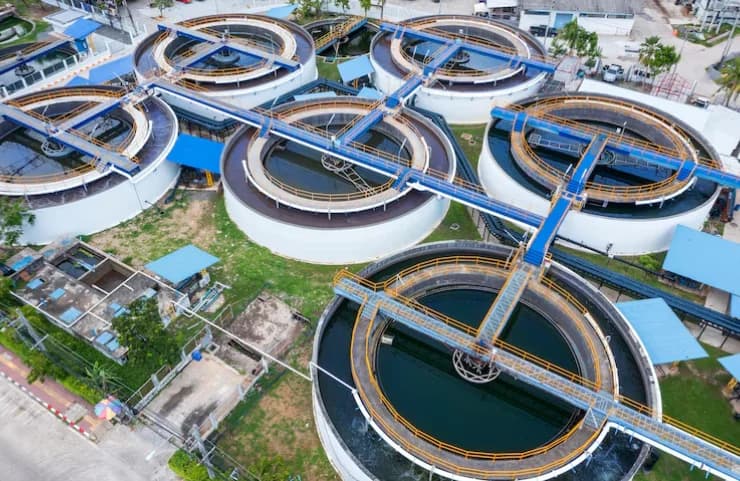
- Sewage Treatment Plant (STP)
- Proposed site: 10-acre plot identified near the Palar River, close to Valayambattu village.
- Intended to treat sewage from Vaniyambadi Municipality, located about 2 km away.
- Aim: To end illegal sewage discharge into existing stormwater drains, which currently pollute lakes and ponds.
Community Concerns:
- Groundwater Pollution: Residents fear the STP will contaminate groundwater and affect the quality of the water bodies.
- Impact on Agriculture: Concerns that the STP's proximity to farming areas will harm water quality and thus affect agricultural productivity in the surrounding villages.
- Alternative Proposals: Residents suggest relocating the STP to a site away from agricultural and water bodies, advocating for its use as grazing land or for rainwater storage to prevent flooding.
Municipal Justification:
- Cost Constraints: Vaniyambadi municipal officials faced challenges finding affordable land within municipal limits, leading to the choice of the Valayambattu site.
- Sewage Management Improvement: The STP is projected to enhance wastewater management and recycle water for irrigation of public spaces.
Environmental and Agricultural Context:
- Water Bodies: The village has several water bodies and is situated near the confluence of Kallar and Palar rivers.
- Risk of Inundation: Concerns expressed over housing inundation during monsoon if land is used for STP instead of rainwater storage.
Stakeholder Perspectives:
- Residents' Stance: Advocacy for environmental assessments and alternative site identification to mitigate potential risks to agriculture and water quality.
- Municipal Officials' Perspective: Framing the STP as a necessary measure for wastewater management and public health improvement.
Summary of Implications:
- Environmental Impact: The situation raises critical questions about balancing urban development, environmental sustainability, and agricultural needs.
- Community Engagement: Highlights the importance of involving local communities in decision-making processes regarding infrastructure that affects their livelihoods and environment.
Conclusion:
The proposed STP in Valayambattu presents significant implications for environmental health, agricultural sustainability, and community welfare. Balancing civic needs with ecological concerns remains a pressing issue in urban planning.
Key Terms & Concepts
| Sewage Treatment Plant (STP) | Proposed facility for sewage management |
| Valayambattu village | Location affected by STP |
| Vaniyambadi municipality | Responsible for STP proposal |
| Palar River | Water body near proposed STP |
| Alangayam Panchayat Union | Governance body of Valayambattu |
| National Highway 48 (NH 48) | Route near the village |
| 10-acre plot | Land identified for STP |
| Household wastewater | Wastewater managed by STP |
| Over one lakh residents | Population of Vaniyambadi |
| Recycled water | Water for irrigation on roads |
| Excess rainwater | Water to be stored during monsoon |
| Existing stormwater drains | Current sewage discharge route |