iAspirants
Orangutans Rescued and Repatriation Efforts
Published on:
Source: Indian Express
Share this post
Article Summary
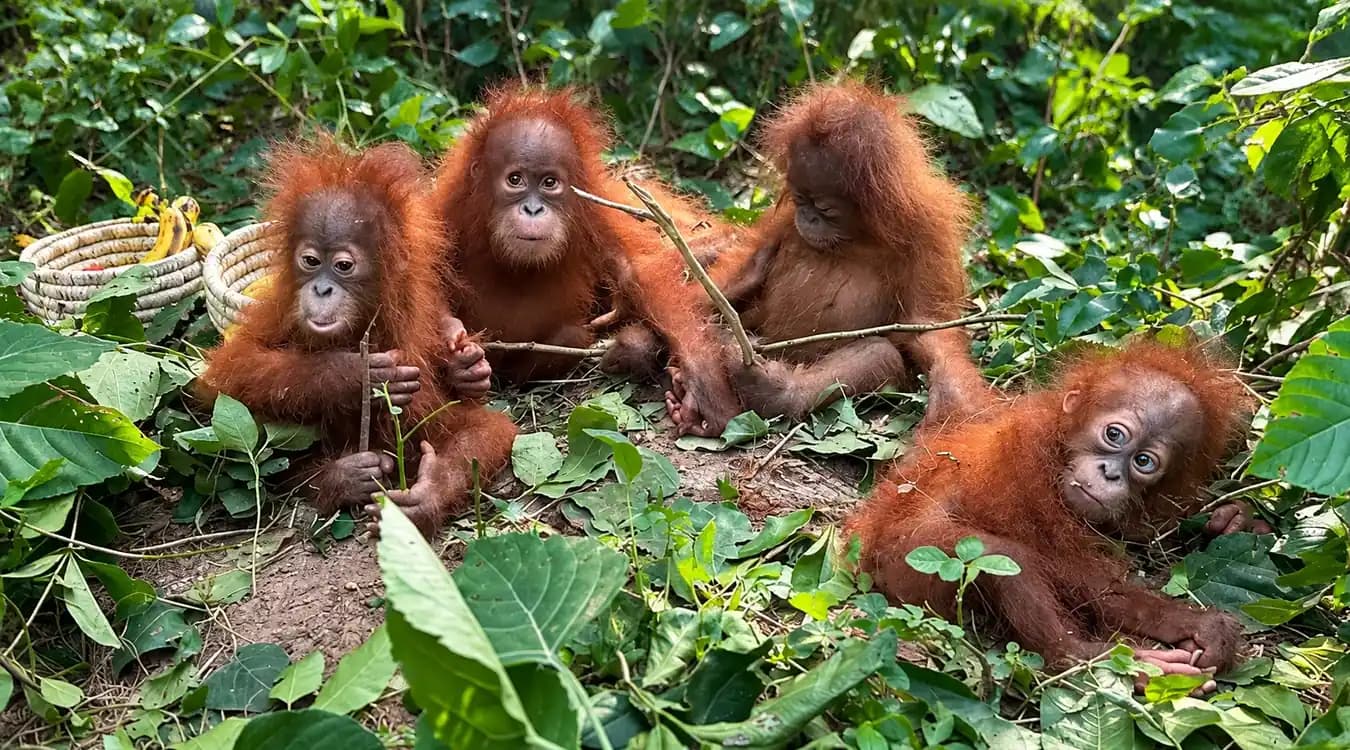
Incident Overview: Five baby orangutans were rescued from a forest in Balasore, Odisha, suspected to be trafficked from Indonesia, particularly Sumatra. The Indonesian Ministry of Forestry is now preparing for potential repatriation once investigations confirm their origin.
International Cooperation: Indonesia's authorities are coordinating under the CITES (Convention on International Trade in Endangered Species of Wild Fauna and Flora), a treaty that regulates global trade in wild species to protect endangered wildlife, including orangutans listed under Appendix I.
Findings: Initial assessments suggest the orangutans are critically endangered, with their native habitat being the rainforests of Indonesia and Malaysia. According to the IUCN Red List, oranugans are classified as "critically endangered."
Judicial and Procedural Protocols: All decisions related to custody and transfer of the orangutans must comply with Indian judicial procedures, specifically requiring authorization from the competent judicial court as stated by Sushil Kumar Awasthi, Director General of Forests, Ministry of Environment, Forest and Climate Change.
Investigation for Wildlife Trafficking: The investigation into the trafficking case involves checking the suspected trafficking route, entry points, transit countries, documentation, and more. Indonesia's Directorate General of Forestry Law Enforcement has been involved in this matter.
Technical Preparations for Repatriation: If confirmed to be from Indonesia, the repatriation process will include health examinations, quarantine, genetic identification, and animal welfare considerations, as stated by Ristianto Pribadi from Indonesia’s Ministry of Forestry.
Cross-border Legal Framework: CITES compels Indonesia to take measures aligned with its national laws for relevant species repatriation, demonstrating international legal obligations in wildlife conservation.
DNA Testing: To accurately determine the origin and status of the orangutans, DNA samples will be procured. This examination is vital for identifying whether these individuals were captured from the wild or previously kept in captivity.
Wildlife Conservation: The Wildlife Trust of India emphasizes the moral responsibility of India to repatriate these animals to their possible origin, reflecting on India's role in international wildlife conservation efforts.
CITES Convention: Established over 50 years ago, CITES aimed to ensure that international trade in wild animals and plants does not threaten their survival. It underscores the importance of sustainable and traceable trade practices.
This summary encapsulates the key facts and procedural insights relevant to the ongoing case of the rescued orangutans and the implications for wildlife trafficking and international cooperation.
Key Terms & Concepts
| CITES | Regulates international wildlife trade |
| Indonesia | Origin country of orangutans |
| Balasore district | Location of orangutan rescue |
| Sumatra | Suspected origin of species |
| Wildlife Trust of India | Conservation organization involved |
| International Union for Conservation of Nature (IUCN) | Provides conservation status |
| Orangutans | Critically endangered species |
| Judicial authorization | Necessary for transfer decision |
| DNA examination | Required for species identification |