iAspirants
Ozone Pollution: A Growing Concern
Published on:
Share this post
Article Summary
Air Quality and Ozone Pollution in India
Pollutants Analyzed: The article discusses air quality beyond PM2.5 and PM10, highlighting surface ozone as a significant emerging hazard during summer months.
Health Risks: Surface ozone is a potent greenhouse gas causing serious health risks and harming agricultural productivity.
Pollution Sources:
- Traditional sources include vehicular emissions, power plants, and industrial activities.
- Biogenic volatile organic compounds (BVOCs) emitted from certain tree species also contribute to ozone formation under high temperatures and sunlight.
Key Findings:
- Lutyens’ Delhi has a high presence of BVOC-emitting vegetation, exacerbating ozone pollution levels.
- The National Institute of Advanced Studies (NIAS) data indicates ozone levels exceeding the permissible standard of 50 ppb on 91% of summer days in 2019.
- A correlation exists between higher temperatures and elevated BVOC emissions leading to increased surface ozone.
Climate Impact:
- The phenomenon of La Niña transitioning could lead to Super El Niño conditions, which may enhance atmospheric circulation and exacerbate ozone pollution.
- Climate change is expected to increase the frequency and severity of high-ozone days, termed as the “climate penalty” on air quality.
Policy Recommendations:
- Integration of vegetation-sensitive urban planning is crucial for effective ozone mitigation.
- Climate change mitigation and air pollution control should be interlinked rather than treated as separate agendas.
- Fundamental approaches should include a shift towards science-based policymaking, decisive emission reductions, and heightened public awareness on air quality issues.
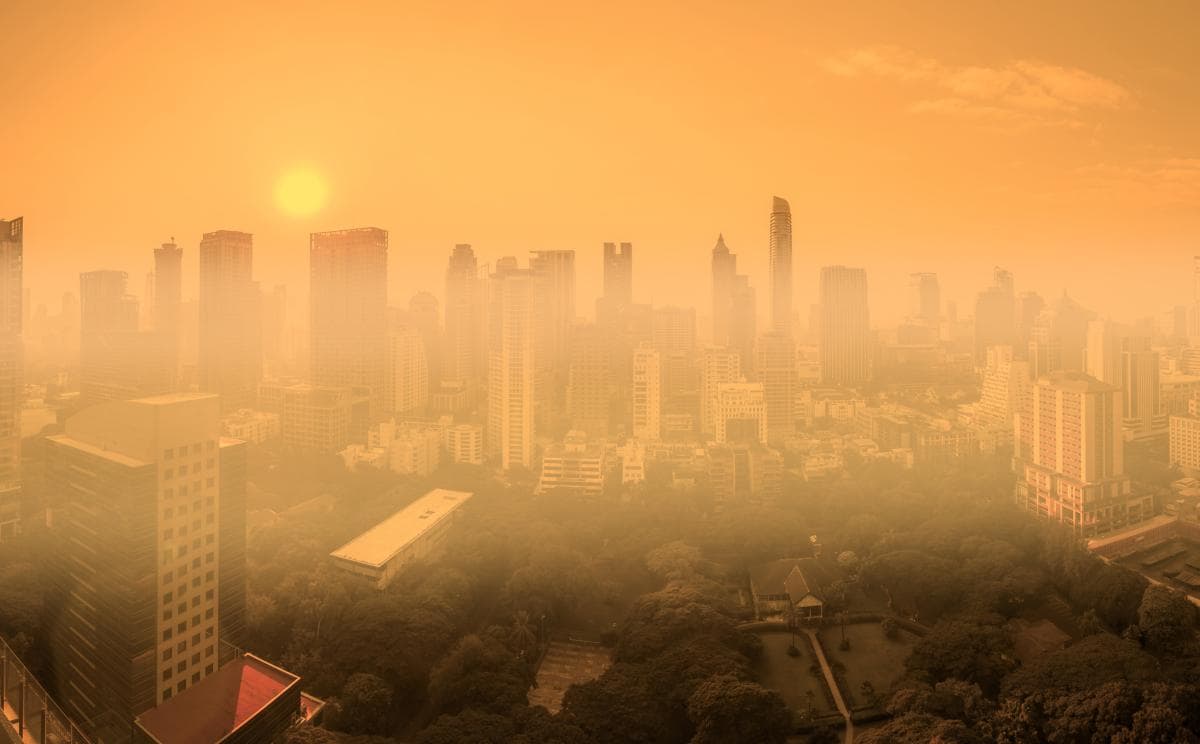
Future Actions: Ongoing discussions urge closer examination of air quality dynamics, especially considering the deceptive appearances of clear skies which can mask underlying ozone pollution threats.
Economic and Environmental Context:
- Air quality management strategies can potentially lead to reductions in both greenhouse gas emissions and air pollutants, contributing to public health and agricultural resilience.
Conclusion: The article emphasizes the need for a proactive approach to air quality management in urban areas, particularly under changing climate conditions where ozone could become a major health concern.
Key Terms & Concepts
| PM2.5 and PM10 | Particulate matter indicators |
| Surface Ozone | Hazardous air pollutant |
| National Institute of Advanced Studies (NIAS) | Conducted ozone analysis |
| Biogenic Volatile Organic Compounds (BVOCs) | Natural ozone contributors |
| Lutyens’ Delhi | High BVOC-emitting area |
| Ozone levels in 2019 | Exceeded 50 ppb standard |
| La Niña and Super El Niño | Climate pattern influences |
| Climate penalty | Impacts air quality |
| Decadal analysis | Evaluated BVOC influence |