iAspirants
Pakistan's Diplomatic Transformation Post-Conflict
Published on:
Share this post
Article Summary
Summary of Key Points:
Diplomatic Shifts and Pakistan's Rehabilitation:
- Pakistan's international standing has improved significantly post-Operation Sindoor, gaining support from Western governments, Gulf monarchies, and Asian powers.
- US President Donald Trump has praised Pakistan's leadership, hosting military leader Asim Munir and Prime Minister Shehbaz Sharif, who plans to nominate Trump for a Nobel Peace Prize again.
- Pakistan has been invited to play a role in the Gaza peace process, highlighting its newfound geopolitical significance.
Regional Dynamics:
- Pakistan previously faced isolation, with deteriorating relations in the Gulf and concerns over the viability of the China-Pakistan Economic Corridor (CPEC) due to security issues.
- Insurgencies in Balochistan threatened Chinese investments, and India successfully marginalized Pakistan in international forums.
Response to Operation Sindoor:
- India’s aim was to label Pakistan as a terrorist sponsor and gain international support for its military actions; however, the global response called for restraint and de-escalation, leading to a setback for India's narrative.
- Turkey, Azerbaijan, and China publicly supported Pakistan in light of the conflict.
International Financial Support:
- Despite objections from India, Pakistan secured financial endorsements:
- The IMF overlooked India's attempts to block a bailout.
- The World Bank announced a $40 billion loan package.
- The Asian Development Bank extended an $800 million credit line.
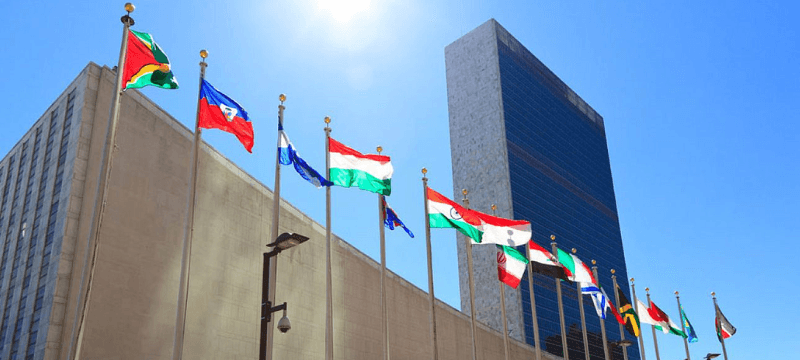
- Pakistan gained a seat on the UN Security Council.
Gulf Relations:
- Pakistan's relations with key Gulf nations improved, with Kuwait lifting long-standing visa restrictions and increased aid from Saudi Arabia, Qatar, and the UAE.
- Saudi Arabia signed a mutual defense pact with Pakistan, shifting its status to a critical defense ally in the Muslim world.
Geopolitical Implications for India:
- India faces challenges with the resurgence of Pakistan as its relations with Russia and the US improve.
- There is a shift in the strategic geometry of South Asia, complicating India's efforts to assert dominance.
- Enhanced US-Pakistan ties challenge India's narrative of portraying Pakistan solely as a terrorism-enabling state.
Domestic Challenges for Pakistan:
- The sustainability of Pakistan's diplomatic gains is contingent upon stabilizing its economy and addressing domestic insurgencies, including threats from the Tehrik-e-Taliban Pakistan and the Balochistan Liberation Army.
- Pakistan must manage regional security dynamics to retain its renewed influence and strategic partnerships.
Conclusion:
- The geopolitical landscape of South Asia is changing, with Pakistan reemerging as a pivotal player. This poses challenges for India's aspirations in global governance and its influence in the region. Effective management of domestic issues will be crucial for Pakistan to maintain its newfound status.
Key Terms & Concepts
| Operation Sindoor | Military conflict triggering changes |
| IMF | Provided bailout support to Pakistan |
| World Bank | Announced $40 billion loan package |
| Asian Development Bank | Extended $800 million credit line |
| UN Security Council | Pakistan won election seat |
| Saudi Arabia | Signed mutual defense pact |
| Kuwait | Lifted visa restrictions |
| United Arab Emirates | Restored aid to Pakistan |
| China-Pakistan Economic Corridor (CPEC) | Strategic economic partnership |
| Tehrik-e-Taliban Pakistan | Insurgent group threatening stability |
| Balochistan Liberation Army | Insurgent group posing risks |
| JF-17 fighter jets | Acquisition of advanced technology |