iAspirants
HomeAbout UsCurrent AffairsPrelims PYQsPricing
Login
iAspirants
HomeAboutBlogsFAQsPricingLogin
Privacy PolicyTerms & ConditionsReturn PolicyContact Us

© 2025 iAspirants, Inc. All rights reserved.

  1. Blogs
  2. History

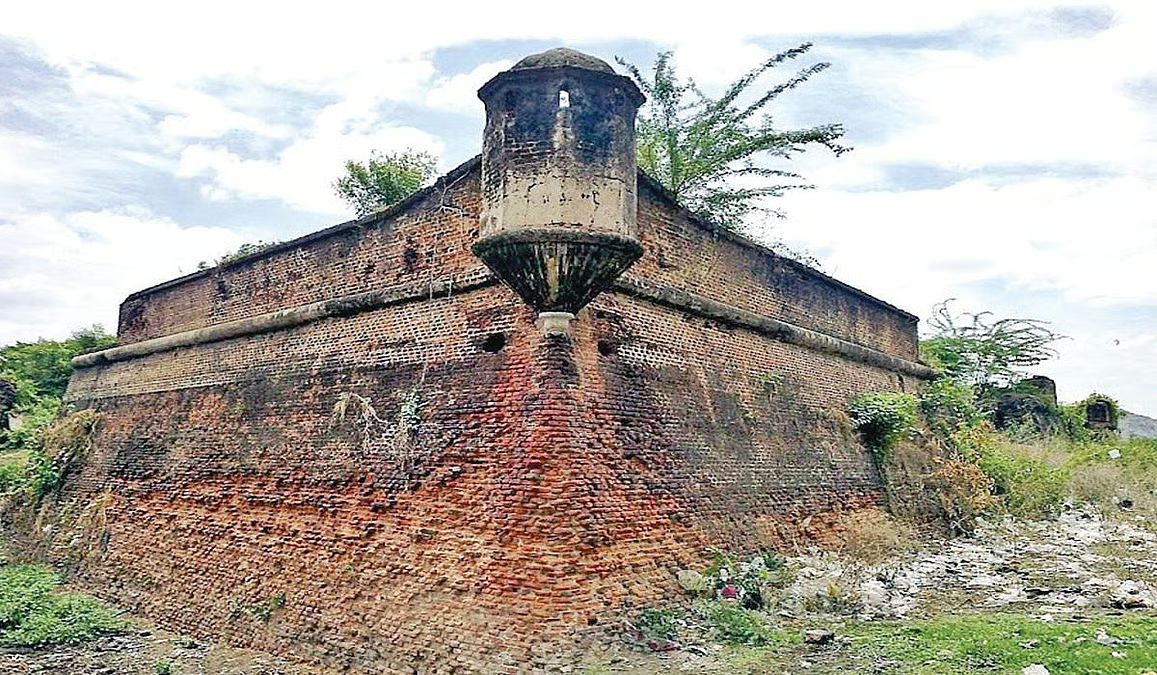
Preservation of Wandiwash Fort Monument

Published on: 20-Aug-2026

Share this post

Preservation of Wandiwash Fort Monument

Article Summary

Summary Notes on the Preservation of Wandiwash Fort

  1. Historical Significance:

    • Battle of Wandiwash (1760 AD): Marked the decline of French influence and the rise of British dominance in South India.
    • Fort is believed to date back to the Vijayanagar Empire (13th-14th century).
    • Originally captured by Hyder Ali around 1750 AD from the British, later recaptured.
  2. Current Status:

    • The Fort is located in North Arcot district, Tamil Nadu, and is in a state of neglect despite being a historic site.
    • The site encompasses approximately one square mile and features intact ramparts, with a significant entrance.
  3. Government Action:

    • The Tamil Nadu Government has classified the Fort as a monument of State importance.
    • Funding has been sanctioned for the preservation and protection of the Fort.
  4. Cultural Heritage:

    • The Fort represents a significant cultural and historical landmark, reflecting the colonial conflicts between the British and the French.
    • It serves as a reminder of the geopolitical dynamics during the 18th century in India.
  5. Judicial and Administrative Context:

    • The preservation initiative aligns with broader governmental policies aimed at protecting and promoting historical monuments within the state.

This summary encapsulates the key historical and governmental elements regarding the Fort at Wandiwash, emphasizing its significance and the actions taken for its preservation.

Key Terms & Concepts

Wandiwash FortHistoric site for preservation
Battle of WandiwashDecisive battle in 1760
Tamil Nadu GovernmentSanctioned preservation funds
Hyder AliCaptured Fort around 1750
Count de LalliFrench leader in battle
Sir EyrecooteBritish leader in battle
Vijayanagar periodHistorical significance era
1760 ADYear of significant battle
1750 ADYear of British capture

Mind Map for UPSC Civil Services Revision

Turn UPSC Civil Services Current Affairs Into Exam-Ready Notes

Reading History current affairs is half the work. Revise them with ready-made notes and test what actually stuck.

  • Daily UPSC Civil Services current affairs analysis
  • Revision notes, mind maps & MCQs
  • Prelims mock tests with instant results

Related UPSC Civil Services Current Affairs Articles

Exhibition of Old Indian Paintings
Art and Culture19-Aug-2026

Exhibition of Old Indian Paintings

  • Exhibition Overview: An exhibition of Old Indian Paintings and Textiles was inaugurated by Her Highness the Maharanee Gaekwar of Baroda in Bombay. This event is organized by a newly formed society aimed at promoting Indian art.

  • Collection Chronology: The presented collection spans from the second century B.C. to the early 19th century, showcasing India's rich artistic history.

  • Textiles Significance: The textiles exhibited are noted for their variety and excellent design. They exemplify the craftsmanship of Indian looms, a traditional art form that is diminishing.

  • Epics Illustrations: A highlight of the exhibition includes illustrations from India's two great epics lent by the Baroda Museum. These are original signed paintings from various artists, demonstrating different conventions, methods, and styles prevalent during the Court of Akbar.

  • Cultural Importance: The event signifies the preservation and appreciation of Indian art, reflecting the importance of cultural heritage and historical craftsmanship in contemporary society.

  • Institutional Support: The involvement of the Baroda Museum signifies institutional support for the arts, which is crucial for the preservation of cultural heritage.

  • This summary captures the essence of the exhibition and its contributions to the appreciation of Indian art and culture.

    Honoring India's Unsung Freedom Heroes
    Polity and Governance15-Aug-2026

    Honoring India's Unsung Freedom Heroes

    Independence Day and the Need for a National Freedom Museum

    • Historical Significance: India’s freedom struggle is a pivotal chapter in world history, involving sacrifices from diverse freedom fighters, revolutionaries, and social reformers over a span of decades.
    • Collective Memory: There's a concern regarding the fading memory of freedom fighters among the younger generation, indicating a need for comprehensive preservation of history beyond textbooks.
    • Proposed Initiative:
      • Call for the establishment of a National Museum of India’s Freedom Movement to celebrate and preserve the history of India's struggle for independence.
      • States are encouraged to create regional museums or galleries to honor local heroes and struggles.
    • Museum Features:
      • Potential to include original documents, photographs, personal belongings of revolutionaries, and interactive educational exhibits.
      • The goal is to create a living testament to the sacrifices made for India's independence, facilitating learning and remembrance for future generations.

    Border Issues with China

    • Current Context: Growing concerns over the India-China border situation, highlighted by recent actions from the Arunachal Pradesh Students’ Union (AAPSU) to assess alleged Chinese activity in Upper Subansiri.
    • Government Accountability: There's a demand for transparency from the government regarding border security and military engagement, contrasting the high-profile diplomatic rhetoric with actual conditions and responses on the ground.
    • Public Communication: Urging the government to provide clear communications and updates regarding territorial integrity.

    Politics of Language

    • Linguistic Diversity: The concern over the politicization of English indicates a broader issue of access to global communication and modern technology for millions of Indians.
    • Inclusive Language Policy: Advocates suggest that promoting Indian languages should not come at the expense of English and that both can coexist to foster educational and cultural enrichment.

    Broader Implications

    • Cultural Preservation: Establishing national and regional museums could amplify collective identity and act as a foundation for future societal progress.
    • Patriotism Through Accountability: Engaging citizens in conversations about national security and governance reflects a nation's commitment to transparency, crucial for a democratic society.
    • Language as a Tool: Recognizing the value of language education in promoting growth and inclusion is vital for a nation's developmental trajectory.

    This concise presentation of India's national context underscores the importance of preserving history, ensuring border security, and promoting inclusive language policies for a robust societal framework moving forward.