iAspirants
Protests Against Ken-Betwa River Project
Published on:
Share this post
Article Summary
Summary of Key Facts and Developments Related to the Ken-Betwa River Linking Project and Protests in Madhya Pradesh
Protest Details:
- Activist Amit Bhatnagar led an 18-day hunger strike against the Ken-Betwa river linking project, advocating for better rehabilitation of affected individuals.
- The project amounts to ₹44,000 crore and has been a focal point of protests by tribal populations in Chhatarpur and Panna districts since July 4, 2026.
Government Assurance:
- The government has agreed to include those missing from the rehabilitation process, as indicated by Chhatarpur Collector Parth Jaiswal.
- Dialogues between the administration and protestors are ongoing, with assurances to form a team to address complaints.
- The administration will review compensation claims to ensure all affected individuals are included.
Legal and Constitutional Context:
- The protests raise issues of environmental rights and social justice, aligning with Article 21 of the Indian Constitution which guarantees the right to life and personal liberty.
- The protests reflect the need for balanced development that accommodates the rights of marginalized tribal communities.
Activism and Symbolic Protest:
- Protestors employed symbolic gestures such as tying nooses around their necks and lying on makeshift pyres to draw attention to their demands for justice and proper compensation.
- Bhatnagar has launched a “Nyay Satyagraha” (struggle for justice) to continue advocating for those affected.
Health and Safety Concerns:
- Bhatnagar’s hunger strike was interrupted when police forcibly evacuated the protest site on July 19, due to rising water levels in the Barana river after heavy rains.
- Post-intervention, Bhatnagar was admitted to Chhatarpur district hospital for medical observation.
Future Actions:
- Bhatnagar intends to monitor the fulfillment of government promises and is open to launching further phases of agitation if necessary.
- His commitment includes conducting on-ground visits to villages to ensure effective communication of promises to the affected individuals.
Background of the River Linking Project:
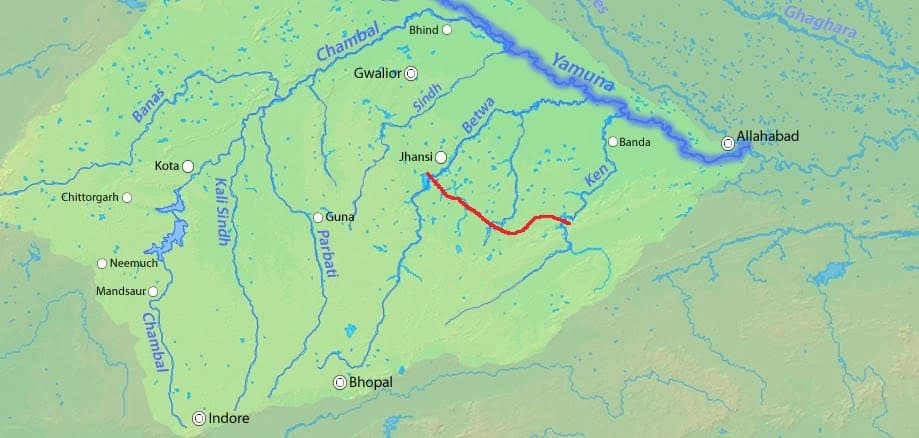
- The Ken-Betwa river linking project is part of a broader national initiative aimed at interlinking rivers to facilitate irrigation and water supply, addressing challenges in water scarcity and agricultural productivity.
Economic Implications:
- The project's budget of ₹44,000 crore signifies major financial investments but raises questions regarding fiscal allocations and their impact on local communities, especially in terms of social welfare.
Environmental and Social Impact:
- The protests highlight ongoing environmental concerns regarding river interlinking projects and their impact on local ecosystems and communities.
Recent Related Events:
- Bhatnagar's case gained national attention, paralleling recent actions against other activists, indicating a broader pattern of state response to dissent.
Conclusion: The developments surrounding the Ken-Betwa river linking project underscore the complex interplay between government developmental policies, community rights, environmental sustainability, and the integrity of socio-economic frameworks in India.
Key Terms & Concepts
| Ken-Betwa River Linking Project | Government project facing protests |
| ₹44,000 crore | Estimated cost of the project |
| Madhya Pradesh Government | State government overseeing project |
| Barana River | Location of protest site |
| Nyay Satyagraha | Movement for justice initiated |
| Chhatarpur district | Location of protests and hunger strike |
| Jai Kisan Sangathan | Activist group leading protest |
| Police action on July 19 | Dismantling protest site |
| People affected by project | Target group for compensation |
| Compensation process | Administrative response to protests |