iAspirants
Radio-tagging Olive Ridley Turtles Insights
Published on:
Share this post
Article Summary
Olive Ridley Sea Turtles Radio-Tagging Study – Key Facts and Data:
Research Findings:
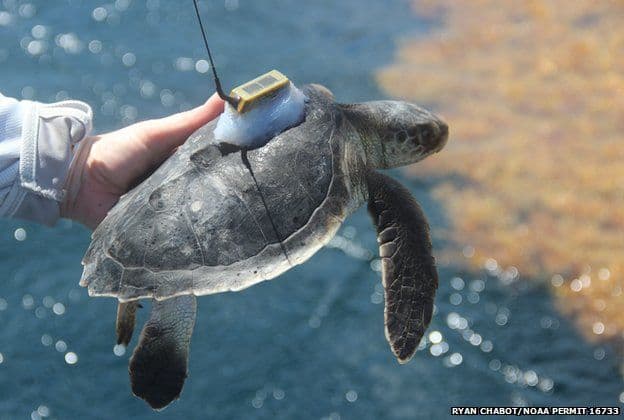
- The radio-tagging study monitored Olive Ridley sea turtles along the Chennai coast, revealing nesting-site fidelity.
- One female turtle, named ‘Kayal’, has demonstrated this fidelity by returning to the same nesting shore three times in a single nesting season.
Data on Tagged Turtles:
- Kayal, tagged and released at Besant Nagar, laid a total of 389 eggs.
- Another tagged turtle, ‘Megalai’, returned twice to nest and laid 211 eggs.
Significance of Study:
- The findings contribute to understanding the nesting behavior of Olive Ridley sea turtles, which is critical for conservation efforts.
- This research is essential in the context of the Wildlife Protection Act, 1972, which aims to protect endangered species, including marine turtles.
Conservation Context:
- Olive Ridley turtles are recognized under Schedule I of the Wildlife Protection Act, reinforcing the need for protective measures due to their vulnerable status.
Ecological Importance:
- Nesting-site fidelity might indicate the quality and suitability of nesting habitats, which is crucial for the species’ reproductive success and population sustainability.
Broader Implications:
- Understanding nesting patterns can aid in formulating effective conservation strategies and policies related to marine biodiversity and habitat protection.
The study exemplifies the intersection of science and conservation policy, emphasizing ongoing research to protect vital species.
Key Terms & Concepts
| Olive Ridley sea turtles | species observed for nesting |
| Chennai coast | location of study |
| Kayal | satellite-tagged turtle |
| Megalai | another turtle observed |
| 389 eggs | total eggs laid by Kayal |
| 211 eggs | total eggs laid by Megalai |
| February 25, 2026 | publication date of findings |