iAspirants
Rajasthan's New Hill Conservation Regulations
Published on:
Share this post
Article Summary
Summary of Key Points
Legislation and Regulations
- Model Regulations for Conservation of Hills in Urban Areas, 2024:
- Approved in April 2025, replacing the 2018 law.
- Classifies hills into three categories based on slope:
- Category C: Slopes over 15 degrees - Non-developable.
- Category B: Slopes between 8 and 15 degrees - Allows low-density activities (e.g., resorts, wellness centers) but may endanger conservation.
- Category A: Slopes up to 8 degrees - Generally align with urban planning frameworks.
Environmental Concerns
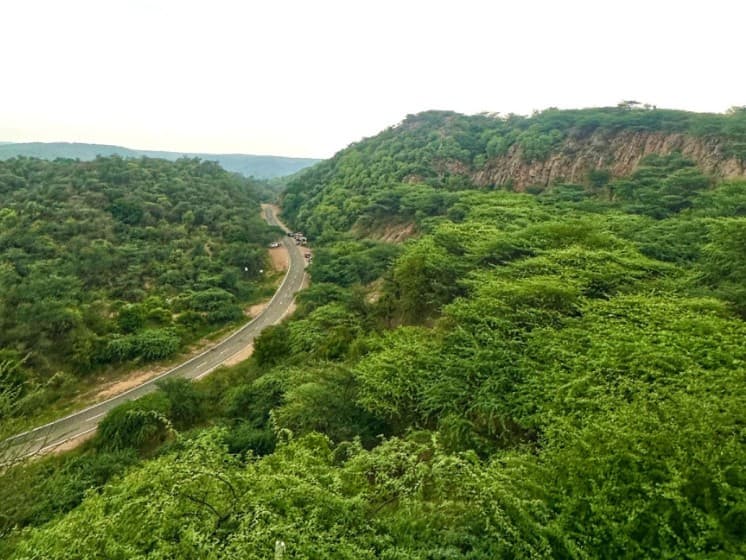
- The regulations have stirred controversy regarding potential threats to the Aravalli range, one of North India's oldest mountain systems.
- The Forest Survey of India (FSI) utilizes a 3-degree slope formula for classification, suggesting that current state regulations may conflict with established ecological guidelines.
Development Provisions
- Category B Developments:
- Resorts: Minimum 2 hectares with 20% land coverage.
- Wellness centers: Allowed on plots as small as 1 hectare.
- Farmhouses: Up to 500 square meters on minimum 5,000 square meters.
- Construction participation in 40% plantation required and bio-digesters mandated.
- Restrictions on activities including construction on crestlines with discretionary powers retained by state authorities.
Court Involvement
- Current developments are under suo motu proceedings initiated by the Supreme Court regarding their implications.
- Previous regulations faced legal scrutiny from groups like the Jheel Sanrakshan Samiti.
Government Perspective
- Rajasthan government claims that the new regulations serve to balance conservation with regulated development, aiming to provide structured growth while protecting hill integrity.
- Urban Development and Housing Minister, Jhabar Singh Kharra, noted the state's adaptability in the face of legal feedback.
Action Required
- Local authorities instructed to classify hilly areas within six months using GIS technology, in cooperation with technical agencies.
Academic and Expert Opinions
- Experts caution that increased permissible uses in Category B may lead to degradation of the Aravalli due to "incremental erosion" disguised as low-density development.
- There are calls for absolute prohibition on commercial construction on sensitive hills.
Judicial Precedents
- The 2018 Hill Regulations were challenged multiple times in courts, indicating ongoing legal contention regarding land-use rights and environmental conservation in hilly regions.
Conclusion
The Model Regulations for Conservation of Hills in Urban Areas underscore a complex balance between development and environmental preservation in Rajasthan, introducing categories for hill classification that raise concerns among conservationists and experts. This regulatory framework is also a point of contention that is currently facing scrutiny in the Supreme Court, highlighting the ongoing conflict between urbanization efforts and ecological integrity.
Key Terms & Concepts
| Model Regulations for Conservation of Hills in Urban Areas, 2024 | new regulations approved in April 2025 |
| 2018 hill conservation norms | previous regulations replaced |
| Category A | development with existing urban frameworks |
| Category B | permitted low-density activities |
| Category C | non-developable hill areas |
| 3-degree slope formula | FSI classification guideline |
| plantation of 40% | mandatory for infrastructure development |
| GIS-based drainage plans | required for new constructions |
| discretionary powers | state government can permit exceptions |
| special circumstances | conditions for land use changes |
| Jheel Sanrakshan Samiti | group opposing commercial hill construction |
| State Remote Sensing Agency | collaborating on classification of hilly areas |