iAspirants
Rare Hornbill Sighting in Kerala
Published on:
Share this post
Article Summary
Summary of Key Information on Malabar Pied Hornbills Sighting
Species Overview:
- Common Name: Malabar Pied Hornbill
- Scientific Name: Anthracoceros coronatus
- Habitat: Typically found in evergreen and deciduous forests, forest edges, and riverine forests.
- Characteristics:
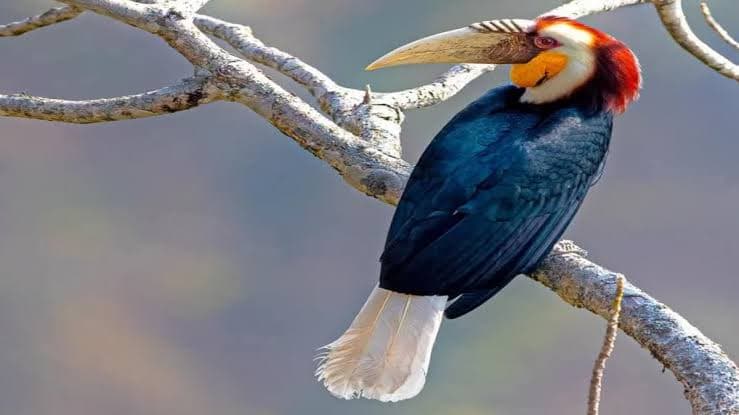
- Notable for its large bill with a prominent casque.
- Distinguished by black-and-white plumage, a white belly, and a black-tipped white tail.
Ecological Importance:
- Plays a vital role in seed dispersal and forest regeneration, contributing to biodiversity.
Recent Sighting:
- Date: July 15, 2026
- Location: Muyyam River, near Taliparamba, Kannur district, Kerala.
- Significance: First documented sighting of the Malabar pied hornbill in the area and contributes to local biodiversity documentation.
Expert Commentary:
- Ms. Sneha C., Assistant Professor of Forestry at Sir Syed College, noted that sightings of the species in Kannur are extremely rare, underscoring the significance of this sighting for bird diversity studies.
- As of now, 148 bird species have been documented in Kurumathur grama panchayat, indicating rich avian diversity.
Citizen Science Initiative:
- The sighting contributes to the second edition of the Kerala Bird Atlas, aimed at documenting the state's bird diversity through community participation.
Environmental Indicators:
- The presence of the Malabar pied hornbill indicates that the riverine vegetation and the availability of large fruit-bearing trees in the area are conducive for wildlife habitation.
This documented sighting enhances the understanding of local avian populations and emphasizes the importance of conserving habitats that support diverse species.
Key Terms & Concepts
| Malabar pied hornbills | Rare bird species documented |
| Muyyam River | Habitat for bird species |
| Kurumathur grama panchayat | Location for bird diversity studies |
| 148 bird species | Documented in local area |
| Kerala Bird Atlas | Citizen science initiative |
| Department of Forestry | Conducting biodiversity research |
| Ezhimala | Location of Great Hornbill sighting |
| Seed dispersal | Ecological role of hornbills |
| Fruit-bearing trees | Support wildlife habitat |
| July 15, 2026 | Date of hornbill sighting |