iAspirants
Current AffairsPrelims PYQsUPSC CSE SyllabusUPSC CSE StrategyBlogsPricing
Login
iAspirants
Current AffairsPrelims PYQsUPSC CSE SyllabusUPSC CSE StrategyBlogsPricingContact UsLoginSignUp
iAspirants

Your AI-powered companion for UPSC preparation.

Study Resources

  • Current Affairs
  • Prelims PYQs
  • UPSC CSE Syllabus
  • UPSC CSE Strategy
  • Blogs

Practice & Plans

  • Mains Answer Evaluation
  • Pricing
  • Sign Up
  • Login

Company

  • Home
  • About Us
  • Contact Us
  • FAQs

Legal

  • Privacy Policy
  • Terms & Conditions
  • Return Policy

© 2026 iAspirants, Inc. All rights reserved.

  1. Blogs
  2. Economic and Social Development

Redrawing India's Poverty Line Necessity

Published on: 18-Nov-2026

Source: The Hindu

Share this post

Redrawing India's Poverty Line Necessity

Article Summary

  • Poverty Line Definition: The poverty line serves as a threshold to determine economic deprivation, requiring accurate measurement through reliable data.

  • Challenges in Measurement: Current assessments of poverty in India face challenges due to:

    • Irregular periodicity of necessary surveys.
    • Delayed data collection and publication.
  • Current Status: Despite a reported decline in extreme poverty levels, broader economic inequalities persist, indicating that economic growth has not benefited marginalized sections of society.

  • Need for Reevaluation: Call for a comprehensive review and redrawing of the poverty line, emphasizing the use of robust data to reflect true economic conditions and ensure equitable distribution of resources.

  • Government Response: Though not specified, this highlights the potential necessity for government action in aligning social welfare policies and economic development goals.

  • Economic Indicators: Notable economic inequalities referenced imply a disparity in wealth distribution, with lower-income individuals not fully gaining from India’s economic growth trajectory.

This summary presents the critical elements related to poverty assessments in India and suggests a need for policy reevaluation to aid in addressing economic disparity effectively.

Key Terms & Concepts

poverty linestandard for poverty measurement
extreme povertypoverty category with high severity
economic developmentgrowth affecting societal wealth
gaps in surveysissue affecting data reliability
economic inequalitiesdisparity affecting social fabric
November 2026data publication date

Mind Map for UPSC Civil Services Revision

Turn UPSC Civil Services Current Affairs Into Exam-Ready Notes

Reading Economic and Social Development current affairs is half the work. Revise them with ready-made notes and test what actually stuck.

  • Daily UPSC Civil Services current affairs analysis
  • Revision notes, mind maps & MCQs
  • Prelims mock tests with instant results

Related UPSC Civil Services Current Affairs Articles

New US Restrictions on AI Technology
National and International Importance18-Nov-2026

New US Restrictions on AI Technology

Summary of US Restrictions on AI Chip Exports to China

1. Overview of New Restrictions:

  • The US Commerce Department announced stringent restrictions on AI chip exports aimed at preventing Chinese firms from accessing advanced American technology through foreign data centers.
  • The regulations address loopholes allowing Chinese companies to utilize servers in countries like Malaysia and Singapore to gain computing capabilities.
Practise Mains answer writingUpload a handwritten answer and get it evaluated

2. Regulatory Details:

  • The interim final rule issued by the Bureau of Industry and Security (BIS) restricts overseas data centers that supply significant computing resources to Chinese firms, requiring governmental authorization for the importation of specific advanced American chips.
  • Companies linked to counterparts in China via subsidiaries are also targeted by these new rules.

3. Technical Specifications and Thresholds:

  • The threshold for restricted remote access is set at an aggregate Total Processing Performance (TPP) of more than 12 million, indicating significant computing capacity.
  • New licensing requirements apply to exports of advanced semiconductors to five nations: Malaysia, Singapore, Indonesia, Thailand, and Brazil.

4. Exemptions and Transition Period:

  • Certain shipments to US-based companies are exempt under specific reporting requirements.
  • Existing data centers will have a 90-day period from the rules' effective date to secure the necessary licenses.

5. Impact of Recent Controversies:

  • The regulations are partly a response to controversy surrounding chipmaker Nvidia and its connections through cloud computing partner Megaspeed.
  • The resignation of Nvidia CEO Jensen Huang heightened scrutiny, as reports surfaced about his association with Alice Huang, linked to possible intelligence connections.

6. Broader Context of Export Controls:

  • The US aims to limit access to powerful semiconductors citing concerns that AI capabilities could enhance military and cyber-espionage initiatives in China.
  • In the past, chip shipment restrictions have led to challenges, as Chinese companies continue finding alternative access routes to advanced chips.

7. Research Findings Impacting Policy:

  • A study from Unemployment Labs indicated that several advanced Chinese AI systems were made using Nvidia's restricted Blackwell processors, intensifying debates over the effectiveness of existing export controls.
  • Epoch AI research estimates approximately two million advanced AI chips made their way to China during 2024 and 2025 via undisclosed arrangements.

8. Conclusion and Policy Implications:

  • The new export controls represent a significant policy shift by the US government in response to potential national security threats and challenges posed by loopholes in technology export regulations.
  • The effectiveness of these measures will be closely monitored in light of the ongoing investigations into chip access and the integrity of the US technology sector.

Constitutional and Legal References

  • No specific constitutional articles or amendments were cited in the news; however, these export controls reflect ongoing legal frameworks surrounding national security and international trade practices.

International Relations Context

  • The restrictions on chip exports may further strain US-China relations, particularly in technology and trade sectors, affecting global supply chains and international economic dynamics.
Space: Essential for National Security
National and International Importance18-Nov-2026

Space: Essential for National Security

Summary of Key Points on Space Security and Its Implications

Overview of Space Utilization

  • Transformation of Space: Space has evolved from a niche scientific field to a critical infrastructure component.
  • Dependencies: Key sectors relying on space technologies include:
    • Communications: Essential for everyday interactions and business operations.
    • Navigation: Supports various industries, including transport and logistics.
    • Weather Forecasting: Vital for disaster management and agriculture.
    • Banking: Space systems facilitate secure and reliable transactions.
    • Critical Infrastructure: National defenses and utilities are increasingly dependent on satellites.

Strategic Importance

  • National Resilience: Space capabilities contribute significantly to national security, aiding in military communications, positioning, surveillance, and situational awareness.
  • Strategic Autonomy: A robust space infrastructure is crucial for achieving and maintaining strategic independence.

Evolving Threat Landscape

  • Shift from Destruction to Disruption: Modern threats extend beyond the physical destruction of satellites to interference techniques like:
    • Jamming: Disrupts communications.
    • Spoofing: Deceives navigation systems.
    • Cyber Interference: Targets satellite networks, ground stations, and associated infrastructures.
    • Electronic Warfare: Harms signal reliability without direct damage to spacecraft.

Implications of Vulnerabilities

  • Complex Attribution and Response: Interference methods complicate the identification of attackers and the formulation of responses.
  • Architecture Vulnerability: The reliance on interconnected systems means that vulnerability is not limited to satellites but includes the entire network linking space infrastructure to terrestrial users.

Conclusion

  • Need for Enhanced Security Measures: With increasing dependence on space-enabled services, and the shift in threat dynamics, a comprehensive approach to space security is urgently needed to safeguard national interests and mitigate risks associated with disruptions.

This summary highlights the critical infrastructure role of space technologies, the evolving threats faced, and the need for enhanced security measures to address vulnerabilities that could impact national resilience and strategic autonomy.

Caste-Free Salon Faces Closure Challenges
Economic and Social Development17-Nov-2026

Caste-Free Salon Faces Closure Challenges

  • Background: A ‘caste-free’ hair salon was established in Vattavada, near Munnar, in 2020 to combat caste discrimination faced by the Chakkiliyan community, a Scheduled Caste in India.

  • Government Action:

    • The Vattavada panchayat initiated the salon following the cancellation of licenses for two local salons that refused service to Chakkiliyans.
    • The facility was created to provide a rent-free commercial space for community service. Mr. Bhagyaraj, an entrepreneur, was invited to manage the salon.
  • Current Situation:

    • The salon now faces potential closure due to an audit objection regarding the rent-free status, as there are no recorded minutes from the panchayat committee meeting approving this arrangement.
  • Economic Implications:

    • The barber is now required to pay ₹5,000 a month in rent plus accrued dues, which he claims he cannot afford. The previous arrangement was ₹500 a month after a year of free service.
    • Mr. Bhagyaraj reported paying increased rents of ₹3,000 plus GST after changes in the local government.
  • Social Impact:

    • The salon has played a crucial role in challenging local caste norms, enabling access to haircuts for marginalized communities. Prior to its establishment, members of the Chakkiliyan community traveled 10 km for salon services.
    • The closure of the salon may lead to the resurgence of caste discrimination, as other local barbers refuse service to certain communities.
  • Administrative Dilemma:

    • Officials express concern that eviction would deprive the community of basic services. They advocate for state intervention to maintain the salon's rent-free status, citing humanitarian reasons.
    • The issue also touches on accountability, as the panchayat secretaries risk being held responsible if rent concession cannot be officially granted.
  • Caste Discrimination Reality:

    • Despite local government efforts, caste-based discrimination remains prevalent in the region, affecting economic activities of marginalized communities.
  • Request for Government Support:

    • Local officials hope for state intervention to prevent the closure of the facility, emphasizing the need to uphold social equality and access to public services for all communities.

The case highlights the nexus between social justice, economic viability, and administrative policies within local governance in India, showcasing ongoing issues of caste discrimination and the efforts to mitigate them.

Cultural Beliefs Impact Bharat's Growth
Economic and Social Development17-Nov-2026

Cultural Beliefs Impact Bharat's Growth

Exam-Focused Notes on Bharat's Transformation under PM Modi

1. Cultural and Developmental Context

  • Culture and belief systems crucial for long-term growth and development.
  • PM Narendra Modi's reform agenda has led to transformative changes in Bharat over the last decade.

2. Key Reforms and Policies

  • Investment in Infrastructure: Enhanced digital and physical connectivity leading to productivity improvements.
  • Fiscal Prudence and Monetary Stability: Protective measures to safeguard household savings from inflation.
  • Banking Sector Reforms: Transitioned to a resilient model, reducing historically bad loans.

3. Legislative Changes

  • Insolvency and Bankruptcy Code: Enables entrepreneurs to take risks while safeguarding creditors’ interests.
  • Goods and Services Tax (GST): Unifies the fragmented indirect tax system into a 'One Nation, One Tax' regime.

4.

Assessment of Production Linked Incentive Scheme
Economic and Social Development16-Nov-2026

Assessment of Production Linked Incentive Scheme

Exam-Focused Notes on the PLI Scheme Impact Assessment

Overview of the Production Linked Incentive (PLI) Scheme:

  • Introduced: 2020 by the Narendra Modi government
  • Objective: Boost manufacturing to provide employment and enhance competitiveness among firms.
  • Background: Followed the corporate tax rate cut in 2019.

Key Features:

  • Targeted Support: Links incentives to incremental production and firm performance, unlike broad-based support.
  • Goal: Catalyze investments in key sectors and improve performance metrics like employment and exports.

Recent Findings from the NITI Aayog and IIM Ahmedabad Report:

  • Cumulative Incentive Disbursement: Less than 20% of the total outlay of ₹1.91 lakh crore as of March 2026.
  • Investment Attracted: ₹2.40 lakh crore
  • Production Generated: ₹22.66 lakh crore
  • Employment Created: Over 8.49 lakh jobs

Sectoral Performance:

  • Strong Progress: Large-scale electronics, pharmaceuticals, food processing, drones, medical devices, and white goods exhibited progress across multiple metrics.
  • Needs Improvement: Sectors like automobiles, telecom, and specialty steel require strengthening in areas of:
    • Employment
    • Exports
    • Domestic value addition

Conclusion & Recommendations:

  • Current Status: Nearly 70% of targeted segments are on track.
  • Recommendations for Improvement:
    1. Adopt a sector-specific approach due to performance variation.
    2. Standardize data collection and reporting mechanisms across ministries.
    3. Move beyond supply-side interventions; incorporate demand-side incentives for downstream firms and consumers.

Implications:

  • The findings suggest a strategic need for policy refinement to improve sector-specific interventions, ensuring the PLI scheme effectively meets its objectives in fostering a competitive manufacturing environment in India.
India's Female Workforce Participation Challenges
Economic and Social Development16-Nov-2026

India's Female Workforce Participation Challenges

Exam-Focused Summary of Women's Labor Force Participation and Government Initiatives

Key Facts & Economic Data:

  • Female Labor Force Participation Rate (LFPR):
    • Current rate (September): 34.6%, with a goal to increase it to 50%.
    • Essential for bolstering GDP growth towards 8%, necessary for India to achieve high-income status by 2047 (World Bank).

Government Initiatives and Surveys:

  • The Ministry of Statistics and Programme Implementation (MoSPI) has proposed new questions to be added to its Periodic Labour Force Survey (PLFS) to understand the nature of unpaid domestic and care work.
  • New focus areas include:
    • Magnitude of care work performed by individuals.
    • Impact of care duties on employment opportunities.

Planned Survey Changes:

  • Questions will cover:
India-ASEAN Summit Strategic Importance
International Relations16-Nov-2026

India-ASEAN Summit Strategic Importance

International Relations: India-ASEAN Engagement

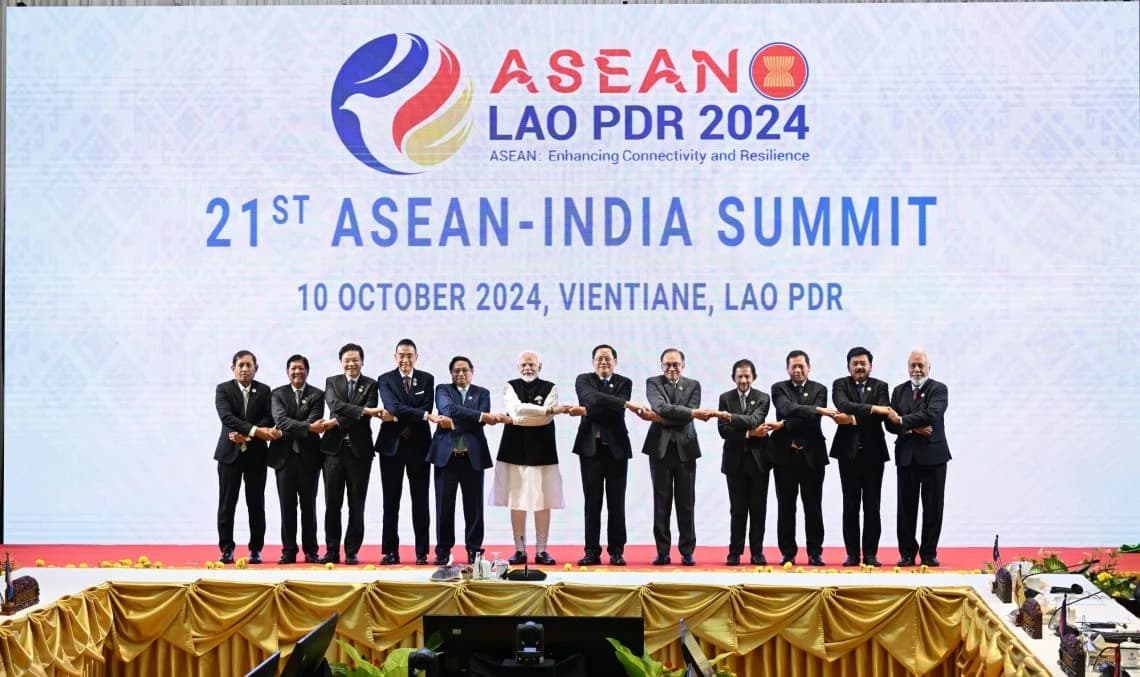
  • Summit Information:

    • Prime Minister Narendra Modi participated in the ASEAN-India Summit and East Asia Summit on November 16-17, 2026.
    • Location: Manila.
  • Context & Importance:

    • The summit is viewed as pivotal due to rising strategic rivalries and economic disruptions on an international scale.
    • Aims to reaffirm ASEAN centrality in global governance and consolidate outcomes of the 2026 ASEAN-India Year of Maritime Cooperation.
    • The event is aligned with India's Act East Policy to enhance cooperation with Southeast Asian nations.
  • ASEAN-India Dialogue Partnership:

    • The partnership will celebrate its 35th anniversary in 2027 after evolving since the establishment of relations in 1992.
    • Highlights a transition from basic bilateral trade and cultural exchanges to a Comprehensive Strategic Partnership.
Impact of Global Events
  • Reform achievements unfold against a backdrop of global challenges: the COVID-19 pandemic, European war, Middle East tensions, and economic slowdowns in major economies.

5. Concept of Jan Andolan (Public Movement)

  • PM Modi emphasizes development as a movement owned by the people rather than just a state function.
  • Calls to elevate public beliefs and aspirations as central to societal progress.

6. Government Schemes and Social Impact

  • Swachh Bharat Abhiyan:
    • Focused on sanitation dignity, built over 10 crore rural toilets.
    • Resulted in significant health improvements: Reduction in infant mortality (60,000 to 70,000 lives saved annually).
    • Empowered women by promoting safety through household toilets termed as 'izzat ghar' (houses of dignity).
  • Pradhan Mantri Awas Yojana:
    • Mandates that subsidies for housing are tied to properties registered in women’s names (either solely or jointly).
    • By 2024, 2.68 crore rural houses completed, with approximately 75% ownership by women.
    • Promotes women’s decision-making power in households.

7. Cultural Diplomacy in Foreign Policy

  • PM Modi’s diplomatic gestures reference India's civilizational heritage, exemplified by the presentation of a gold-plated replica of Kerala’s Cheraman Juma Masjid to the King of Saudi Arabia.
  • Positions Bharat as a civilization with historical ties and cultural richness rather than solely an economic market.

8. Long-Term Growth and Sustainability

  • The belief in a Jan Andolan for a Viksit Bharat (Developed India) is seen as a pathway for inclusive and sustainable development.
  • Such reforms tied to historical and cultural consciousness could ensure lasting transformations in society and governance.

This summary encapsulates the major themes and reforms introduced under PM Modi, along with their implications for Bharat's socio-economic landscape and cultural identity.

  • Nature of unpaid work (self-consumption vs. selling).
  • Job-seeking within the past 30 days.
  • Reasons for not seeking work, including family/household responsibilities.
  • Current data indicates that 44.4% of women cited child care or personal commitments as reasons for not working.
  • Time Use Surveys Data:

    • Working-age men (15-59 years): Unpaid activities reduced from 74 minutes (2019) to 62 minutes (2024).
    • Working-age women: Increased unpaid activities from 364 minutes (2019) to 366 minutes (2024).

    Policy and Economic Implications:

    • The new PLFS questions, paired with Time Use Survey findings, aim to refine the understanding of women's work participation.
    • A need for tailored policies that reflect the diversity of care and employment experiences across rural and urban areas.

    Hurdles to Employment:

    • Factors hindering women's employment include:
      • Unpaid domestic tasks.
      • Lack of mobility and time for entrepreneurial endeavors.
    • Tamil Nadu exemplifies a successful model by providing dormitories for female workers, addressing the challenges of distance and living arrangements.

    Additional Insights:

    • Current efforts to improve women's labor participation are critical in combating stereotypes and enhancing female engagement in the workforce.
    • Key Challenges:
      • The dual burden of unpaid work and formal employment.
      • Societal norms and structural barriers still persist, impacting women's economic opportunities.

    Conclusion:

    Understanding and addressing the complexity of women's participation in the workforce through improved data collection and policy interventions is pivotal for achieving India's 2047 development goals. These initiatives highlight the vital connection between expanding the female labor force and overall economic growth.

  • Significance of ASEAN:

    • India is recognized as an ASEAN dialogue partner that prioritizes ASEAN’s strategic autonomy and supports its inclusive institutional framework.
    • Reinforces India's commitment towards regional integration and collaboration in multifaceted areas including trade, security, cultural exchange, and environmental sustainability.
  • Future Prospects:

    • Potential for added momentum in various sectors, suggesting growth in economic ties, security collaboration, and cultural interactions as part of the evolving partnership.