iAspirants
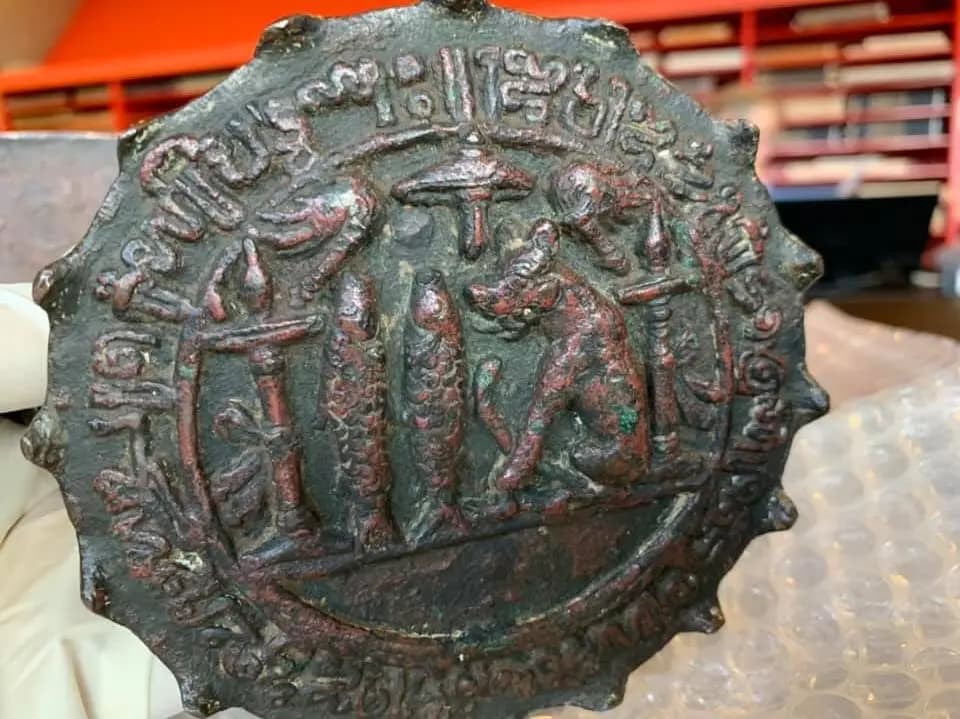
Return of Anaimangalam Copper Plates
Published on:
Share this post
Article Summary
Summary of the Anaimangalam Copper Plates and Buddhist Monastery
Historical Context:
- The Anaimangalam copper plates, also known as the Leiden plates, document the land donation by King Rajaraja Chola I to the Chudamani Varma Vihara around 1005 CE, which was dedicated to Buddhism and located in Nagapattinam.
- The land was recorded as Pallichchandham, consisting of tax-free lands for non-Hindu religious institutions.
- The documentation of the land gift was officially completed by his son, Rajendra Chola I, in 1035 CE.
Significant Events:
- In 1090 CE, the Sri Vijaya ruler sent envoys to Kulothunga Chola I requesting to reaffirm the monastery's land rights, resulting in additional copper plates issued to secure territorial custody.
- The plates ultimately made their way to Europe and were preserved at Leiden University, where they were deciphered by scholars in the late 19th to early 20th century.
Research and Findings:
- Historian Achyuthan Govindan Kutty Menon researched the copper plates and their correlation to local historical records in the 1960s.
- His publication, "Copper plates to silver plates: Cholas, Dutch and Buddhism," analyzed data about the monastery's name, village transformations, and its eventual destruction.
- Although Buddhism ceased to exist in the region by the 19th century, the monastery's remnants, referred to as "Pudhuveli Gopuram," served as a navigational landmark.
Key Architectural Details:
- The monastery's structure was described by Sir W. Elliot in 1846 as a unique three-story brick tower.
- In 1867, the tower was demolished, erasing its historical significance.
Transformation of Land Use:
- Menon tracked land deeds and noted that after the village was dedicated to the monastery, its name shifted from "Anaimangalam" to "Sangamangalam" in later records, indicating a shift in property control as Buddhism faded.
- The properties were later repurposed and similar rights were extended to the Portuguese by successive rulers, reflecting the changing socio-political landscape.
Cultural and Archaeological Significance:
- The copper plates hold great archaeological and historical value, offering insights into the Chola Empire's policies on land grants to religious institutions and the integration of Buddhism into local communities.
- The plates are important for understanding the linguistic and political shifts in the region over the centuries.
Summary of Current Event:
- The anticipated return of the Anaimangalam copper plates to India underscores the ongoing efforts for the repatriation of cultural heritage and historical artifacts significant to India’s history.
Conclusion
The case of the Anaimangalam copper plates and the historical documentation surrounding them illustrate the complexities of land ownership, cultural transitions, and the enduring impact of past empires on present-day identities and land use in India.
Key Terms & Concepts
| Anaimangalam copper plates | Documented land grant |
| Chola dynasty | Donor of monastery land |
| Chudamani Varma Vihara | Buddhist monastery recipient |
| Nagapattinam | Port city location |
| Rajaraja Chola I | Initiator of land grant |
| Kulothunga Chola I | Issuer of reaffirmation charter |
| Sri Vijaya Kingdom | Sender of envoys |
| 1867 | Year of monastery demolition |
| Dutch East India Company | Mapped land deeds |
| Sangamangalam | Name evolution of Anaimangalam |
| Buddhism | Religion linked to history |
| Pudhuveli Gopuram | Landmark from monastery |
| Sir W. Elliot |