iAspirants
Review of Crop Residue Management Plans
Published on:
Share this post
Article Summary
Air Quality Management Commission (CAQM) Meeting Summary
Date of Meeting: 06 May 2026
Chair: Rajesh Verma
States Involved: Punjab, Haryana, Uttar Pradesh (NCR)
Key Objectives:
- Review state preparations for the elimination of stubble burning in 2026.
- Emphasize coordinated actions and enhanced enforcement mechanisms.
Findings:
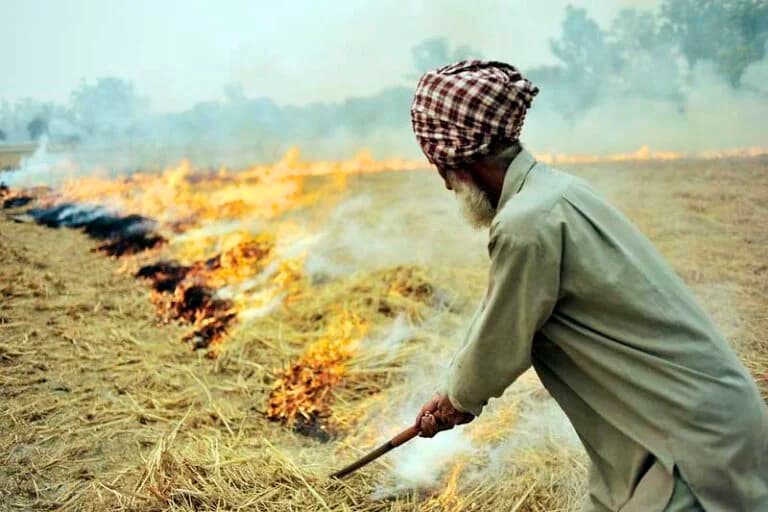
- Stubble burning is a year-round challenge affecting air quality.
- Immediate and systematic preparations are needed before the rice harvesting season.
State Reports:
- Senior officials presented their action plans aimed at eliminating stubble burning in 2026.
Action Plans Included:
- On-site management of crop residues.
- Use of rice straw outside its origin.
- Compliance with guidelines for co-firing rice straw in brick kilns (Guideline No. 92).
- Timely availability of Crop Residue Management (CRM) machines.
- Promotion of villages completely stopping stubble burning through incentives.
- Intensified Information, Education, and Communication (IEC) activities.
- Enforcement measures for operational logistics.
Statistics:
- Fires Recorded (01 April 2026 - 06 May 2026):
- Punjab: 3,729 incidents
- Haryana: 2,683 incidents
- Uttar Pradesh (NCR): 176 incidents
Sensitive Districts Noted:
- Punjab: Sangrur, Firozpur, Bathinda
- Haryana: Jind, Jhajjar, Sonipat
- Uttar Pradesh: Gautam Buddha Nagar, Meerut
Action Points Outlined by CAQM:
- States must submit revised and comprehensive action plans by 11 May 2026.
- Detailed reports on the status of operational CRM machines within two months.
- District-wise reports on co-firing in brick kilns from 01 November 2025 to 30 April 2026.
- Strengthening preventive measures to avoid accidental fires linked to stubble burning.
- Accelerating IEC activities to raise awareness and compliance.
- Punjab to develop a dedicated portal for monitoring compliance with Guideline No. 92, modeled after Haryana's existing portal.
Commitments:
Stakeholder agencies assured the CAQM of coordinated efforts and necessary measures for effective implementation of state action plans to prevent and eliminate stubble burning in the upcoming harvesting season.
Conclusion
The CAQM's meeting underscores the importance of collaborative efforts among states to combat air pollution through effective stubble management, with specific timelines and responsibilities outlined for state officials to ensure compliance and progress.
Key Terms & Concepts
| Commission for Air Quality Management (CAQM) | Overseeing air quality initiatives |
| Punjab | State involved in burning issues |
| Haryana | State involved in burning issues |
| Uttar Pradesh | State involved in burning issues |
| Crop Residue Management (CRM) Machines | Tools for managing crop waste |
| Guidelines No. 92 | Regulations for biomass co-firing |
| Guidelines No. 96 | Regulations for wheat residue management |
| 3729 incidents | Burning incidents in Punjab |
| 2683 incidents | Burning incidents in Haryana |
| 176 incidents | Burning incidents in Uttar Pradesh |
| May 6, 2026 | Date of important meeting |
| November 1, 2025 - April 30, 2026 | Period for reporting co-firing |