iAspirants
Revival of the Monroe Doctrine Explained
Published on:
Share this post
Article Summary
Summary Notes on the Monroe Doctrine and Its Modern Implications
Historical Context
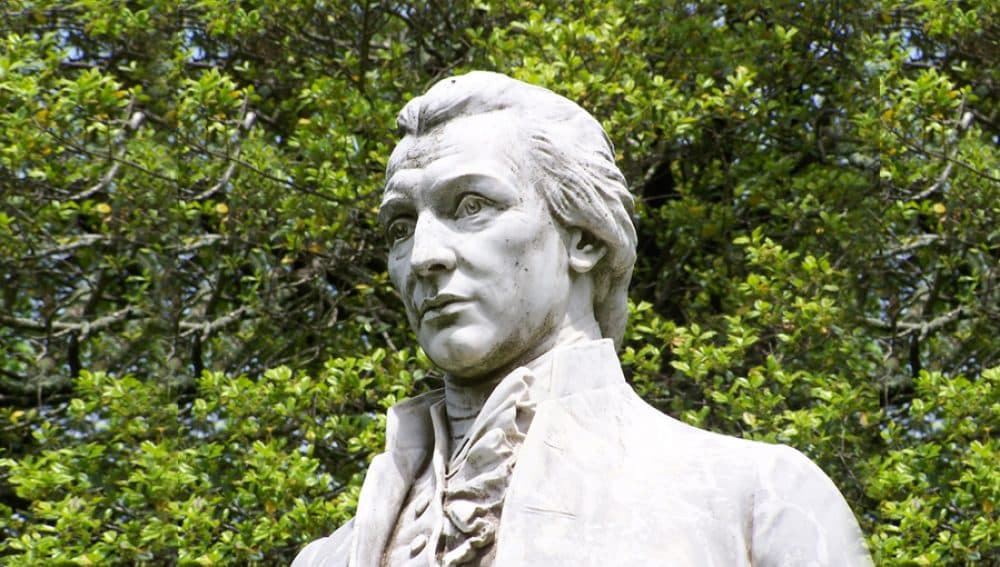
- Monroe Doctrine Origin: Formulated by President James Monroe on December 2, 1823, a response to European colonial ambitions in the Americas, asserting that the Western Hemisphere was closed to further European colonization and that any intervention would be regarded as a threat to U.S. security.
- Historical Evolution: The doctrine has evolved in meaning and application, influenced by changing U.S. foreign policy and political regimes.
Key Constitutional and Political Elements
- Constitutional Framework: The Monroe Doctrine, although not a law, has influenced U.S. policy and has been referred to by various presidents as foundational to American foreign interests.
- Initial Principles:
- Non-Colonization Clause: Prevents European powers from establishing new colonies in the Americas.
- Non-Interference Clause: Warns against European influence on the political systems of the Americas, with the U.S. pledging non-involvement in European affairs.
Modern Implications
- Trump Administration: Recent invocation by President Donald Trump in the context of Venezuela marked a shift from traditional interpretations, suggesting U.S. justification for intervention regardless of external threats.
- "Trump Corollary": Indicates U.S. intervention in Latin matters based on internal political dynamics rather than external threats.
- Scholarly Views: Conflicting interpretations exist regarding the Monroe Doctrine’s application in contemporary geopolitics, with some scholars arguing it has led to U.S. imperialism in Latin America.
Economic and Political Impact
- Venezuela Case: The invocation of the Monroe Doctrine in Venezuelan affairs has sparked discussions on U.S. influence and sovereignty issues among Latin American nations, potentially raising tensions in the region.
- Historical Duality: The doctrine has historically justified both anti-colonialism and U.S. imperial actions in Latin America, leading to critiques regarding its ambiguity and justifications for intervention.
Legal and International Perspectives
- Roosevelt Corollary: In 1904, President Theodore Roosevelt expanded the Monroe Doctrine to justify the U.S. intervening in Latin American countries deemed misbehaving, establishing a precedent for U.S. policing in the region.
- International Appeal: Notably, Indian nationalist Bal Gangadhar Tilak invoked a "Monroe Doctrine for India," advocating for self-rule against colonial powers, showcasing the doctrine’s influence beyond the Americas.
Future Considerations
- Geopolitical Consequences: Experts caution that renewed adherence to the Monroe Doctrine could destabilize both U.S. internal politics and international relations, leading to greater global rivalries, particularly concerning U.S. actions parallel to Russian and Chinese activities.
- Historical Significance: As noted by Henry Kissinger, the Monroe Doctrine has had profound implications on regional and global affairs, influencing U.S. political philosophy and strategy over the centuries.
Conclusion
The Monroe Doctrine's historical roots and contemporary interpretations continue to evoke debates on U.S. foreign policy, intervention practices, and its implications for global stability and regional sovereignty.
Key Terms & Concepts
| Monroe Doctrine | Foundational U.S. foreign policy |
| James Monroe | Proclaimed the doctrine in 1823 |
| December 2, 1823 | Date of doctrine proclamation |
| Venezuela | Context for recent invocation |
| Trump Corollary | New interpretation of the doctrine |
| Spanish-American War | Event affecting doctrine's application |
| Roosevelt Corollary | Intervention principle added in 1904 |
| The Wilsonian Moment | Contextual reference to self-determination |
| Grover Cleveland | President invoked doctrine in 1896 |
| Henry Kissinger | Former Secretary of State quoted |