iAspirants
Rising Water Threatens Lonar Lake
Published on:
Share this post
Article Summary
Summary of Lonar Lake Situation and Government Response
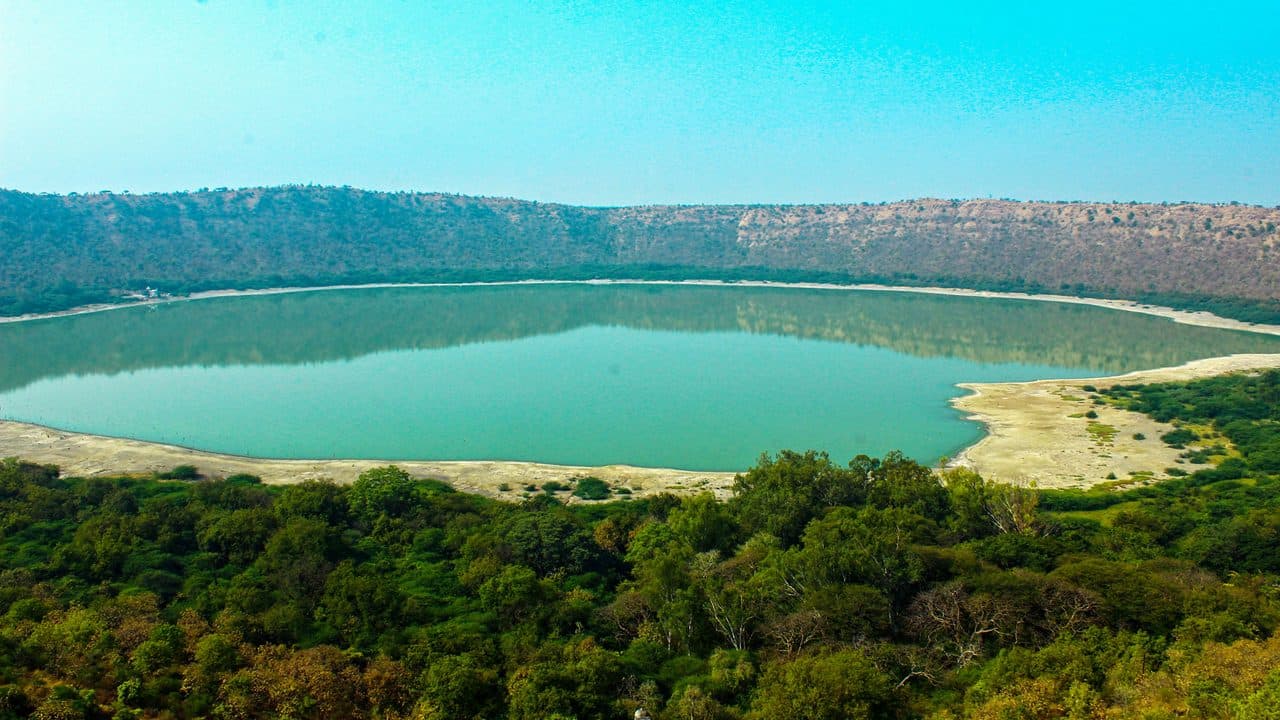
Lonar Lake Overview
- Location: Maharashtra, India; Buldhana district.
- Significance:
- Formed by a meteorite impact; recognized as a National Geo-heritage site by the Government of India.
- Largest basaltic impact crater globally.
- Designated a Ramsar site (International Ramsar Convention on Wetlands).
- Ecology:
- Highly saline and alkaline lake; pH around 10, rendering it uninhabitable for most species.
- Unique ecological features sustain only specific extremophile species.
Current Issue
- Rising Water Levels: Increased by approximately 4 meters since 2022, partly due to:
- Heavy monsoon in 2025 (over 100 mm rainfall in just three hours).
- Inflows from groundwater recharge due to construction of water management structures (borewells, percolation dams) in surrounding areas.
- Threat to Heritage Sites:
- The Kamalja Devi Temple is partially submerged; 15 ASI-protected temples affected; nine are reported partially/fully submerged.
Judicial and Government Actions
- Bombay High Court: Took suo motu cognizance of rising water levels and its impact on heritage sites.
- ASI Response:
- Plans to construct a temporary "gabion wall" to protect submerged temples.
- Long-term solutions include conducting geological and geo-hydrological surveys.
Policy and Environmental Considerations
- The lake is located within the Lonar Wildlife Sanctuary, under the Wildlife Protection Act, 1972, which restricts water diversion without state consent.
- Recommendations for water management involve diverting springs and lifting water to maintain ecological balance.
Historical Context and Research
- Age of Crater: Conflicting studies regarding the age—either 12,000 years (Princeton University, Adam Maloof) or as ancient as 570,000 years (Curtin University, Fred Jourdan).
- Geological Research: Investigation led by experts highlights the interplay between natural hydrology and anthropogenic factors affecting the lake's water levels.
The situation at Lonar Lake underscores the challenges of balancing ecological preservation and the conservation of cultural heritage within the framework of existing environmental legislation and governmental responsiveness.
Key Terms & Concepts
| Lonar Lake | Natural heritage site |
| Kamalja Devi Temple | Historical structure at lake |
| Bombay High Court | Judicial authority involved |
| National Geo-heritage site | Designation by Indian government |
| Geological Survey of India | Research organization |
| Ramsar site | Wetland conservation status |
| pH value of 10 | Lake's ecological characteristic |
| 4 meters | Water level increase since 2022 |
| 100 millimeters of rainfall | Rainfall in three hours |
| Wildlife Protection Act, 1972 | Legislation affecting conservation |
| Gabion wall | Proposed protective structure |
| Geological and geo-hydrological survey | Necessary future study |