iAspirants
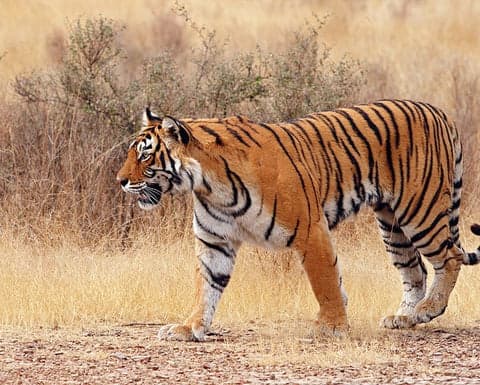
Royal Bengal Tigers Dispersal in India
Published on:
Share this post
Article Summary
Tiger Dispersal Events in India: Key Facts and Implications
Recent Incidents:
- A Royal Bengal Tiger traveled approximately 650 km from Tadoba Tiger Reserve, Maharashtra, to East Godavari district, Andhra Pradesh, spotted on National Highway 16.
- The tiger was tranquilized and captured near agricultural fields in Kurmapuram village after multiple sightings.
Conservation Efforts:
- The captured tiger has been relocated to the Animal Rescue Centre in Visakhapatnam zoo and will be released back into the wild.
- Public alerts issued for safety precautions around residential areas due to potential man-animal conflicts.
Tracking and Monitoring:
- Another sub-adult male tiger has been tracked moving through multiple districts in Telangana, having dispersed from Maharashtra.
- Officials are concerned about the risk of conflicts and livestock predation given the close proximity of both tigers to human habitation.
Statistical Insights:
- A study of 29 tiger cubs in Ranthambhore (2005-2011) indicated a higher dispersal probability for males (92.3%) versus females (36.4%).
- Documented long-distance tiger travel includes a 2023 incident where a tiger traveled 2,000 km across four states.
Government Response:
- East Godavari district collector declared school holidays until the tiger leaves residential areas.
- A special response team from Pune has been activated for tiger capture and relocation efforts.
- Efforts are underway to manage the potential for man-animal conflict, emphasizing monitoring and timely intervention.
Ecological Context:
- Dispersal is a natural behavior for tigers, influenced by territorial needs and population pressures in shrinking forest areas.
- The movement patterns of these tigers illustrate the ecological pressures they face as they seek new territories and mating opportunities.
Expert Opinions:
- Wildlife specialists underline the need for timely interventions to prevent tigers from becoming "problem tigers" due to their encounters with human populations.
- Capture and relocation options are limited by existing tiger populations in nearby reserves, necessitating careful planning to avoid overcrowding.
Long-term Implications:
- These events highlight the ongoing challenges in wildlife conservation, including habitat loss, urban expansion, and the need for improved human-wildlife conflict management strategies.
- Establishing and protecting corridors for tiger movement is essential for maintaining genetic diversity and population sustainability.
Legislative and Policy Framework:
- Relevant frameworks for wildlife conservation include the Wildlife Protection Act, various Environmental Protection legislations, and ongoing government initiatives aimed at habitat restoration and conflict mitigation.
Future Monitoring:
- Continuous tracking and research are needed to understand tiger dispersal dynamics better and to develop adaptive strategies for coexistence between wildlife and human communities.
These findings illustrate both the resilience of tiger populations and the significant challenges posed by human encroachment into natural habitats. Ensuring a sustainable coexistence will require cooperative efforts from local communities, governmental bodies, and conservation organizations.
Key Terms & Concepts
| Royal Bengal Tiger | Subject of dispersal |
| Tadoba Tiger Reserve | Origin of the tigers |
| National Highway 16 | Location of sighting |
| Animal Rescue Centre, Visakhapatnam zoo | Rescue and rehabilitation center |
| East Godavari | District of sighting |
| Andhra Pradesh Forest Department | Monitoring and capturing authority |
| Kirthi Chekuri | District collector |
| Pune | Location of special team |
| Ranthambhore | Study location for tiger dispersal |
| Chandrapur | Source of tiger dispersal |
| Kawal Tiger Reserve | Potential interception area |
| Man-animal conflict | Potential risk highlighted |
| 2023 |