iAspirants
Sarnath Achieves UNESCO Heritage Status
Published on:
Source: PIB
Share this post
Article Summary
Summary of UNESCO World Heritage Recognition for Sarnath
UNESCO Heritage Listing:
- Date of Recognition: July 25, 2026, during the 48th session of the World Heritage Committee in Busan, South Korea.
- Significance: Sarnath, an ancient Buddhist site where Lord Buddha delivered his first sermon, has been added to the UNESCO World Heritage List, bringing India's total to 45 recognized sites.
- Ranking: India ranks 6th globally and 2nd in the Asia-Pacific region in terms of UNESCO World Heritage sites.
Cultural and Historical Importance:
- Sarnath is one of four major Buddhist pilgrimage sites, signifying its importance in the Buddhist tradition.
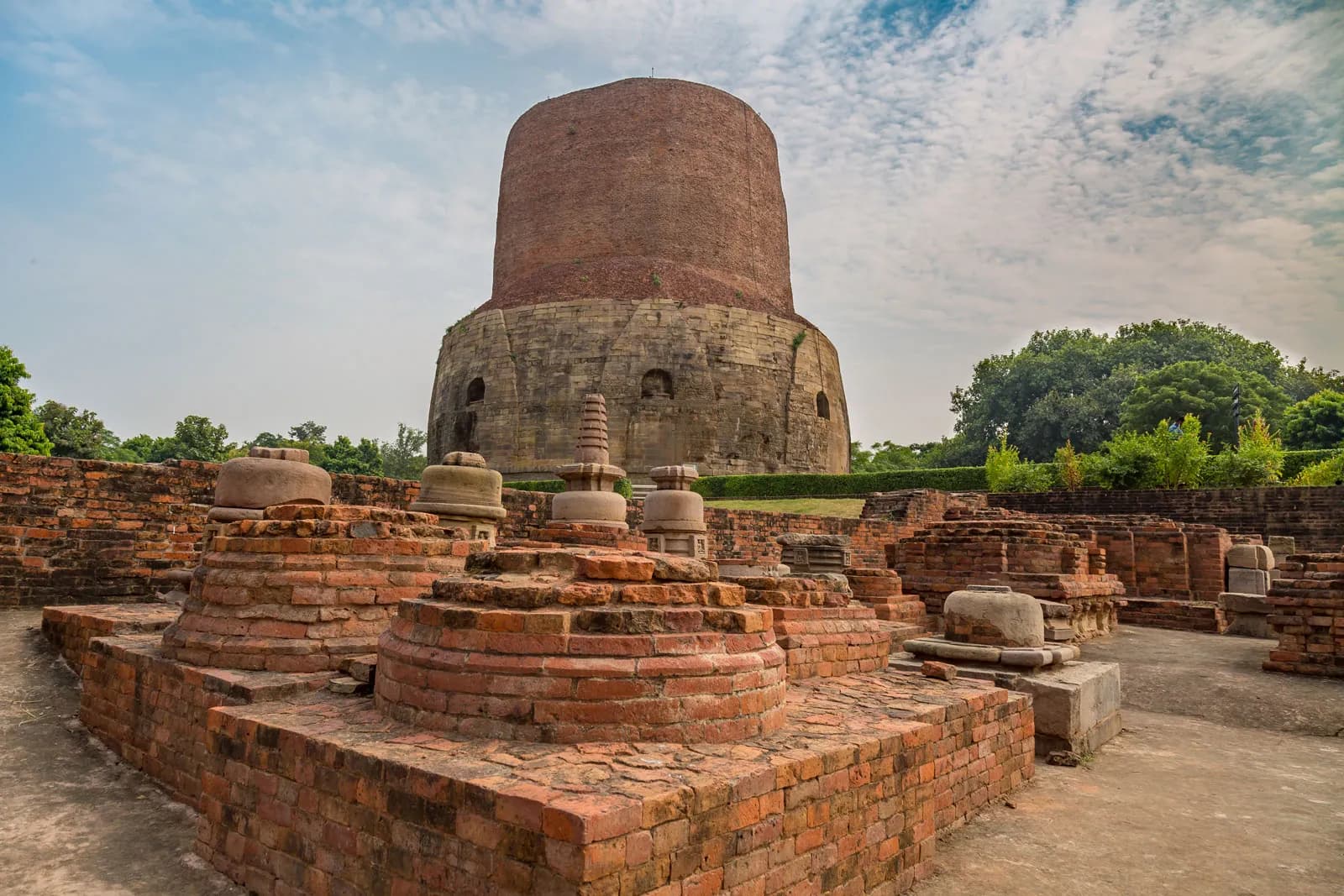
- The site includes significant archaeological remnants such as the Dhamek Stupa, Ashoka Pillar, and various monasteries and stupas, reflecting a continuous historical development over sixteen centuries.
- The first sermon by Gautam Buddha, known as "Dharmachakra Pravartan," occurred here in the 6th century BCE, marking the beginning of the Buddhist Sangha.
UNESCO Criteria:
- Criteria (iii): Recognizes Sarnath's enduring spiritual significance as a major Buddhist pilgrimage site.
- Criteria (vi): Acknowledges Sarnath's direct association with significant events in Buddha's life, highlighting its exemplary importance to the Buddhist community.
Global Context:
- As of July 2026, the UNESCO World Heritage List includes 1,273 properties from 173 countries, comprising 991 cultural, 240 natural, and 42 mixed sites.
- The World Heritage Convention, adopted by UNESCO in 1972, emphasizes the protection and promotion of cultural and natural heritage of outstanding universal value.
Government Initiatives:
- Cultural Heritage Protection: The Government of India has initiated various programs for the protection, restoration, and promotion of its vast cultural and natural heritage.
- Adopt a Heritage Program: Launched in September 2017, this program focuses on developing visitor-friendly amenities at protected monuments through partnerships with private sectors and NGOs.
- National Manuscript Mission: Launched in 2025, this initiative aims to preserve and digitize India's extensive manuscript heritage, ensuring accessibility for research and public engagement.
Economic and Visitor Data:
- The 'Adopt a Heritage' program has led to a significant increase in visitor engagement, recording 13.59 million visitors during the fiscal year 2024-25.
- The program has resulted in enhanced facilities and services at heritage sites, contributing to a better visitor experience.
Archaeological Survey of India (ASI):
- ASI is responsible for the preservation and maintenance of 3688 centrally protected monuments, including 28 World Heritage sites.
- The ASI enforces the Ancient Monuments and Archaeological Sites and Remains Act, 1958, and the Antiquities and Art Treasures Act, 1972.
Conclusion:
- The recognition of Sarnath as a UNESCO World Heritage site underscores India's commitment to preserving and promoting its rich cultural heritage.
- It also reinforces India's identity as the birthplace of Buddhism and its role in fostering cultural ties with Buddhist nations worldwide.
Key Terms & Concepts
| Sarnath | Ancient Buddhist site recognized |
| UNESCO | World Heritage Committee |
| July 2026 | Date of UNESCO recognition |
| 45 | Total UNESCO sites in India |
| Buddhism | Religion originating from Sarnath |
| ICOMOS | Advisory body for UNESCO |
| 1972 | Year of UNESCO Convention adoption |
| 1,273 | Total properties in World Heritage list |
| 196 | Countries part of World Heritage Agreement |
| Buddha's first sermon | Significant event at Sarnath |
| Cultural Heritage Sites | Type of UNESCO recognition |
| Bodhgaya | Related UNESCO heritage site |
| Lumbini |