iAspirants
Serbia Protests Against Government Crackdown
Published on:
Share this post
Article Summary
Serbia Protests and Government Crackdown on Universities: Key Facts and Data
Protest Background:
- Date: January 27, 2026.
- Location: Belgrade, Serbia.
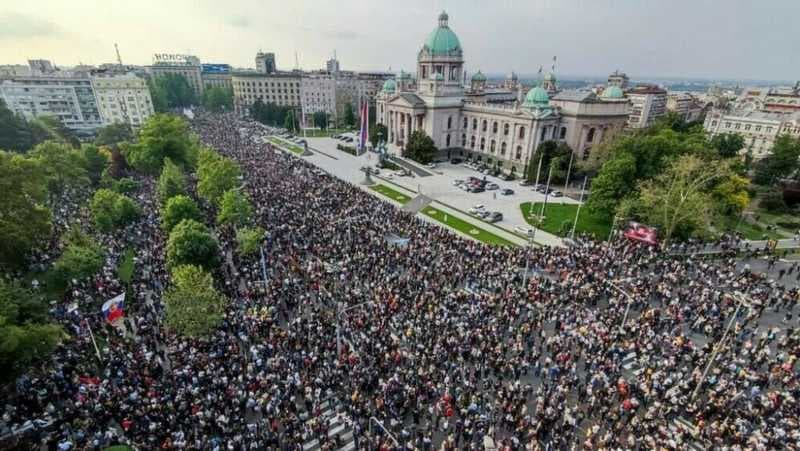
- Event: Thousands gathered under the slogan “Knowledge is power” to protest against government actions towards universities and academic freedom.
- Focus: Support for professors and teachers dismissed for participating in anti-government demonstrations.
Trigger Event:
- Incident: Collapse of a concrete railway station canopy in Novi Sad in November 2024.
- Casualties: 16 fatalities.
- Public Reaction: Widespread blame on government corruption and negligence regarding safety regulations during building renovations.
Protest Dynamics:
- Size: Protests are reported as the most sustained and numerous in Serbia for years, attracting hundreds of thousands of participants.
- Government Response: President Aleksandar Vucic has resisted early election demands from the protesters and has intensified pressure on demonstrators.
Educational Community's Stance:
- Remarks by Vladan Djokic, Dean of the University of Belgrade: Highlighted governmental arrogance and the treatment of the academic community.
- Allegations of government pressure include financial and legal repercussions against institutions and staff involved in protests.
- Accusations against protesting individuals as “terrorists” by officials and pro-government media.
Judicial and Law Enforcement Actions:
- Riot Police: Recent eviction of students from a faculty building in Novi Sad, showcasing heavy-handed tactics against protests.
- Claims of police violence during the eviction process.
Suspension of Classes:
- Notable action taken by several faculties in Belgrade: Classes were suspended as a form of protest against government actions.
International and Political Context:
- Criticism on Human Rights: Reports of excessive police force and arbitrary detentions have drawn international condemnation.
- Political Positioning: Vucic is pursuing European Union membership while maintaining close ties with Russia and China, amidst allegations of suppressing democratic freedoms.
Constitutional and Legal Framework:
- Rights of Protest: The situation raised questions about the implications of fundamental rights to assembly and free speech under Serbian law and its compliance with European standards.
- Academic Freedom: Attacks on the educational sector contrast with principles of autonomy and freedom of expression enshrined in various international human rights instruments.
Public Sentiment:
- Growing dissent among citizens regarding governance, corruption, and preservation of academic integrity and freedom.
Future Implications:
- Possible escalation of protests and increased calls for governmental accountability.
- Domestic and international pressure may influence Serbian government policies in relation to civil rights and freedoms.
This summary outlines the current socio-political landscape in Serbia concerning academic freedom, public protests, and government actions, highlighting significant events, figures, and implications for both national and international stakeholders.
Key Terms & Concepts
| University of Belgrade | Key protest location |
| Novi Sad | Location of disaster |
| January 27, 2026 | Date of protests |
| November 2024 | Date of railway disaster |
| European Union | Target for Serbia's entry |
| Russia and China | Strengthening ties |
| 16 people | Casualties from disaster |
| students and professors | Targeted academic community |
| President Aleksandar Vucic | Government leader |
| Knowledge is power | Motto of the protest |
| riot police | Enforcement response |
| financial and legal pressure | Government tactics |