iAspirants
Significance of Baisakhi Festival
Published on:
Share this post
Article Summary
Exam-Focused Notes on Baisakhi
Historical Significance:
- Date of Celebration: Baisakhi is celebrated on April 13 or 14, marking the beginning of the month of Vaikash.
- Foundation of Khalsa Order: Commemorates the establishment of the Khalsa order by Guru Gobind Singh on April 13, 1699, during a period of religious persecution under Mughal rule by Emperor Aurangzeb.
Key Events:
- Execution of Guru Tegh Bahadur: The eighth Guru was executed for refusing conversion to Islam, a pivotal moment leading to Guru Gobind Singh's leadership.
- Baptism Ritual: The ceremony at Takht Keshgarh Sahib involved initiating the 'panj pyaras' (five beloved ones) with amrit (sacred nectar) to promote unity and egalitarianism.
Philosophical Underpinnings:
- The Khalsa emphasizes egalitarianism, rejecting discrimination based on caste, creed, or gender.
- Five Ks: Adopters of Khalsa identity are recognized by the five articles of faith: kesh (uncut hair), kangha (comb), kacha (cotton undergarment), kada (steel bracelet), and kirpan (ceremonial sword).
Cultural Aspects:
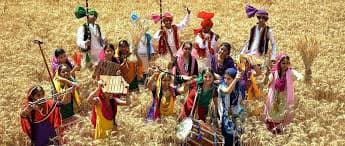
- Community Celebrations: Observances include paying respects in Gurdwaras, sharing kharaprasad (sacred food), and participating in langar (community kitchen).
- Connection to Agriculture: The festival coincides with the spring harvest, celebrating the deep bond between farmers and their land, underlining gratitude for sustenance.
Religious and Solar Significance:
- Baisakhi aligns with various solar new year celebrations across India, such as Pohela, Boisakh, Bhihu, Vishu, and Puthandu, marking cultural diversity.
- Astronomically, it signals the Sun's transition into Aries or Mesha rasi.
Social and Community Impact:
- Represents the resilient spirit of Punjabis and serves as a reminder of communal harmony and shared agricultural heritage.
- Acts as a moment to pray for prosperity and well-being for families and communities.
This summary highlights the historical, cultural, and religious importance of Baisakhi, emphasizing its role in Sikh history and agricultural celebration in India.
Key Terms & Concepts
| Baisakhi | Cultural and agricultural festival |
| April 13, 1699 | Birth of Khalsa order |
| Khalsa | New order initiated by Guru Gobind Singh |
| Guru Gobind Singh | Tenth Guru of Sikhs |
| five Ks | Symbolic articles of the Khalsa |
| Mesha rasi | Indicates transition to Aries |
| Langar | Community kitchen service |
| Punjab | Region celebrating Baisakhi |