iAspirants
Small Hydropower Development Scheme
Published on:
Share this post
Article Summary
Notes on the Small Hydro Power Development Scheme
Overview
- Total Estimated Capacity: India has an estimated total small hydro power capacity of 21,133.61 MW.
- Utilized Capacity: Approximately 5,171 MW has already been harnessed (about 24.5%).
- Cabinet Approval: The Central Cabinet approved the Small Hydro Power Development Scheme with a financial outlay of ₹2,584.60 crores.
- Target: The scheme aims to increase small hydro power capacity by 1,500 MW across various states, particularly benefiting hilly and northeastern regions.
Employment Creation
- Job Creation: The construction phase is expected to generate 5.1 million person-days of employment.
Importance of Hydro Power
- Energy Security: Hydro power is a reliable renewable energy source that provides continuous electricity, unlike intermittent sources like solar and wind.
- Grid Stability: It plays a crucial role in ensuring grid stability and energy security in India's evolving energy landscape.
Scheme Features
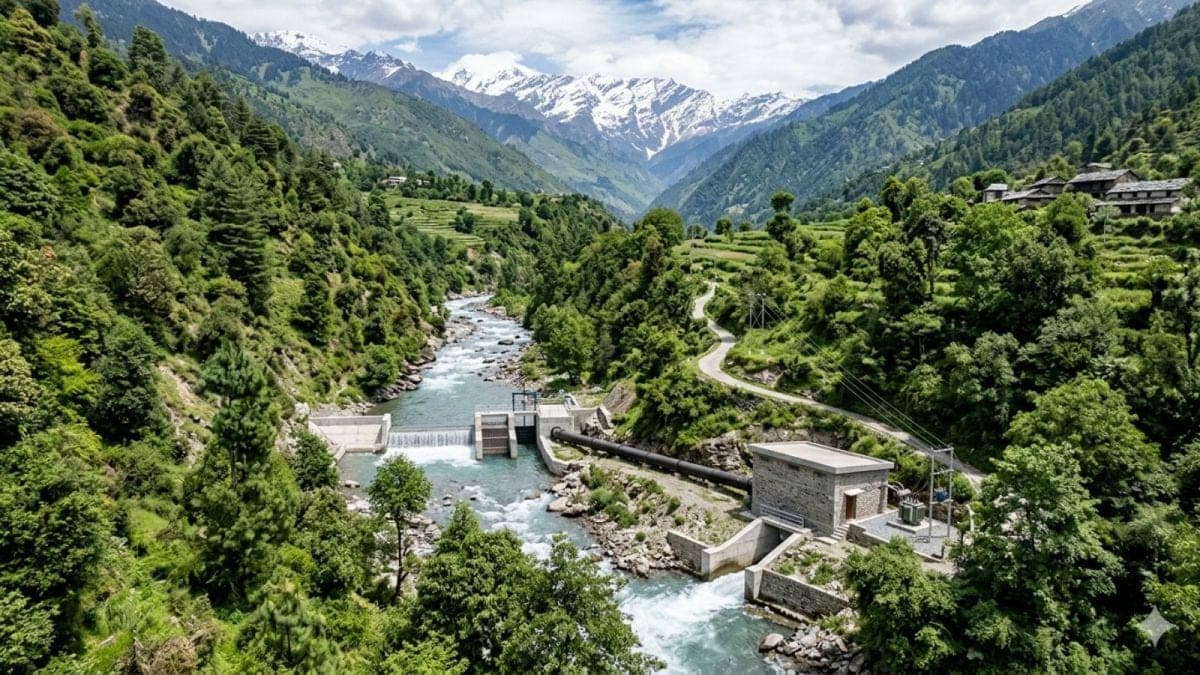
- Capacity Definition: Small hydro projects are defined as those with a capacity of up to 25 MW and are administered by the Ministry of New and Renewable Energy.
- Financial Assistance:
- For northeastern states and border districts: ₹3.6 crore per MW or 30% of project cost (whichever is lower), with a maximum of ₹30 crore per project.
- For other locations: ₹2.4 crore per MW or 20% of project cost (whichever is lower), with a maximum of ₹20 crore per project.
Economic Impact
- Investment: The scheme is expected to attract an investment of approximately ₹15,000 crores into the small hydro power sector.
- Indigenous Manufacturing: It promotes the use of indigenous plants and machinery, strengthening local manufacturing and supply chains.
Regional Distribution of Capacity
- Northern Region: 7,978 MW (approx. 38%), primarily in hilly states like Himachal Pradesh and Uttarakhand.
- Northeastern Region: 3,262 MW (approx. 15%), with Arunachal Pradesh holding the largest share.
- Southern Region: 5,490 MW (approx. 26%), led by Karnataka.
- Western Region: 2,963 MW (approx. 14%), with Maharashtra leading.
- Eastern Region: 1,440 MW (approx. 7%), including states like Bihar and West Bengal.
Environmental and Social Benefits
- Sustainability: Small hydro projects have minimal environmental impact, require less land, and can operate for extended periods.
- Local Development: By improving energy access in remote areas, these projects act as catalysts for local economic growth, enhancing infrastructure and creating jobs.
Conclusion
- The Small Hydro Power Development Scheme represents a significant policy intervention aimed at unlocking India’s untapped small hydro power potential.
- By integrating targeted financial support and infrastructure development, the scheme is poised to enhance clean energy capacity and foster inclusive development across the nation.
References
- Press Information Bureau (PIB)
- NITI Aayog
- Indian Renewable Energy Development Agency (IREDA)
Key Terms & Concepts
| Small Hydropower Capacity | Estimated capacity of 21,133.61 MW |
| Utilized Capacity | Approx. 5,171 MW utilized |
| Cabinet Approval | Approved budget of ₹2,584.60 crores |
| Target Capacity Increase | Aim to increase by 1,500 MW |
| Employment Generation | Expected 5.1 million person-days |
| Financial Assistance Structure | ₹3.6 crores per MW for NE states |
| Investment Expected | Approx. ₹15,000 crores investment |
| Project Reports | Support for 200 detailed project reports |
| Implementation Period | FY 2026-27 to FY 2030-31 |
| Run-of-the-River Projects | Utilizes natural river flow |
| Himachal Pradesh Capacity | 3,460 MW potential identified |
| Arunachal Pradesh Capacity | 2,064.92 MW potential identified |