iAspirants
Strengthening India-Vietnam Strategic Partnership
Published on:
Share this post
Article Summary
Key Points on India-Vietnam Relations Post State Visit of Vietnamese President Tô Lâm (May 5-7, 2026)
Bilateral Agreements & Enhanced Cooperation
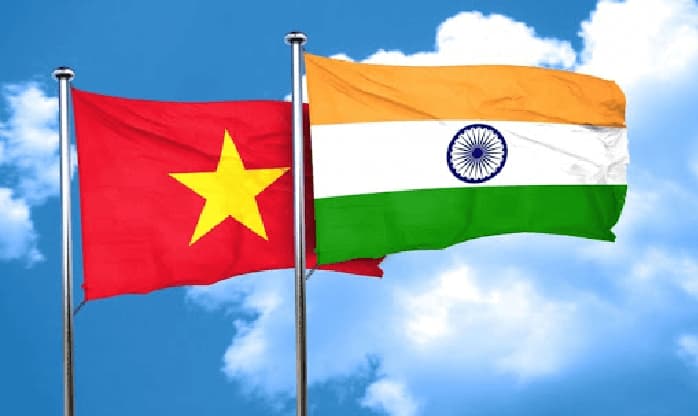
- India and Vietnam elevated their relationship to an Enhanced Comprehensive Strategic Partnership.
- Key agreements signed focus on defence, technology, finance, and energy sectors.
Strategic Context
- Evolving amidst increasing assertiveness from China in the South China Sea.
- Convergence in threat perceptions regarding maritime coercion and supply chain vulnerabilities.
Historical Progression
- India’s Look East (now Act East) policy initiated the relationship, transitioning toward a Comprehensive Strategic Partnership in 2016.
- Regular high-level exchanges and defence dialogues have deepened trust and cooperation.
Defence Cooperation
- Defence cooperation is deemed the backbone of the partnership.
- Notable actions include:
- Transfer of the INS Kirpan, a missile corvette, to Vietnam in 2023.
- Offer of finance lines, training assistance, and maritime cooperation.
- Current discussions involve potential shipments of BrahMos supersonic cruise missiles to Vietnam.
Economic Relations
- Bilateral trade has surpassed $16 billion, with a target of $25 billion by 2030.
- Strategic focus on:
- Supply chain resilience and rare earth collaboration.
- Digital payments integration amid an evolving economic partnership.
- Vietnam's critical role in India's supply chain diversification away from over-reliance on China.
Regional Implications
- Relationship contributes to minilateral partnerships alongside Japan, Australia, and the USA to maintain a rules-based maritime order.
- Joint statements emphasize rule of law, peace, and stability in the region.
ASEAN Relations
- Vietnam’s position as a pivotal ASEAN member enhances India’s engagement with Southeast Asia and reflects Hanoi’s strategic hedging.
- Growing ASEAN centrality in India’s Indo-Pacific vision.
Future Outlook
- Success of the partnership depends on translating strategic intentions into operational outcomes.
- Need to address implementation gaps in trade, connectivity, and defence industrial cooperation.
- Specific challenges include navigating scientific, financial, geopolitical obstacles, and structural barriers in logistics and legal frameworks.
Strategic Importance
- Cooperation in critical minerals and emerging technologies is seen as vital for regional security and economic architecture.
- Partnerships are vital in shaping alternative economic structures as global supply chains face change due to securitization.
Summary
The state visit of President Tô Lâm signifies a pivotal moment in India-Vietnam relations, showcasing a matured partnership poised to take on significant regional challenges, especially against the backdrop of China's assertiveness. The strategic and economic dimensions of this relation promise comprehensive developments, maturing into a robust alliance that highlights the importance of cooperation amid shifting geopolitical landscapes.
Key Terms & Concepts
| Enhanced Comprehensive Strategic Partnership | Bilateral relations upgrade |
| Act East Policy | India's strategic initiative |
| INS Kirpan | Missile corvette transfer |
| $16 billion | Current bilateral trade volume |
| $25 billion | Target trade volume by 2030 |
| ASEAN | Regional organization for collaboration |
| BrahMos | Proposed missile shipment |
| South China Sea | Strategic maritime area of concern |
| Japan, Australia, United States | Key strategic partners |
| Digital payment integration | Aspect of economic cooperation |
| Critical minerals | Area of expanded cooperation |
| Supply Chain Resilience | Focus for economic collaboration |