iAspirants
Study on Climate History of Majuli
Published on:
Share this post
Article Summary
Summary of Research Study on Majuli Island's Climate History
Key Facts:
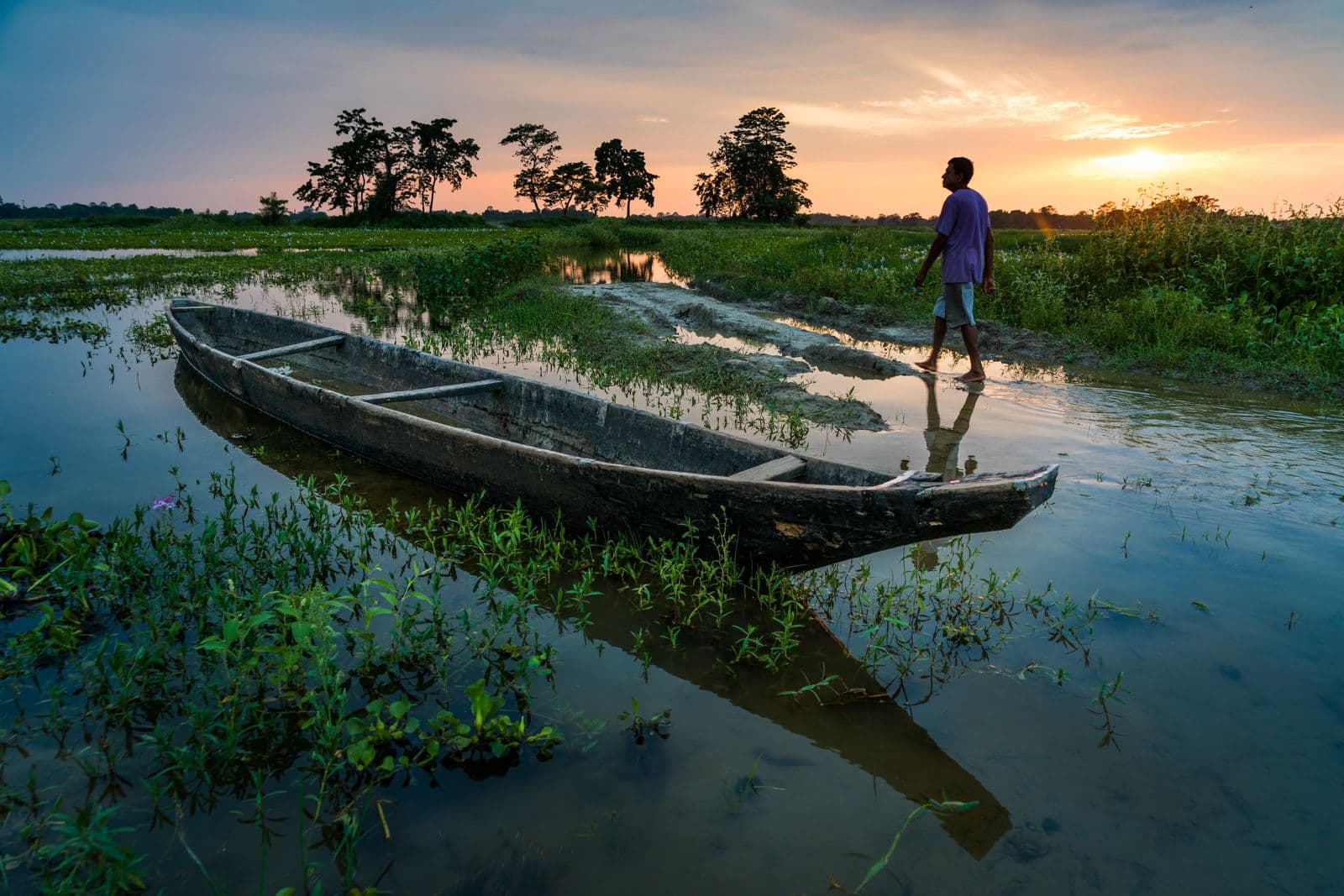
- Location: Majuli Island, Assam, India - the world's largest inhabited river island.
- Cultural Significance: A center for neo-Vaishnavism and home to several indigenous tribes.
- Research Duration: Covers approximately 4,000 years of climate and vegetation history.
Study Highlights:
- Conducted by Birbal Sahni Institute of Palaeosciences (BSIP), Lucknow, under the Department of Science and Technology (DST).
- Provides insights into climate variability, vegetation change, and flood conditions over a long-term perspective.
- Uses sediment cores from Sakali Wetland to analyze pollen and grain size, revealing historical environmental conditions and river dynamics.
Climate and Vegetation Changes:
- Chronology:
- 4040-2260 calibrated years BP: Initial warm and humid phase with dense forest cover.
- Transition to drier conditions over 4.2 thousand years.
- Fluctuations in monsoon intensity and flood severity, with a relatively humid period from 1100-500 calibrated years BP correlating with the Medieval Climate Anomaly.
- Recent 500 years show a decline in temperature and rainfall, aligning with the Little Ice Age.
Methodology:
- Pollen Analysis: Considered one of the most reliable indicators of past environmental conditions; preserved in sediments over thousands to millions of years.
- Grain Size Analysis: Helps in understanding river dynamics and flood intensity changes over time.
Findings:
- Established the first comprehensive environmental record for Majuli Island.
- Identified significant correlations between local vegetation dynamics and major global climate events, highlighting the region's vulnerability to climate change.
Implications:
- Results can inform climate adaptation strategies for communities affected by recurrent flooding and land loss.
- Provides a scientific basis for biodiversity conservation, wetland restoration, and sustainable land-use planning.
Publication:
- The study is published in the journal Palaeobotany and Palynology, contributing to the understanding of long-term climate-vegetation dynamics and river processes in Majuli Island.
Relevance:
- The findings underscore the importance of integrating paleoecological data into policy-making and disaster management frameworks, particularly in flood-prone regions like the Brahmaputra basin.
This research enhances the understanding of climate adaptability and ecological resilience, essential for sustainable development in vulnerable areas.
Key Terms & Concepts
| Majuli Island | Largest inhabited river island |
| Brahmaputra River | Affects flooding in region |
| Beirbal Sahni Institute of Palaeosciences | Conducted the climate study |
| Holocene epoch | Period of environmental changes |
| 4040 to 500 calibrated years BP | Time frame for temperature estimates |
| Climate variability | Focus of the study |
| Pollen analysis | Reconstructs past vegetation |
| Wetland restoration | Focus for ecological planning |
| Climate adaptation strategies | Address flooding impacts |
| Paleo-botany and palynology | Fields of study for research |
| Environmental indicators | Showcase ecological changes |
| Flood intensity | Key factor analyzed |