iAspirants
Supreme Court and Aravalli Mining Leases
Published on:
Share this post
Article Summary
Summary of Key Facts and Data regarding Aravalli Hills and Mining Leases
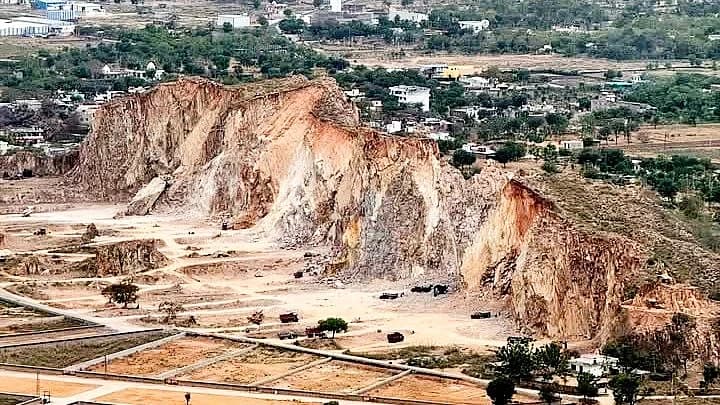
- Supreme Court Involvement: The Supreme Court (SC) is involved in defining the boundaries of the Aravalli hills for ecological protection, specifically considering a proposal for a 100-metre definition.
- Central Empowered Committee (CEC): Established by the SC in 2002, CEC emphasized the need to adhere to a 3-degree slope benchmark for the Aravalli hills as set by the Forest Survey of India (FSI).
- Mining Lease Recommendations: As of November 7, 2024, the CEC recommended not to process the renewal or extension of 164 mining leases in Rajasthan until the SC approves a final definition of the Aravallis.
- Lease Geography: The 164 mining leases are partly or wholly located within the FSI-defined Aravalli hills, adhering to a pre-existing height cutoff for mining licenses established in 2006.
- Historical Context:
- May 2024: The SC allowed Aravalli states to process mining lease applications but stipulated that no final permissions could be granted without court approval.
- August 2024: Rajasthan was allowed to file applications to renew or extend mining leases that complied with relevant laws.
- Current Status of Applications:
- 379 applications for extensions or renewals were received, with 165 of these meeting necessary statutory requirements.
- CEC noted that crucial details regarding the mining applications were still pending from Rajasthan’s Department of Mines and Geology.
- Geographical Assessments: CEC utilized technology tools (KML files superimposed on Google Earth) to analyze overlaps of planned mining areas with Aravalli hill polygons.
- Outcome: The CEC report indicated that only one of the 164 mining leases had a marginal intersection with the Aravalli polygons, while the others fell wholly within them.
- Court’s Decision: On November 20, 2024, the SC accepted the 100-metre definition for the Aravallis, impacting future mining operations and applications.
Constitutional and Legal Considerations:
- Article 48A: The State shall endeavor to protect and improve the environment and to safeguard the forests and wildlife of the country.
- Related Acts: Compliance with the Rajasthan Minor Mineral Concession Rules, 2017 is emphasized for the processing of renewal/extension applications.
Environmental Implications: The management and conservation of the Aravalli hill's ecology are critical amidst economic activities like mining. Further assessments and adherence to agreed-upon ecological benchmarks will determine the sustainability of these leases.
Key Recommendations: The CEC's recommendation underscores the importance of strictly adhering to legal definitions and environmental assessments before approving further mining activities in ecologically sensitive areas. The necessity for complete data submission by the state government is essential for informed judicial decisions.
This summary encapsulates the legal proceedings, ecological considerations, and implications for mining in the Aravalli region, highlighting the necessary balance between development and environmental protection.
Key Terms & Concepts
| Aravalli Hills | Geographical area under dispute |
| Central Empowered Committee (CEC) | Advisory body to Supreme Court |
| Supreme Court | Judicial authority in mining decisions |
| Rajasthan Minor Mineral Concession Rules, 2017 | Regulatory framework for mining |
| Forest Survey of India (FSI) | Provider of ecological benchmarks |
| 100-metre definition | New benchmark for mining regulation |
| May 2024 | Date of Supreme Court decision |
| 379 applications | Total applications for mining leases |
| 164 mining leases | Leases under review for approval |
| November 20 | Date of Supreme Court's acceptance |
| ML-65/1993 | Specific mining lease mentioned |