iAspirants
Supreme Court and Governor's Powers
Published on:
Share this post

Article Summary
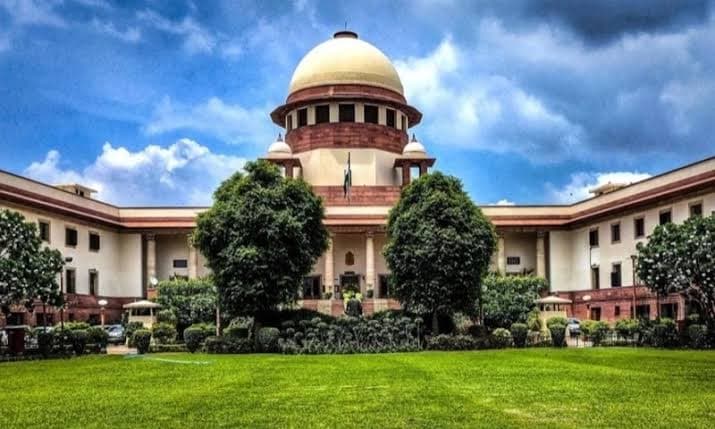
Supreme Court Hearing: The Supreme Court of India is reviewing a Presidential Reference regarding the Governor’s powers under Article 200 of the Constitution, which deals with assent to bills passed by the state legislature.
Governor’s Options Under Article 200:
- The Governor has four options:
- Assent to the bill
- Withhold assent
- Return the bill for reconsideration
- Reserve the bill for the President's consideration
- The Governor has four options:
Timeline Directive: The Court mandated a three-month timeline for both the Governor and the President to make decisions on bills, which has drawn criticism regarding the authority of high constitutional offices.
Arguments of Discretion:
- Article 163 states the Governor acts on the advice of the Council of Ministers, raising the question of whether the Governor can exercise discretion under Article 200.
- Judicial precedent, including Shamsher Singh vs State of Punjab (1974) and Nabam Rebia (2016), confirmed that Governors must act based on ministerial advice.
Historical Context: The Government of India Act, 1935, included the phrase "the governor in his discretion," whereas Article 200 omits this, indicating that the Constitution-makers intended for the Governor to act only on ministerial advice.
Judicial Rulings:
- In State of Tamil Nadu vs The Governor of Tamil Nadu (2025), the court rejected the argument of a Governor exercising discretion, emphasizing the need for accountability to prevent legislative obstruction.
- The Sarkaria Commission allows for rare discretion if the bill is patently unconstitutional.
Constitutional Interpretation: According to constitutional scholar D.D. Basu, the deliberate omission of “discretion” in Article 200 constrains Governor's powers to act independently from the Council of Ministers.
Impact of Delays:
- The Supreme Court acknowledged significant delays by some Governors in assenting to bills, noting that such inaction impedes the functioning of government and the legislative process.
- There is recognition that Article 355 can provide a basis for the Union Government to direct the Governor to act appropriately under Article 200 to maintain the constitutional governance of states.
Judicial Acknowledgment: Recent rulings are viewed as critical in strengthening federalism and ensuring the legislative process is not hindered by excessive delay.
Implications for Future Governance: The Court's ruling attempts to address the legislative deadlock created by Governor inaction and aims to uphold the principle of accountability within the constitutional framework.
This summary encapsulates the key constitutional provisions, judicial interpretations, and the implications of the Supreme Court's recent rulings regarding the Governor's powers and the legislative process in India.
Key Terms & Concepts
| Supreme Court of India | Hearing arguments on power usage |
| Article 200 | Governor's options for assent |
| Article 163 | Governor's functions with aid |
| Government of India Act, 1935 | Historical basis for Article 200 |
| Sarkaria Commission | Reiterated constitutional principles |
| Punchhi Commission | Reviewed federal structure issues |
| Article 355 | Union Government intervention guidelines |
| State of Punjab vs Principal Secretary to the Governor (2023) | Landmark judicial ruling |
| State of Tamil Nadu vs The Governor Of Tamilnadu and Anr. (2025) | Clarified Governor's discretionary power |