iAspirants
Supreme Court Discusses Protest Regulations
Published on:
Share this post
Article Summary
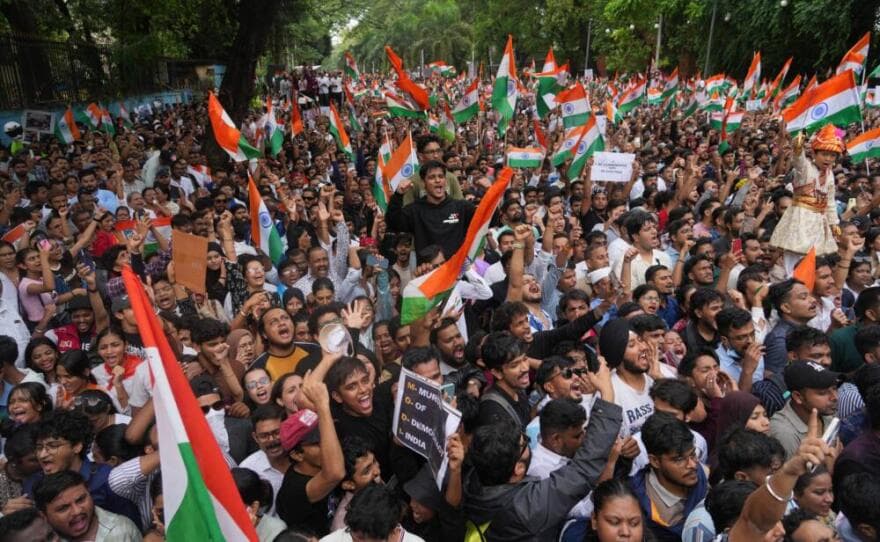
Supreme Court Observations on Right to Protest: Key Points
Constitutional Protections:
- The right to peaceful protest is guaranteed under the Indian Constitution, highlighting Articles related to fundamental rights.
- Police conduct during protests may be subject to uniform guidelines ensuring the protection of both protesters and police personnel.
Judicial Bench Composition:
- The hearing was led by Chief Justice of India (CJI) Surya Kant with Justices Joymalya Bagchi and V. Mohana.
Context of Protests:
- Nationwide protests erupted over examination paper leaks, leading to significant political consequences, including the resignation of Union Education Minister Dharmendra Pradhan and the appointment of Pralhad Joshi in his place.
Proposed Legislation:
- The government introduced the Public Examinations (Prevention of Unfair Means) Amendment Bill, 2026:
- Proposes to increase imprisonment for cheating in examinations from 3-5 years to 5-10 years.
- Increases the maximum fine from ₹10 lakh to ₹50 lakh.
- The government introduced the Public Examinations (Prevention of Unfair Means) Amendment Bill, 2026:
Judiciary's Concerns:
- The Supreme Court expressed a need for discipline among citizens and police in protest situations, emphasizing that alleged police excesses, including lathi charges and aerial firing incidents, need independent examination.
- Multiple petitions regarding police aggression during protests were submitted, particularly concerning police actions in Bihar’s Siwan district.
Call for Safety Protocols:
- The court raised the issue of whether the police had adequate safety gear during crowd management, marking concern for injuries to both protesters and police.
- Senior advocates called for pan-India guidelines to govern police action in protest situations.
Hearing Schedule:
- All petitions related to these incidents will be heard together on July 28, 2026.
Incidents During Protests:
- Allegations of police using weapons like AK-47s against protesters have emerged.
- Injuries incurred by protesters, including serious ones resulting from police actions, are a matter of judicial concern.
Public Response and Accountability:
- There is scrutiny regarding police actions, especially allegations of excessive use of force. The court has indicated a commitment to independently assess reported incidents of violence.
Historical Context:
- These observations and actions come amidst a larger backdrop of social movements and responses to governance, reflecting ongoing tensions between individual rights and law enforcement powers in India.
This summary encapsulates the judicial stance, legislative proposals, and the socio-political environment surrounding recent protests, highlighting key constitutional rights and the balance of law enforcement response amidst civil agitation.
Key Terms & Concepts
| Supreme Court of India | Judicial authority on protests |
| Constitution | Guarantees peaceful protest rights |
| Public Examinations (Prevention of Unfair Means) Amendment Bill, 2026 | Proposes harsher penalties for cheating |
| July 20, 2026 | Date of notable protests |
| ₹50 lakh | Proposed maximum fine under Bill |
| 5 to 10 years | Proposed imprisonment increase |
| Bihar | Location of police firing incident |
| AK-47 | Type of weapon allegedly used |
| July 27, 2026 | Hearing date for petitions |
| Central Reserve Police Force (CRPF) | Involved in protest policing |
| Rapid Action Force (RAF) | Deployed during protests |
| Delhi Police | Authority managing protests |