iAspirants
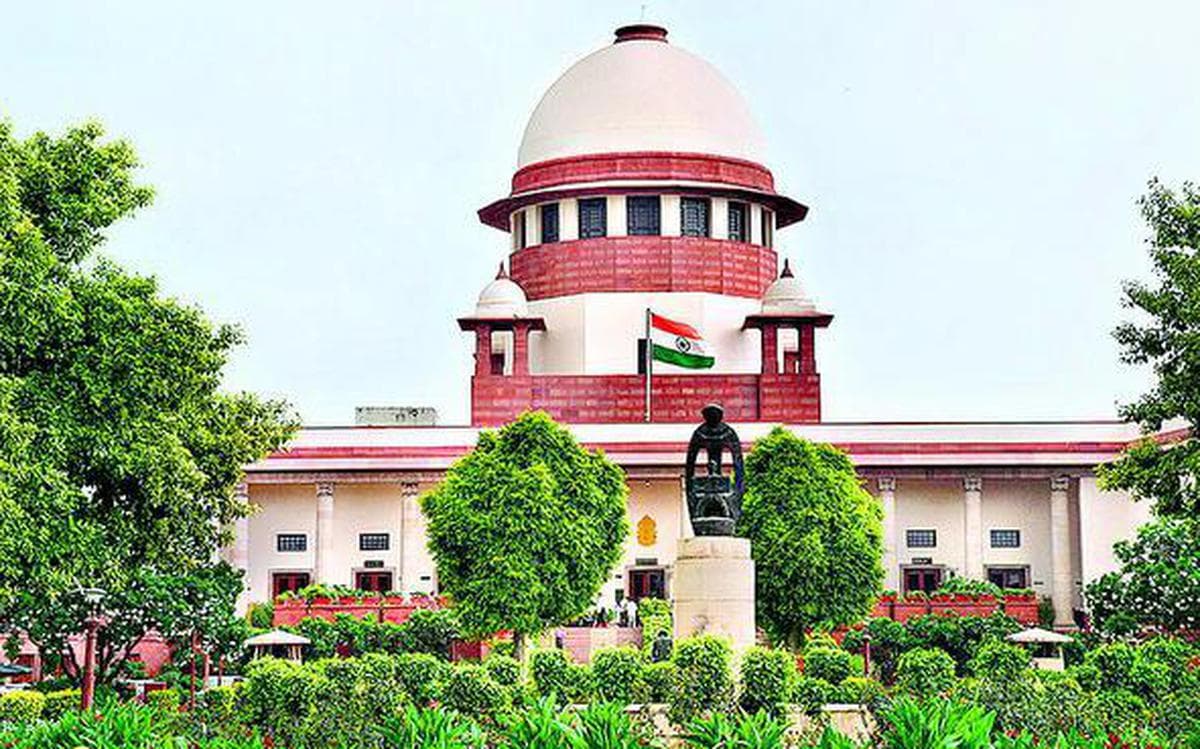
Supreme Court Hearing on Migrant Detention
Published on:
Share this post

Article Summary
The recent proceedings in the Supreme Court related to the detention of Bengali-speaking migrant workers highlight critical legal, constitutional, and procedural concerns regarding the identification and deportation of alleged foreign nationals in India.
Key Points from the Article:
Supreme Court Hearing:
- The Supreme Court agreed to hear a Public Interest Litigation (PIL) related to the detention of Bengali-speaking migrant workers, filed by the West Bengal Migrant Workers Welfare Board.
- Over a thousand Bengali migrant workers were reportedly detained from February to July 2023 under suspicion of being undocumented Bangladeshi immigrants.
- A notice was issued to the Centre and nine states for their response regarding this matter.
Legal Framework:
- The legal proceedings reference the Foreigners Act, 1946, which defines a "foreigner" as someone who is not an Indian citizen and empowers the government to impose restrictions on their movements.
- Section 9 of the Foreigners Act places the burden of proof on individuals categorized as 'foreigners' to prove their Indian citizenship.
Challenges in Proving Citizenship:
- Citizenship in India is complex and governed by the Citizenship Act, 1955, which specifies different criteria for individuals based on their birth dates.
- Individuals born in India between January 26, 1950, to July 1, 1987, are deemed citizens if at least one parent is an Indian citizen.
- For individuals born after July 1, 1987, they are recognized as citizens if both parents are citizens at the time of their birth, or if one parent is a citizen and the other is not an illegal migrant.
- Supreme Court rulings indicate that common identification documents do not suffice as conclusive proof of citizenship, complicating the process for individuals, especially those from marginalized communities, due to a documentation deficit.
- Citizenship in India is complex and governed by the Citizenship Act, 1955, which specifies different criteria for individuals based on their birth dates.
Ministry of Home Affairs Directives:
- On May 2, 2025, the Ministry of Home Affairs (MHA) issued directives instructing states to create Special Task Forces to identify and deport illegal immigrants, particularly focusing on Bangladeshis and Rohingyas.
- The MHA also mandated that if an individual claims Indian citizenship, verification must occur within 30 days, failing which deportation could ensue based merely on administrative delays.
Deportation Process:
- Deportation procedures have established protocols, particularly in states like Assam, where cases are reviewed by Foreigners Tribunals under the Foreigners (Tribunals) Order, 1964. The current revision to expedite deportations adds concerns regarding due process.
- The procedures, as stipulated, may lead to individuals being deemed foreigners without adequate legal recourse, thereby potentially violating their rights.
Legal Grounds for Challenge:
- The PIL argues that the MHA’s new procedures are unconstitutional, violating fundamental rights to life, liberty, and equality under the Indian Constitution.
- It raises concerns about arbitrary powers given to law enforcement and the potential for wrongful deportations without due legal process.
Conclusion:
This case underscores the complexities of immigration law and procedural justice in India, revealing significant constitutional implications regarding the detention and deportation of suspected foreigners. The Supreme Court's decision to hear this PIL may shape the future contours of migration law, citizenship rights, and due process in India.
Important Sentences:
- The Supreme Court agreed to hear a PIL on the detention of Bengali-speaking migrant workers suspected of being undocumented immigrants.
- The Foreigners Act, 1946, places the burden of proof for citizenship on individuals labeled as 'foreigners'.
- Citizenship determination in India is complicated, with no single definitive proof of citizenship for individuals born in the country.
- The MHA's directives established a 30-day verification process which could facilitate rapid deportations.
- The legality of these new procedures is questioned in the PIL, citing potential violations of fundamental rights under the Constitution.
Key Terms & Concepts
| Supreme Court | Hearing public interest litigation |
| West Bengal Migrant Workers Welfare Board | Filed the PIL |
| Foreigners Act, 1946 | Governs foreign nationals entry |
| Citizenship Act, 1955 | Defines citizenship criteria |
| Ministry of Home Affairs | Issued deportation directives |
| Assam | State with specific deportation process |
| Aadhaar cards | Not conclusive proof of citizenship |
| Holding Centers | Detain suspected illegal immigrants |