iAspirants
Supreme Court on Outsourcing Jobs
Published on:
Share this post

Article Summary
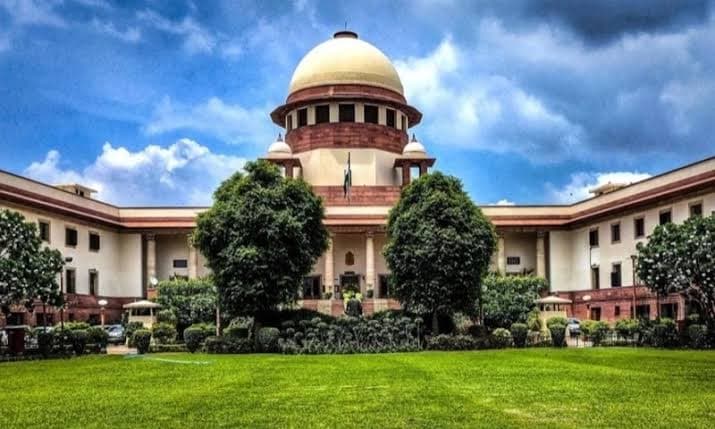
The Supreme Court of India has delivered a pivotal judgment regarding the employment practices of public institutions, focusing on the treatment of long-term ad hoc workers and the issue of job outsourcing. The judgment was pronounced on August 25, 2025, by a bench comprising Justices Vikram Nath and Sandeep Mehta.
Key Points:
- Outsourcing and Employee Rights: The Court ruled that public institutions cannot use outsourcing to exploit employees or evade legal obligations regarding regular employment and salary parity.
- Nature of Employment: The bench emphasized that the state, as a constitutional employer, must recognize and regularize jobs that are inherently perennial rather than resorting to hiring temporary or ad hoc workers.
- Constitutional Duty: Justice Nath articulated that the state is not merely a market player but is obligated to engage with its workforce fairly, reflecting the necessity of such roles in public administration.
- Case Context: The ruling arose from an appeal made by daily wage workers of the Uttar Pradesh Higher Education Services Commission, who sought regularization after their requests were denied by the commission citing financial constraints and lack of vacancies.
- Critique of Current Practices: The Court criticized the practice of "ad hocism," asserting that reliance on temporary workers undermines public confidence and violates the principle of equal protection under the law.
- Financial Stringency: While acknowledging that financial limitations do have implications on public policy, the Court stated that they cannot supersede the need for fairness and lawful engagement in employment practices.
- Administrative Transparency: The judgment mandates that government departments maintain accurate records of employment, including establishment registers and muster rolls, and to justify their preference for temporary arrangements over permanent hiring.
- Consequences of Insecurity: The Court noted that prolonged job insecurity adversely affects employees and emphasized the need for clear job descriptions, timelines, and compliance measures.
- Judicial Responsibility: The ruling articulated that delays in compliance with these obligations do not constitute simple negligence but rather reflect a deliberate disregard that threatens the livelihoods and dignity of employees.
Constitutional Implications:
- The Court's observations align with Article 14 of the Indian Constitution, which speaks to the right to equality and the obligation of the state to provide equal protection under the law. The judgment reinforces the state’s constitutional responsibility to ensure fair employment practices for all workers engaged in public service.
Operational Mandates:
- Government Departments: The Supreme Court ordered public institutions to create proper budgets that account for permanent positions and fulfill judicial directives faithfully concerning employee engagement.
- Regulation of Employment: Institutions must devise policies that acknowledge the permanence of certain roles, ensuring that their workforce is not relegated to precarious employment conditions under temporary labels.
This judgment serves as a significant reinforcement of labor rights within the public sector and holds the state accountable for the welfare of its employees, particularly those engaged in long-term, recurring work without the security of regularization.
In summary, the Supreme Court has made a landmark ruling that emphasizes the balance between fiscal responsibility and the protection of worker rights, highlighting the importance of transparency, fairness, and stability in public employment practices.
Key Terms & Concepts
| Supreme Court | Judicial authority |
| Uttar Pradesh Higher Education Services Commission | Commission denying regularization |
| Justices Vikram Nath | Judge delivering judgment |
| Justices Sandeep Mehta | Judge delivering judgment |