iAspirants
Supreme Court Questions Governors' Delay
Published on:
Share this post

Article Summary
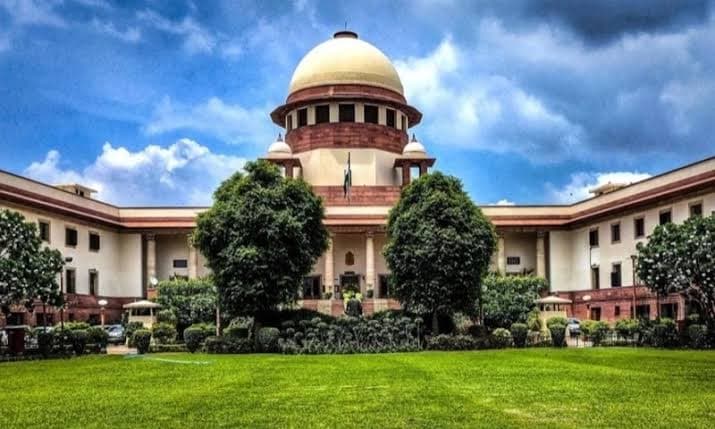
On September 2, 2025, a Presidential Reference Bench of the Supreme Court of India commented on the role of Governors in relation to legislative bills, asserting that they cannot indefinitely delay their assent. This discussion involved the states of Tamil Nadu and West Bengal, which argued that the Governors should not act as impediments to the legislative process. The Chief Justice of India B.R. Gavai, along with Justices Vikram Nath and P.S. Narasimha, emphasized that the Constitution cannot be hindered by any organ of the state.
Key components of the ongoing case include:
- Presidential Reference: The Supreme Court is evaluating a Presidential Reference submitted in May 2025, which addresses whether there should be time limits for Governors and the President in handling state bills.
- Historical Context: This reference follows an April 8, 2025, judgment by a two-judge bench that criticized the Governor of Tamil Nadu for delaying assent to ten state bills since 2020, establishing a new precedent that required a decision on similar bills within three months, post which they would be considered deemed assented.
- Arguments Presented:
- Tamil Nadu's advocates, A.M. Singhvi and P. Wilson, contended that the role of Governors should not equate to a "royalty in a Republic", implying their duties should align with democratic principles and cooperation.
- West Bengal's counsel, Kapil Sibal, supported the assertion that legislative processes are sovereign and cannot be obstructed by the Governor’s inertia. He argued against granting absolute power to Governors under Article 200 of the Constitution (which gives Governors authority to assent to bills).
Supreme Court Observations:
- The court raised concerns about implementing a "general" time limit for Governors and questioned potential legal inconsistencies if the three-month deadline from the previous judgment was not adhered to.
- Justice Vikram Nath inquired about possible remedies if the consensual assumption of assent was not followed, indicating that simply deeming bills assented might not suffice without addressing the mechanism of refusal or further deliberation with the President.
- Justice Narasimha suggested that while general timelines might not apply, individual cases could potentially have specific time frames guided by the circumstances surrounding each bill.
Legal Perspectives:
- Advocates reaffirmed that legislative acts are fundamental and must not be hindered by gubernatorial inaction. Sibal emphasized that a collaborative relationship between the legislative and executive branches is critical for constitutional functioning.
- The Governors are seen as a conduit between the state's legislative actions and the execution of laws, necessitating their active engagement rather than passive oversight.
Conclusion: This case presents significant implications regarding the balance of power between state Governors and legislative assemblies, highlighting the necessity for timely action on democracy’s foundational processes. The outcome of this reference may redefine the limitations and expectations of Governor actions on relevant bills and affect the broader constitutional relationship between state heads and legislative bodies.
Important Points:
- The Supreme Court asserts that Governors cannot delay legislative bills indefinitely.
- A three-month deadline for assent to state bills was established in a previous judgment.
- The court is examining the appropriateness of setting a general timeline for Governor actions.
- Advocates emphasized legislation as a sovereign act, necessitating prompt governor assent.
- Tension exists between the role of the Governor in state legislation and the need for cooperative governance.
Key Terms & Concepts
| Tamil Nadu | State in legal argument |
| West Bengal | State in legal argument |
| Supreme Court | Judicial authority |
| Presidential Reference | Legal inquiry process |
| Article 200 | Constitutional provision |
| Chief Justice B.R. Gavai | Judicial authority |
| Justice Vikram Nath | Judicial authority |
| Justice P.S. Narasimha | Judicial authority |
| A.M. Singhvi | Senior advocate for Tamil Nadu |
| Kapil Sibal | Senior advocate for West Bengal |