iAspirants
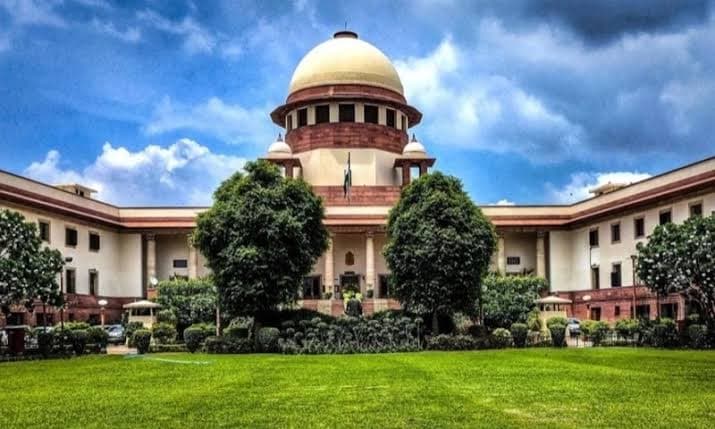
Supreme Court Refuses Urgent Hearing
Published on:
Share this post

Article Summary
Supreme Court Ruling on Madras High Court Order Regarding Personal Assistants (PAs) Appointment: Key Points
Judicial Context: The Supreme Court declined an urgent hearing on a plea challenging a Madras High Court order that annulled the appointment of 17 Personal Assistants to High Court judges. The High Court identified multiple illegalities and irregularities in the recruitment process.
High Court Findings:
- The court acted on a suo motu (on its own motion) case initiated in 2024 regarding the PA appointments.
- It found non-compliance with Rule 14A of the Madras High Court Service Rules, 2015, which mandates passing Higher Grade exams in English shorthand and typewriting as essential qualifications for PAs.
Legal Violations:
- In-service candidates lacking the required qualifications were appointed with a one-year grace period to acquire them. This action was deemed to contravene the Right to Equality under Article 14 of the Indian Constitution.
- The High Court stated that the relaxation of essential eligibility requisites prior to appointment undermined the principle of equality and indicated arbitrariness.
Rights and Equal Opportunities:
- The High Court emphasized that unnecessary relaxations gave undue advantage to ineligible candidates, breaching service rules and creating an inequitable selection process. This could potentially infringe upon the rights of other eligible candidates.
Judicial Leadership:
- A Bench led by Justices S. M. Subramaniam and N. Senthilkumar reaffirmed that technical qualifications are fundamental for the PA role, and any alteration of eligibility criteria must have valid justification.
Precedential Significance:
- The High Court warned that allowing the 17 PAs to continue could set a dangerous precedent, further diluting the merits-based recruitment ethos and infringing on the rights of other applicants seeking the role of Personal Assistant.
Implications:
- The dismissal of the urgent hearing suggests the Supreme Court's intention to maintain the integrity of judicial appointments based on merit and adherence to established qualifications, reinforcing the constitutional mandate of equality before the law.
Conclusion: The Supreme Court's decision not to review the Madras High Court's annulment of the PA appointments underscores the importance of following due process and maintaining fairness in public service appointments, adhering to constitutional principles and established rules.
Key Terms & Concepts
| Supreme Court | Judicial authority in India |
| Madras High Court | Court issued recruitment order |
| Personal Assistants (PAs) | Position challenged in court |
| Rule 14A | Regulation for PAs qualifications |
| Madras High Court Service Rules, 2015 | Regulations governing appointments |
| Right to Equality | Fundamental right under Constitution |
| Article 14 | Constitutional provision on equality |
| Higher Grade examinations | Essential qualification for PAs |
| 2024 | Year of High Court's suo motu case |
| 2026 | Year of Supreme Court's decision |