iAspirants
Supreme Court's AI Caution in Judiciary
Published on:
Share this post

Article Summary
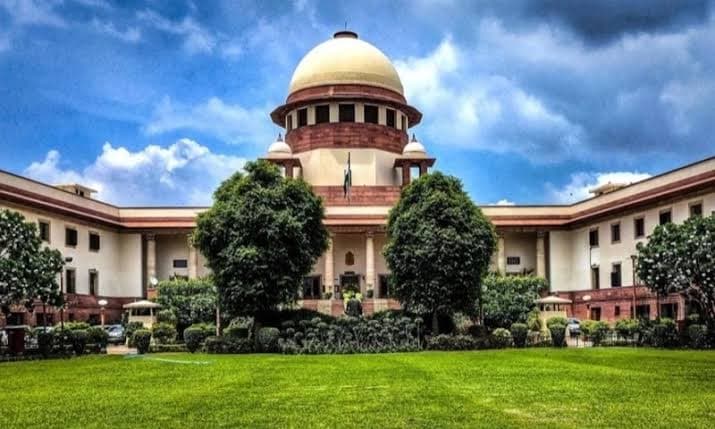
Judicial Concerns on AI Use: The Supreme Court of India has warned against reliance on AI-generated information in judicial proceedings, equating its misuse to the toxic effects of methyl isocyanate from the Bhopal gas tragedy (1984), describing it as “invisible, insidious, and catastrophic.”
Case Overview: The Court set aside decisions from the National Company Law Tribunal (NCLT) and National Company Law Appellate Tribunal (NCLAT) due to reliance on fictitious AI-generated legal citations, which was also overlooked by the appellate tribunal.
Judicial Rulings and Approach: The Court affirmed a strict stance on the deployment of AI in justice delivery, asserting that while AI can improve efficiency, it cannot substitute human reasoning, discretion, or accountability. Rulings from earlier this year emphasized judicial misconduct when AI-generated citations influence decisions.
Professional Standards: The Court indicated that judges influenced by AI-generated fabrications render decisions without legal validity. This represents a violation of professional standards for both judges and advocates.
Draft Regulations on AI in Court: The Supreme Court introduced the draft “Regulations for Use of Artificial Intelligence (AI) in Courts, 2026,” prohibiting AI use in adjudication, sentencing, bail eligibility, and assessing credibility of parties or witnesses. This draft is open for public consultation.
Bar Council of India’s Role: The Court directed the Bar Council of India (BCI) to establish a committee to create regulations and define disciplinary measures for lawyers who present unverified AI material in court.
Existential Questions on AI: The integration of AI in various sectors raises concerns regarding its societal impact, with an acknowledgment of the potential risks of misapplication leading to significant social consequences.
Judicial Authority: The Supreme Court emphasized the need for human oversight to mitigate risks associated with AI, reinforcing the principle that justice should be transparent and based on verified human judgment, not AI hallucinations.
Key Terms & Concepts
| Supreme Court of India | Judicial authority on AI issues |
| National Company Law Tribunal (NCLT) | Initial tribunal for insolvency case |
| National Company Law Appellate Tribunal (NCLAT) | Appellate tribunal for NCLT decision |
| Bhopal gas tragedy | Analogy for AI risks |
| Artificial Intelligence (AI) | Technology in judiciary discussion |
| Regulations for Use of Artificial Intelligence (AI) in Courts, 2026 | Draft regulations governing AI use |
| Bar Council of India (BCI) | Body for formulating AI norms |
| February 27 | Date of significant court observation |