iAspirants
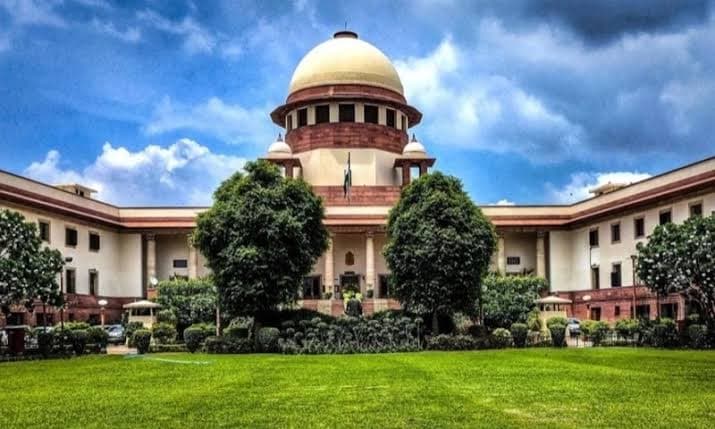
Supreme Court's Concerns on Execution Delays
Published on:
Share this post

Article Summary
Supreme Court Concerns on Execution Petitions in Indian Judiciary: Key Highlights
Judicial Observations
- The Supreme Court criticized the delay in execution petitions, termed the state of lower courts as “highly disappointing”.
- Justice JB Pardiwala and Justice Pankaj Mithal highlighted the alarming figure of over 8.82 lakh pending execution petitions nationwide.
Execution Petition Process
- Definition: An execution petition is a formal request to implement a court's decree after a civil lawsuit.
- Delays in the execution process can render judicial victories ineffective, leading to a cycle of litigation and eroded trust in the justice system.
Data Insights
- Average time for disposal of civil suits is approximately 4.91 years, with execution petitions taking an additional 3.97 years.
- As per the National Judicial Data Grid (NJDG), 47.2% of pending execution petitions were filed before 2020.
- The primary reasons for delayed execution include:
- Unavailability of legal counsel (38.9%)
- Court stays on proceedings (17%)
- Awaiting documents (12%)
Procedure Issues
- The Civil Procedure Code necessitates multiple procedural steps, contributing to delays. Each step can extend the process by months due to necessary hearings.
Regional Disparities
- Certain states such as Maharashtra and Tamil Nadu exhibit high pendency, indicating a need for localized analysis of judicial infrastructure and dispute volume.
Supreme Court's Interventions
- In 2021, the apex court established 14 mandatory directions to expedite execution proceedings, including a six-month disposal target.
- A follow-up in March 2025 reaffirmed the need for a nationwide data tracking mechanism for execution matters, reflecting its ongoing commitment to judicial efficiency.
Recent Judicial Orders
- As per the October 16 order, the court noted 3,38,685 execution petitions were disposed of following the implementation of its March directives, yet emphasized the continuing 8,82,578 pending petitions.
- The Bombay High Court tops the list with over 3.4 lakh pending petitions, followed by the Madras High Court (~ 86,000) and Kerala High Court (~ 83,000).
Future Directions
- An extension of another six months was provided to High Courts to enhance the execution of pending petitions.
- The Supreme Court is set to review compliance by April 10, 2026.
Constitutional and Legal Framework
- The Supreme Court's involvement raises important discussions around the effectiveness of the Civil Procedure Code and the rule of law under Article 14 (Right to Equality) and Article 21 (Right to Life) of the Indian Constitution, advocating timely access to justice.
This summary underscores the Judicial System's challenges in India, particularly concerning execution petitions, while highlighting the urgent need for systemic reforms to ensure effective legal recourse and uphold citizens' rights.
Key Terms & Concepts
| Supreme Court | Judicial authority regulating proceedings |
| execution petitions | Pending legal enforcement requests |
| October 16 | Date of order concerning delays |
| 8.82 lakh | Number of pending petitions |
| National Judicial Data Grid (NJDG) | Data source for litigation statistics |
| Civil Procedure Code | Legal framework for lawsuits |
| Maharashtra | Region with highest pendency |
| Tamil Nadu | Region with substantial posts pending |
| 2021 judgment | Court ruling on execution timeframe |
| March 2025 judgment | Apex court directive on monitoring |
| six-month deadline | Court's directive for petition disposal |
| 3,38,685 | Executed petitions in six months |