iAspirants
Tamil Poetry's Connection with Nature
Published on:
Share this post
Article Summary
Tamil Classical Literature and Ecological Awareness
Key Highlights:
Cultural Significance:
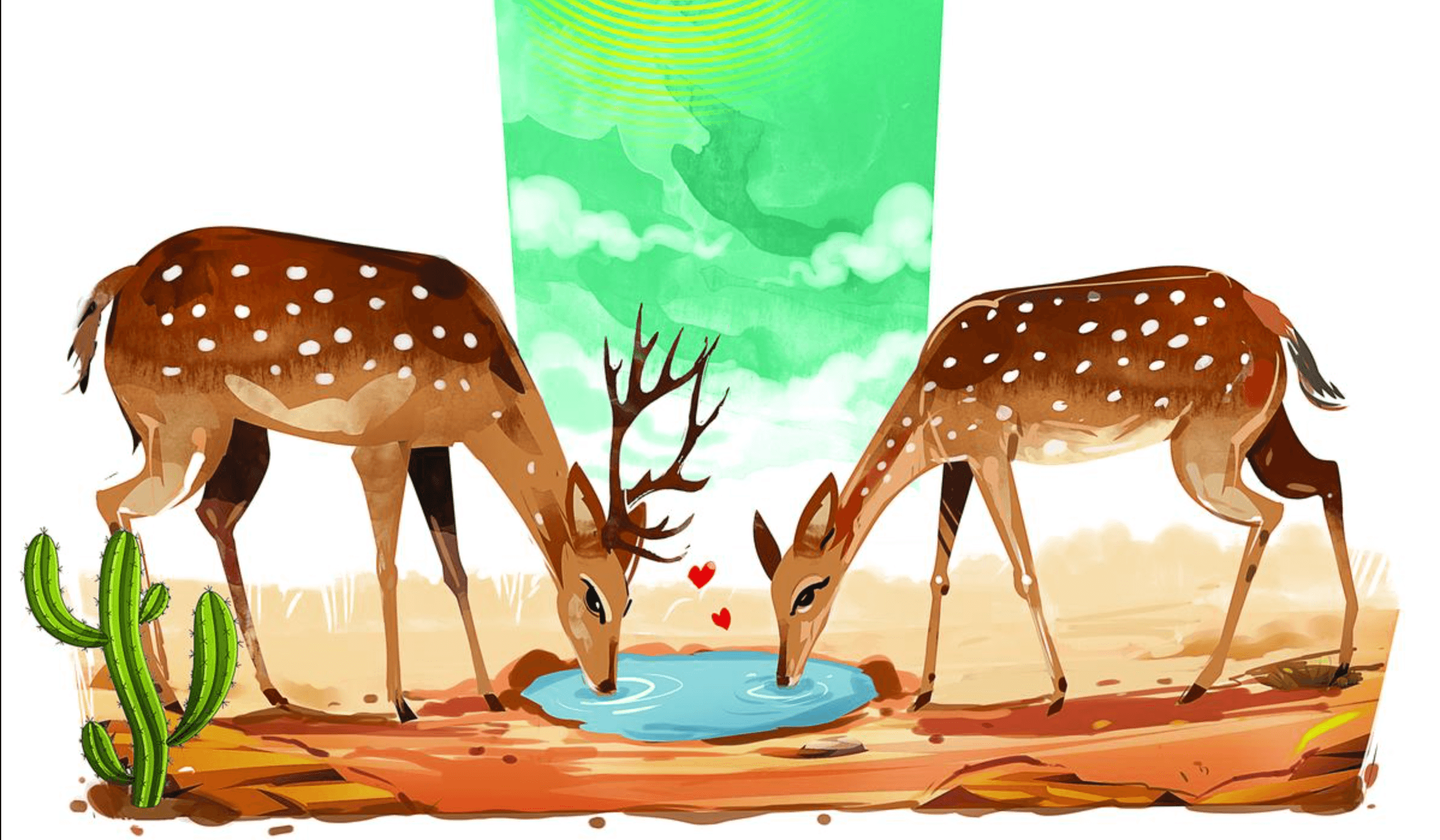
- The poem "Ainthinai Aimpathu" exemplifies the ideal bond between lovers, using natural imagery. It recalls a male and female deer who selflessly pretend to drink water for each other's sake, symbolizing deep emotional connections.
Ecological Awareness:
- Tamil classical literature intricately connects animals with ecological and emotional landscapes across five physiological regions:
- Kurinji: Elephants, tigers, bears, lions
- Mullai: Deer, rabbits
- Marudham: Buffalos, otters
- Neithal: Sharks
- Palai: Dhole (red dog)
- Tamil classical literature intricately connects animals with ecological and emotional landscapes across five physiological regions:
Lexical Richness:
- The Tamil language showcases extensive vocabulary related to fauna. For example, deer have 38 names, buffaloes 20, lions 15, and elephants 45. This reflects evolving linguistic nuances and socio-cultural significance.
Animal Description Compilation:
- H. Chithiraputhiran, a Tamil scholar, compiled a dictionary titled "Tamil Sevvilakkiyangalil Vilangina Sorkal: Special Dictionary-Index, Concordance, Dictionary," published by the Central Institute of Classical Tamil.
- This work includes various animal names elaborated with English and scientific equivalents, referencing 41 literary works for contextual understanding.
Linguistic Challenges in Animal Identification:
- Common prefixes and suffixes complicate identifying animal names, e.g., "Maa" and "Maan" can alter meanings. For instance, Arima (lion) and Ulaimaan (another term for lion) exemplify linguistic complexity.
Gender Indicators:
- Distinct terms effectively denote animal genders, with words like Oruthal (male across species) and Pinavu (female across species). The context often determines the specific reference in classical poetry.
Literary Contexts:
- Descriptive instances showcase emotional depth linked to animals, e.g., in "Nattrinai," a hero hastens his return upon witnessing a jungle fowl nurturing its mate.
Five Physiological Divisions (Thinai):
- Each 'thinai' represents unique emotional and ecological worlds, enriching Tamil literature's relationship with nature and wildlife.
Cultural Preservation and Studies:
- Chithiraputhiran’s efforts are positioned to facilitate comparative literary studies across languages and support dictionary compilations focusing on Tamil.
Relevance to Modern Context:
- The exploration of Tamil classical poetry not only delves into cultural heritage and animal associations but also indicates historical human engagement with nature, promoting ecological awareness, which resonates in current conservation discussions.
Conclusion
The study of animal imagery in Tamil literature, particularly through works like those of H. Chithiraputhiran, highlights the depth of ecological knowledge embedded in classical texts, reflecting an intricate relationship between language, culture, and nature — essential in understanding Tamil heritage and its relevance today.
Key Terms & Concepts
| Ainthinai Aimpathu | Illustrates bond between lovers |
| Tamil Sevvilakkiyangalil Vilangina Sorkal | Dictionary of classical animals |
| Kurinjipattu | Mentions 99 flowers |
| Central Institute of Classical Tamil | Published Tamil dictionary |
| Nattrinai | Shows ecological awareness |
| Tolkappiyam | Referencing historical animal terms |
| Chithiraputhiran | Compiled animal names |
| March 20, 2026 | Publication date of dictionary |
| 38 names | Different names for deer |
| 45 names | Names for elephants |
| 10 physiographical divisions | Ecological and emotional landscapes |