iAspirants
Technology Detects Elephant Movements on Tracks
Published on:
Share this post
Article Summary
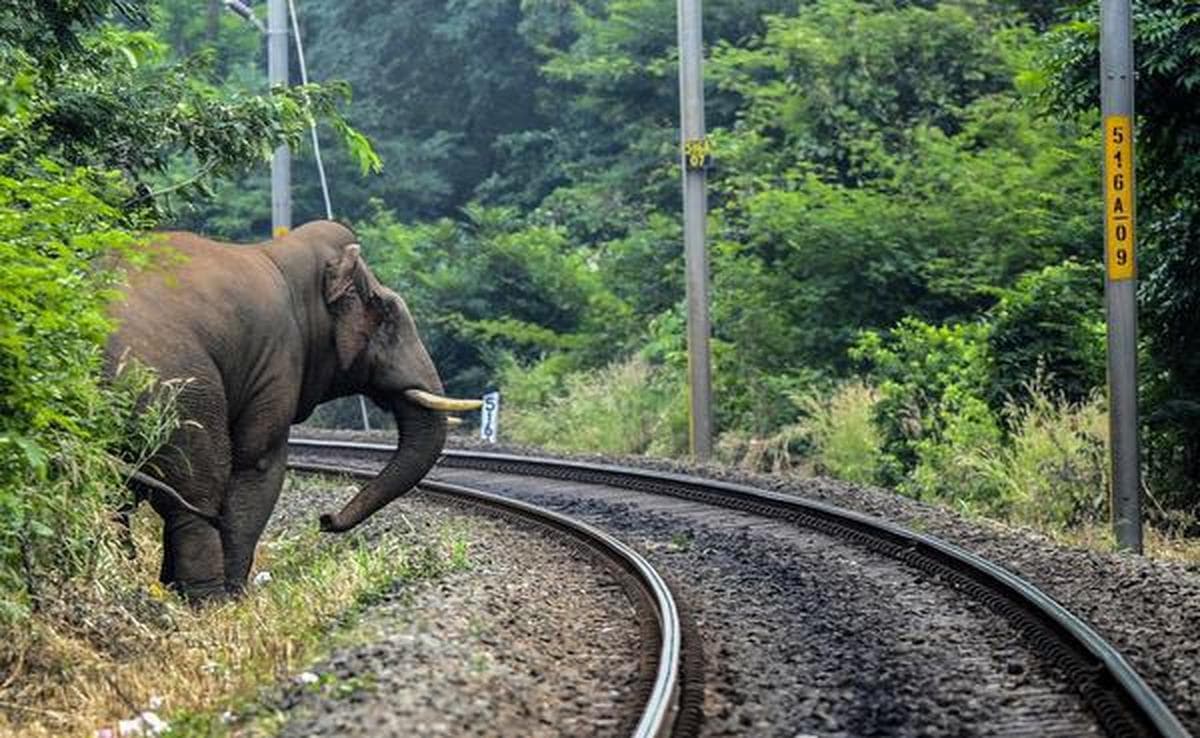
Location & Context: The Binnaguri Railway Station in West Bengal’s Jalpaiguri district is a critical area for elephant movement and railway operations. It is situated in a vulnerable elephant corridor along a 52-km stretch (Madarihat-Nagrakata) that has seen over 90 elephant deaths on railway tracks since 2019.
Intrusion Detection System (IDS):
- Launched as a pilot project in 2023.
- A Rs. 208-crore initiative by the Ministry of Railways aimed at installing IDS on 1,158 route kilometers of railway tracks across eight zones (Northeast Frontier Railway, East Coast Railway, Southern Railway, Northern Railway, South Eastern Railway, North Eastern Railway, Western Railway, and East Central Railway).
- Currently operational over 141 route kilometers under the Northeast Frontier Railway.
Technical Details:
- Distributed Acoustic Sensing (DAS) utilized for monitoring: It employs optical fibers buried 20 meters from the tracks and three feet underground. The system detects vibrations caused by elephant movement through a process known as Rayleigh scattering.
- The technology alerts railway officials to the presence of elephants, particularly during critical hours (5 PM-9 PM) when train accidents are more likely.
Data & Statistics:
- Average of four elephant-related alarms daily.
- A report by the Ministry of Environment, Forest and Climate Change noted 81 elephant casualties due to train collisions from 2019-2020 to 2023-2024.
- A comprehensive survey identified 127 railway stretches spanning 3,452.4 km needing mitigation to prevent wildlife train collisions.
Judicial and Administrative Background:
- The initiative aligns with efforts to preserve biodiversity and reduce wildlife fatalities, referencing the constitutional duty under Article 48A (protection and improvement of environment and safeguarding of forests and wildlife).
- The comprehensive report emphasizes the need for safety measures across prioritized railway stretches (77 stretches covering 1,965.2 km in 14 states).
Collaboration and Future Plans:
- Collaboration with the forest department to extend optical fiber installations in forest lands.
- Technology advancement to include monitoring for rail fractures to enhance safety further.
Public Safety Concerns:
- The IDS is designed to avert collisions by monitoring movements ahead of trains, acknowledging that elephant behavior differs significantly from other wildlife. For example, elephants do not disperse quickly from tracks when alarmed, posing unique risks to train safety.
These notes summarize the key points of the article concerning efforts to protect elephants along railway corridors through technological interventions and government initiatives aimed at reducing wildlife fatalities.
Key Terms & Concepts
| Intrusion Detection System (IDS) | Monitors elephant movement |
| Optical fibres | Detects vibrations from elephants |
| Binnaguri Railway Station | Location of the detection system |
| Sairang-New Delhi Rajdhani Express | Train involved in elephant deaths |
| Madarihat-Nagrakata section | Vulnerable elephant corridor |
| Rs. 208-crore project | Cost of installation of IDS |
| 1,158 route kilometres | Length of railway tracks for IDS |
| 3,452.4 km | Total surveyed railway stretches |
| 81 elephant casualties | Reported train collisions from 2019-2024 |
| Distributed Acoustic Sensing (DAS) | Principle used in IDS |
| Ministry of Environment, Forest and Climate Change | Prepared wildlife collision report |
| Lok Sabha | Location of ministry response |