iAspirants
Temple Jewellery Craft Struggles Survive
Published on:
Share this post
Article Summary
Temple Jewellery of Vadasery – Key Facts and Highlights
Craft Background:
- Originated in the 9th Century AD.
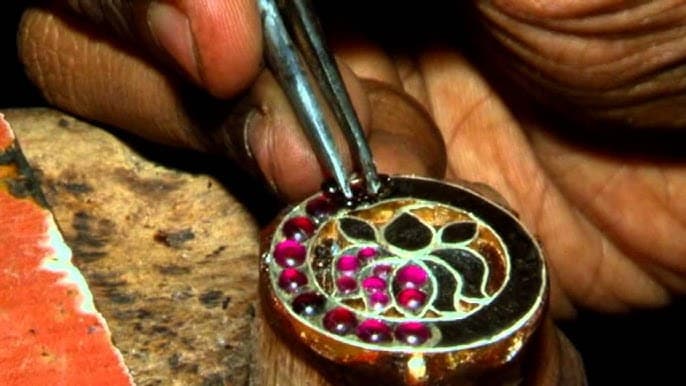
- Handcrafted jewellery is distinguished by its intricate designs inspired by deities, nature, and animals.
- Recognized for its cultural significance, especially among classical dancers.
Geographical Indication (GI) Tag:
- Temple jewellery holds a Geographical Indication tag, a crucial recognition for protecting this traditional craft.
Economic Impact:
- The rise in gold and silver prices has led to increased costs, affecting demand and sales.
- Typical jewellery sets that previously cost around ₹1.5 lakh now sell for approximately ₹3 lakh.
- For instance, hip belts previously sold for ₹50,000 increased to ₹80,000 within a month due to market fluctuations.
- There are about 50 families and 300 craftsmen in Vadasery relying on this craft for their livelihood.
Craft Production:
- Traditional method involves 75% silver and 25% gold, with the addition of kemp and glass stones.
- The manufacturing process includes handmade silver molds, wax filling for stones, and finishing with gold leaf.
Market Shifts:
- Due to soaring prices, many classical dancers have turned to imitation jewellery.
- Artisans report fluctuations make pricing difficult, prompting some to shift to other employment sectors.
Influence of History:
- The temple jewellery craft flourished under the Chola kingdom and was historically made for deities and temple dancers.
- The abolishment of the devadasi system expanded the market but has led to a significant decline in demand in recent years.
Challenges Faced:
- The rapid increase in precious metal prices has decreased order volumes.
- Many artisans are contemplating leaving the craft, leading to potential cultural loss.
- Systematic public exposure and better market access are proposed by artisans to revive interest and demand.
Community and Artisan Perspectives:
- Artisans continue seeking avenues for sustaining their craft, expressing a need for more inclusive participation in government exhibitions.
Key Observations from Artisans:
- Craftsmen indicate that at least eight artisans are involved in creating each piece, emphasizing the traditional skills and labor-intensive nature of the work.
- Frequent price changes lead to a struggle between maintaining quality and managing costs.
Conclusion
The temple jewellery of Vadasery not only represents a rich cultural heritage but also faces significant economic challenges due to the fluctuating prices of gold and silver. As artisans grapple with a declining market, the need for increased public visibility and support via government initiatives remains critical for the sustainability of this unique craft.
Key Terms & Concepts
| Vadasery | Location of jewellery artisans |
| Geographical Indication tag | Certification for temple jewellery |
| 9th Century AD | Origin of temple jewellery |
| ₹1.5 lakh to ₹3 lakh | Price increase for jewellery set |
| 300 craftsmen | Number of artisans in Vadasery |
| Chola kingdom | Historical rule affecting business |
| kemp stones | Cost of ornament stones |
| ₹50,000 to ₹80,000 | Price increase for hip belt |
| 8 craftsmen | Workforce per jewellery piece |