iAspirants
Textbook Changes on Historical Artefacts
Published on:
Share this post
Article Summary
Summary Notes on the NCERT Art Education Textbook Revision
Context and Background
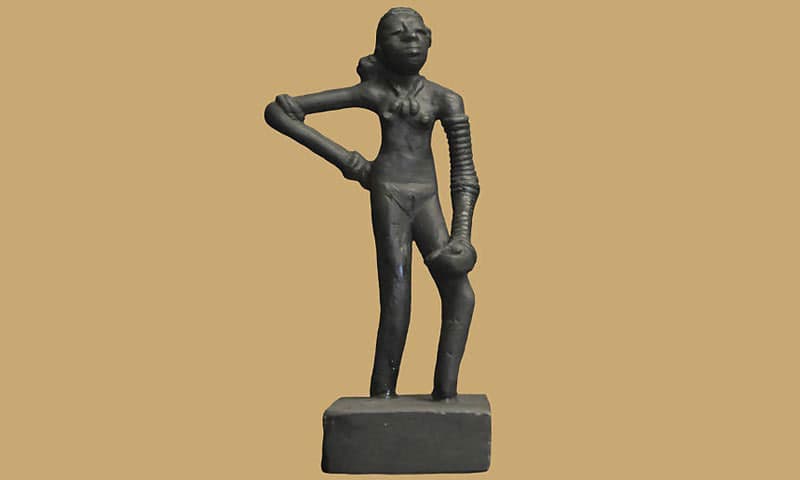
- Artefact Significance: The 4,500-year-old bronze statue, "Dancing Girl" from Mohenjo-daro, represents the Harappan civilization’s advancements in metallurgy and artistry.
- Educational Revisions: The NCERT (National Council of Educational Research and Training) has altered imagery in the Class IX art education textbook, covering the figurine's torso to align with age-appropriate standards.
Key Issues
Pedagogical Philosophy:
- Recent curriculum changes reflect a trend towards simplifying historical narratives and reducing perceived controversial topics.
- The NCERT's rationale includes fostering "positive citizens" through education devoid of conflict, citing previous content removals such as references to the Gujarat riots and Babri Masjid demolition.
Critical Thinking and NEP Alignment:
- The educational changes contradict the goals of the National Education Policy (NEP), which emphasizes critical thinking and comprehension of historical context.
- There is concern about over-sanitizing educational content, which may prevent students from grappling with historical complexities and cultural nuances.
Implications of Changes
- Cultural Representation: The modification of the "Dancing Girl" imagery could undermine the representation of women in history, diverging from the growing presence and individuality of women in contemporary society across various domains.
- Symbolism of the "Dancing Girl":
- The original figurine symbolizes poise, confidence, and cultural richness rather than conforming to modern standards of modesty.
- The change sends a message that may inhibit recognition of women's contributions and presence in society.
Educational Impact
- Youth Engagement:
- Education ought to prepare students to engage with real-world complexities, thus, providing them with nuanced understanding rather than simplified or modified representations might be more effective.
- Agency in Learning:
- Trusting students with historical and cultural artifacts can foster better understanding and empower them to form independent thought.
Conclusion
The NCERT's revisions of educational materials, particularly concerning historical artefacts like the "Dancing Girl," highlight a broader tension between pedagogical philosophy and the promotion of critical thinking. These changes raise significant questions about educational content accountability and the representation of women and culture in India’s historical narrative.
Key Terms & Concepts
| Dancing Girl of Mohenjo-daro | Ancient artefact representing Harappan culture |
| NCERT | National Council of Educational Research and Training |
| Class IX art education textbook | Textbook revised for age-appropriate content |
| NEP | National Education Policy aimed at critical thinking |
| 2024 | Year of NCERT's justification for syllabus changes |
| Gujarat riots | Content omitted from Class XII syllabus |
| Babri Masjid demolition | Content omitted from Class XII syllabus |
| D P Saklani | NCERT director advocating syllabus rationalization |