iAspirants
Thailand Cambodia Border Conflict Escalates
Published on:
Share this post
Article Summary
Summary of Thailand-Cambodia Conflict
Current Situation
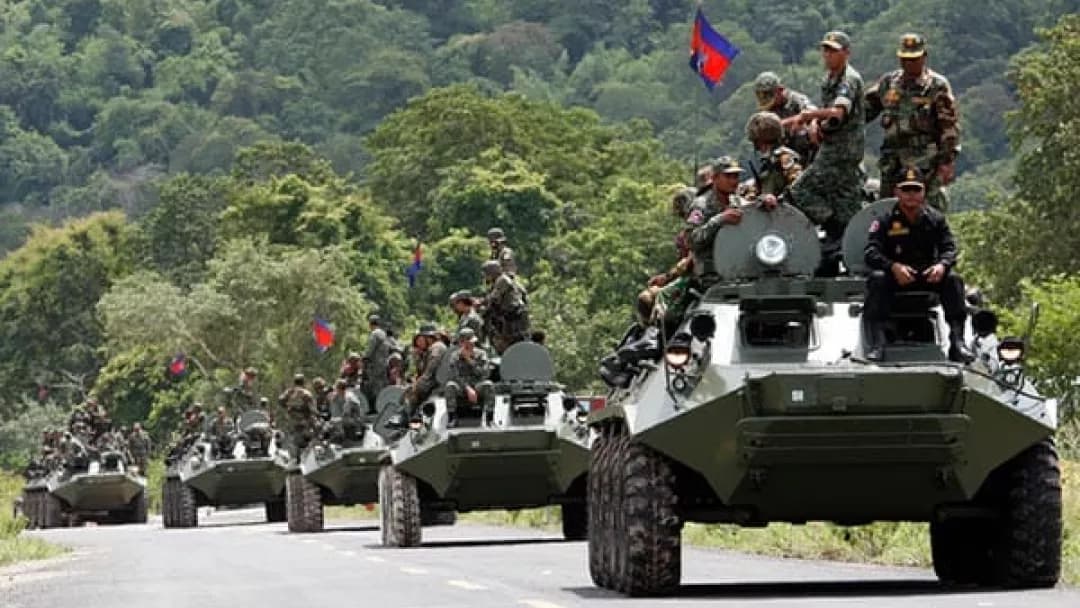
- On December 8, Thailand's army conducted airstrikes targeting military positions in Cambodia in response to alleged attacks that resulted in the deaths of Thai soldiers.
- Initial reports indicate one Thai soldier died and eight were wounded; Cambodia claimed three civilians were injured in the strikes.
- Thousands were evacuated from both sides of the border due to escalating tensions.
Historical Context
- The border conflict has its roots in a territorial dispute dating back to a 1907 French colonial border demarcation.
- The Preah Vihear temple, a significant cultural and religious site for both nations, remains central to the dispute.
- The International Court of Justice (ICJ) recognized Cambodia's claim over Preah Vihear in 1962; renewed tensions have arisen due to nationalist sentiments and ongoing disputes over sovereignty.
Past Conflicts and Ceasefires
- A conflict in July resulted in 48 deaths and significant displacement on both sides.
- The July conflict was preceded by border skirmishes in May and a landmine explosion that wounded Thai soldiers, with Thailand blaming Cambodia for laying new mines.
- A peace deal was brokered by Malaysia in October 2023, with U.S. involvement, yet high tensions persist.
Government Demands and Diplomatic Frictions
- Thai Prime Minister Anutin Charnvirakul has established four conditions for peace: removal of heavy weapons along the border, clearance of landmines, cooperation to prevent cross-border crime, and management of sensitive border zones.
- Diplomatically, there has been a withdrawal and expulsion of ambassadors in response to previous hostilities, indicating deteriorating relations.
International and Legal Implications
- The conflict has potential ramifications on ASEAN regional stability and cooperation.
- Historical agreements and judgments, especially the ICJ ruling, are crucial in mediating conflicts.
- Ongoing nationalistic rhetoric from both governments fuels the crisis, complicating peaceful negotiations.
Cultural and National Identity Issues
- Both Thailand and Cambodia share cultural and linguistic ties, yet nationalist sentiments exacerbate the conflict, with each side claiming historical ownership of their heritage related to the temple and lands.
- The Preah Vihear temple was central to Khmer Empire cultural history, and its governance reflects broader national identity struggles.
Summary of Key Dates and Events
- 1907: French colonial demarcation sets the current disputed border.
- 1962: ICJ rules in favor of Cambodia over Preah Vihear.
- 2008: Tensions rise after Cambodia seeks UNESCO recognition for the temple.
- 2013: ICJ reinforces Cambodia’s claims, but the demilitarized zone is not implemented.
- October 2023: Peace deal established, supervised by international parties, despite ongoing tensions.
Important Considerations
- Understanding this conflict requires a grasp of historical claims, legal rulings by the ICJ, and the socio-political dynamics that drive nationalist sentiments in both countries.
- The role of international diplomacy and third-party involvement is critical in mediating future disputes, especially considering the historical backdrop that shapes Thai-Cambodian relations.
Key Terms & Concepts
| Cambodia | Involved country in conflict |
| Thailand | Involved country in conflict |
| Preah Vihear Temple | Disputed cultural site |
| International Court of Justice (ICJ) | Judicial resolution body |
| Malaysia | Mediator in peace talks |
| Donald Trump | US President during mediation |
| 1907 Border Treaty | Historical border agreement |
| UNESCO World Heritage site | Site of international significance |
| July 2023 Conflict | Previous border clashes |
| Ceasefire Agreement | Attempt to reduce hostilities |