iAspirants
Thermogenesis in Plants and Insects
Published on:
Share this post
Article Summary
Summary of Key Scientific Insights on Thermogenesis in Plants
Definition of Thermogenesis:
- Thermogenesis refers to the biological process in which living organisms produce body heat. While typically associated with birds and mammals, all complex life forms engage in this process via mitochondria, which convert food into adenosine triphosphate (ATP).
Energy Conversion:
- Only approximately 25% of energy derived from food contributes to ATP synthesis; the remainder is released as heat. Some plants, through specific enzymes, can transform all energy from sugars directly into heat.
Example of Thermogenic Plants:
- Sacred Lotus (Nelumbo nucifera):
- Native to North and Central India, this plant exhibits thermogenesis by generating heat (30-35º C) internally when its petals turn pink, even in cooler external temperatures (10º C).
- Flowering attracts insect pollinators due to scent and temperature manipulation, enhancing cross-pollination.
- The structure includes a central receptacle with female organs (pistils) that mature before male organs (stamens), ensuring efficient reproductive success.
- Sacred Lotus (Nelumbo nucifera):
Mechanism:
- Thermogenesis is activated by a rise in calcium ion levels in specific cells, which signal mitochondria to increase heat production using stored starch and fat.
Other Thermogenic Plants:
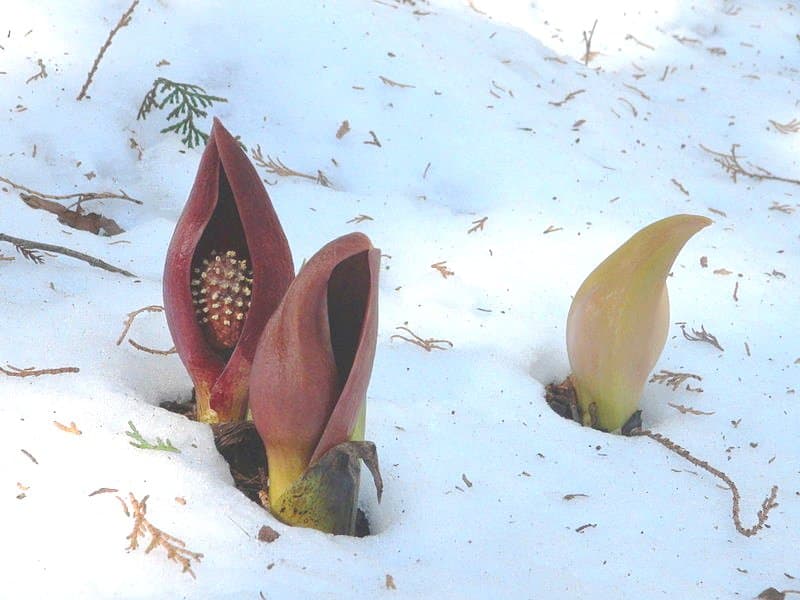
- Eastern Skunk Cabbage:
- Grows in colder North American regions; it generates heat to melt surrounding snow, attracting beetles and beneficial insects.
- Dead Horse Arum Lily:
- Found in Sardinia, it creates heat and emits a strong odor to attract carrion-seeking blowflies for pollination.
- Eastern Skunk Cabbage:
Scientific Research:
- Recent research published in Plant Physiology discusses these mechanisms, highlighting the biological intricacies of thermogenesis in plants, indicating potential areas for further study in plant biology and ecological interactions (2025 publication year noted).
Applications and Implications
- Understanding thermogenesis in plants could have implications for biodiversity, agricultural productivity through improved pollination strategies, and ecosystem dynamics.
Conclusion
The study of thermogenic plants reveals critical adaptations that enhance genetic diversity and cross-pollination opportunities, reflecting the complexity of natural processes and plant-insect interactions on a larger ecological scale.
Key Terms & Concepts
| thermogenesis | heat production in organisms |
| mitochondria | cellular power plants |
| adenosine triphosphate (ATP) | biological fuel energy |
| sacred lotus (Nelumbo nucifera) | heat-emitting flowering plant |
| cross-pollination | genetic diversity benefit |
| calcium ions | heat production trigger |
| Eastern skunk cabbage | heat-producing plant |
| dead horse arum lily | carrion-attracting plant |
| Plant Physiology, 198, 2025, kiaf173 | source of research |